

 Which American 2000s TV Series Are You?
 The Perpetual Student Syndrome: When Self-Development Becomes a New Form of Procrastination
 Test: Who Were You in a Past Life?
 Your Mythological Totem: Take the Test and Find Out Which Ancient Creature Protects You?
 Adulthood Test: Find Out How Old You Really Are
 Empathy Check. How Well Developed Is Your Emotional Intelligence?
 English
 Русский
 Deutsch
 Español
Gadgets, Apps, and Neural Networks for Mental Well-Being
In today’s world, full of challenges and uncertainty, caring for one’s mental health is no longer a luxury—it’s a necessity.
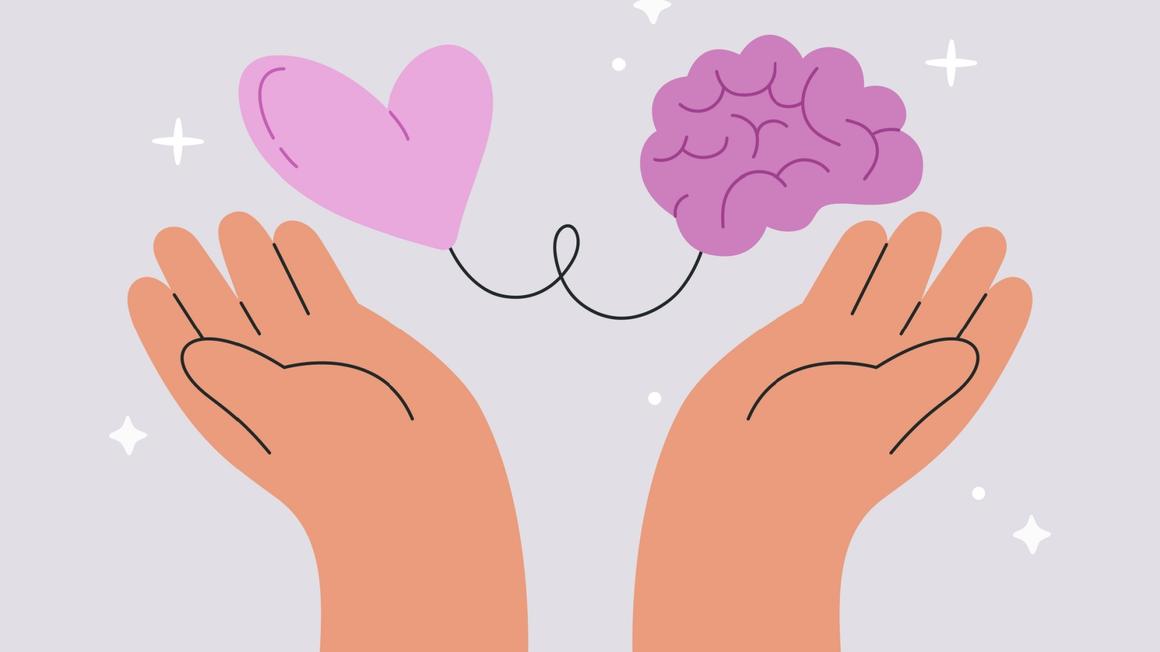
Not long ago, technology was accused of contributing only to rising anxiety and distraction, but now it offers a powerful arsenal for restoring psychological balance and cultivating mindfulness. With its help, we can learn to manage stress and improve our quality of life. This article explores how gadgets, apps, and artificial intelligence are transforming from sources of informational noise into tools for maintaining mental health and mental clarity.
First Aid in Your Pocket: Techniques for Coping with Stress
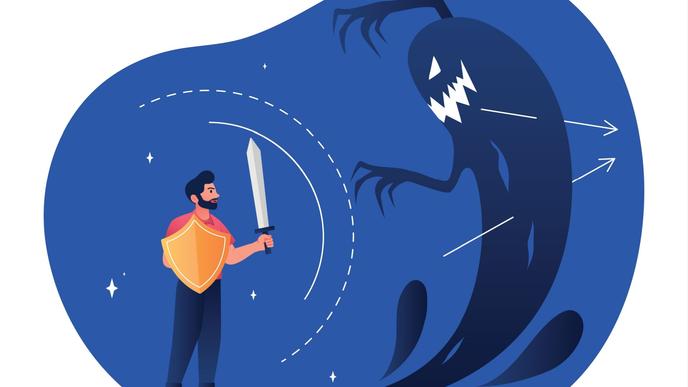
When a wave of anxiety hits and you feel like you're losing control, it's important not only to recognize that you're experiencing anxiety or a panic attack but also to have concrete, reliable self-help methods at hand.
The "5-4-3" Grounding Technique
This method, recommended by psychotherapists, helps to stop panic attacks, reduce anxiety, or simply relax in stressful situations by engaging all the senses. Its essence lies in gradually shifting attention from internal catastrophic thoughts to external, neutral stimuli.
How it works: when you find yourself in a stressful situation, mentally or aloud name -
-
5 things you can see around you (for example: "I see a keyboard, a cup, a ray of sunlight on the table, a book, a plant");
-
4 things you can touch ("I feel the texture of the fabric on the chair, the coolness of the table, the smoothness of my phone, the warmth of my palms");
-
3 sounds you can hear ("I hear the hum of the computer, the ticking of the clock, my breathing");
-
2 smells you can detect ("I smell coffee, fresh air");
-
1 taste ("I taste my own mouth or take a sip of water").
Modern technology allows you to practice such techniques anytime, literally in just a few clicks. Apps like MindShift CBT or Calm often have built-in "emergency" sections with voice guides that lead you step by step through these exercises-particularly helpful when you can't collect your thoughts.
Breathing Practices as a Tool for Instant Calm
Mental state is directly connected to physiology. Rapid, shallow breathing is a sign of stress. Conscious slowing of breath sends a signal of safety to the brain. Numerous studies confirm that controlled breathing practices reduce cortisol levels and activate the parasympathetic nervous system, responsible for relaxation.
How to achieve this:
-
The "4-7-8" Method: Inhale through your nose for 4 counts, hold your breath for 7, and slowly exhale through your mouth for 8. Repeat the cycle 4-5 times.
-
Diaphragmatic Breathing: Focus on "belly breathing." As you inhale, your stomach rises; as you exhale, it gently contracts.
Smartwatches such as Apple Watch, Garmin, and Fitbit, and apps like Breathe (for Apple Watch) and Prana (for smartphones) have become ideal guides to the world of breathing practices. They vibrate in sync with your breath and provide visual cues, helping you stay on rhythm and fully concentrate on the process.
Progressive Muscle Relaxation
Developed in the 1920s, this technique remains a gold standard for relieving physical tension-a direct consequence of stress. The principle is simple: you sequentially tense and then relax different muscle groups.
Start with your toes: tighten them for 5-7 seconds, then completely relax for 15-30 seconds. Move upward through your feet, calves, thighs, and so on, finishing with your facial muscles.
To practice muscle relaxation, you can use the Headspace app. In the Sleep and Managing Anxiety sections, you'll find guided body-scanning sessions and full relaxation courses.
Meditation and Mindfulness Through Apps: Awareness as a Skill
Meditation is no longer associated with esoteric practices; it's a real workout for the mind, comparable to fitness for the body. And just like with fitness, consistency and proper technique matter. Modern mindfulness apps provide exactly that.
Headspace: Gamifying Meditation
Founded by former Buddhist monk Andy Puddicombe, Headspace is known for its friendly and structured approach. It divides the meditation journey into themed "courses":
-
Basics (for beginners),
-
Managing Stress,
-
Focus, and
-
Sleep.
Each course consists of short, 10-20-minute sessions with animated explanations that make complex ideas simple and engaging. You earn rewards for consecutive sessions, which motivates you to stick with the practice and turns mindfulness development from a dull duty into an exciting challenge.
Calm: An Ecosystem for Relaxation
Calm is an entire universe of tranquility. Along with standard guided meditations, it offers bedtime stories for adults read by celebrities with soothing voices (for example, Stephen Fry), a library of nature sounds for creating personalized soundscapes, breathing exercises, and a Calm Journal for reflection.
Calm understands that there is no universal recipe for relaxation. Some people unwind better through storytelling, others through the sound of rain. The app offers many pathways into a mindful state.
Waking Up: Deep Dive Into the Self
Created by neuroscientist and philosopher Sam Harris, Waking Up is designed for those who want not only to relax but to deeply explore the nature of consciousness. The app combines meditation practice with theoretical lessons-short talks on philosophy and neuroscience. It challenges the very concept of "self" and teaches users to observe their thoughts not as part of themselves but as passing mental events.
This app is for those unsatisfied with surface-level approaches. It develops not just relaxation but a meta-skill-the ability to observe the workings of one's own mind, a foundation for psychological resilience.
Lectera’s Online Courses by topic
How Trackers Improve Sleep and Productivity
Sleep is the cornerstone of mental health. Chronic sleep deprivation directly leads to increased anxiety, depressive symptoms, and reduced cognitive function. In the past, we could only guess about the quality of our sleep. Today, smartwatches and rings provide precise data, turning sleep from a mystery into a manageable process.
Sleep Phases and Their Importance
Modern trackers (such as Oura Ring, Withings Sleep Analyzer, and advanced models of Apple Watch and Fitbit) analyze not only sleep duration but also its structure.
-
Deep Sleep (Slow-Wave): Critically important for physical recovery, immune strength, and memory consolidation. Its lack results in feeling drained.
-
REM Sleep: The rapid-eye-movement stage, when we dream. It's responsible for emotional processing, creativity, and learning. A lack of REM sleep is linked to increased emotional vulnerability.
By reviewing your morning report with a graph of sleep phases, you can understand why you feel tired even after eight or more hours of rest. Perhaps you lacked deep sleep because of an evening coffee. This awareness helps you make conscious lifestyle adjustments.
Creating Ideal Sleep Conditions
Trackers have evolved from simple recorders to active assistants.
-
Optimal Bedtime: Algorithms analyze your sleep history and daily activity to suggest the best time to go to bed, so you wake up during a light sleep phase rather than deep sleep.
-
Bedtime Rituals: Many apps offer a "sleep mode" that dims your screen an hour before bedtime, prompts a short meditation or breathing exercise, and blocks notifications-helping your nervous system ease into rest.
-
Environmental Monitoring: Some devices (like Oura Ring) track body temperature and heart rate variability (HRV)-a key marker of stress and recovery. A drop in HRV can signal that you should opt for a lighter workout or go to bed earlier.
In this way, modern mental health apps have become effective tools for conscious self-regulation. Start small-with a five-minute breathing session or by reviewing your sleep data-and within a few weeks, you'll notice how digital chaos transforms into inner order.
Share this with your friends via:
Latest News

Fall 2026 promises to be an eventful season for education worldwide.

Tickets for WE Convention 2026 are now available - with 25% off for EARLY BIRDS!

The private school Alpha School, which has opened campuses from New York to California, uses AI bots to teach children academic subjects for just two hours a day. The school has no traditional teachers, no homework, and tuition reaches $65,000 per year.

UK Prime Minister Keir Starmer has announced a major public-private partnership in the field of artificial intelligence. Google, Microsoft, Amazon and NVIDIA, together with the government, are launching an AI skills training programme for 7.5 million British workers.

International educational programmes provider Study Group has announced a change of ownership. The company has been acquired by Arete Education – an investment structure in the higher education sector created by Global University Systems (GUS) and US private investment firm Brightstar Capital Partners.
