









 Which American 2000s TV Series Are You?
 The Perpetual Student Syndrome: When Self-Development Becomes a New Form of Procrastination
 Test: Who Were You in a Past Life?
 Your Mythological Totem: Take the Test and Find Out Which Ancient Creature Protects You?
 Adulthood Test: Find Out How Old You Really Are
 Empathy Check. How Well Developed Is Your Emotional Intelligence?

 English
 Русский
 Deutsch
 Español
How to Preserve Human Communication in a World of Technology
Today, we entrust neural networks with a multitude of diverse functions – from performing routine work tasks to planning travel routes, generating creative ideas, managing social media, and learning.
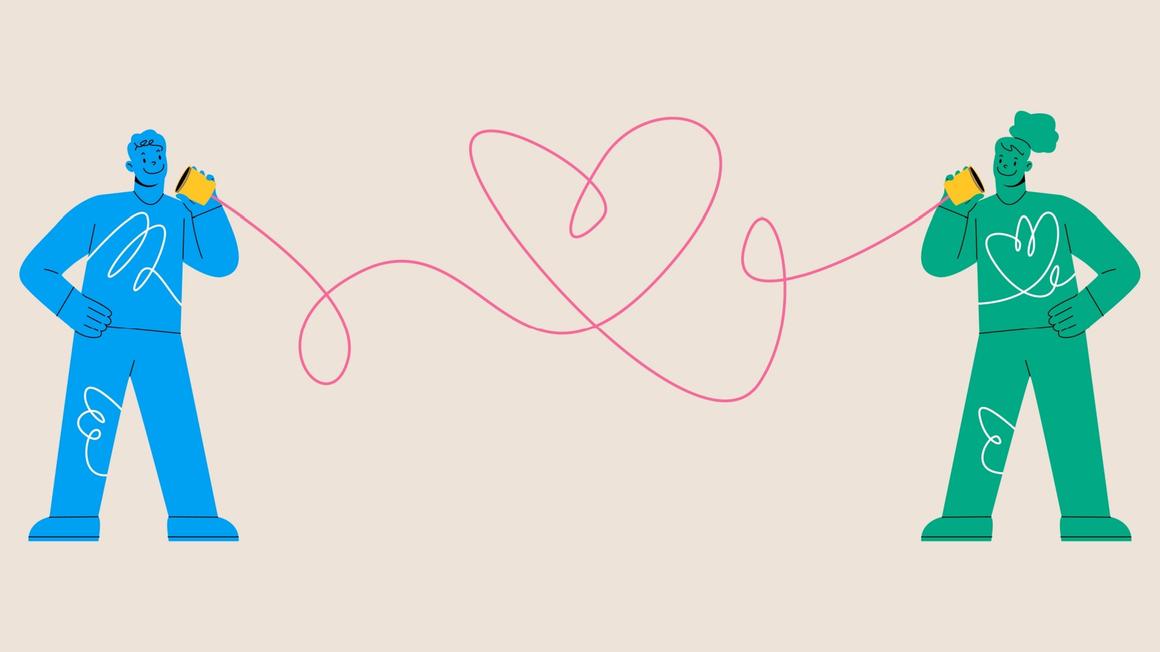
Technology indeed makes life more convenient, but at the same time, it intensifies another question: how to preserve human communication, emotional sensitivity, and the ability to build relationships in an era when everything can be delegated to an algorithm.
Unlike Robots
Social skills are what distinguish us from machines. Empathy, the ability to engage in dialogue, flexibility of thinking, understanding the context and emotions of an interlocutor. These skills, no matter how you look at it, cannot be fully automated. Today, precisely these qualities are becoming the new "premium skill": employers are increasingly seeking specialists who not only know how to use AI tools but also can build productive interactions with people, especially in hybrid and distributed teams.
Maintaining a balance between technological advancement and humanity is a key task for the modern professional. This is not at all about opposition - "human VS machine" - but about synergy: how to use the capabilities of AI without losing the capacity for genuine communication and creative thinking.
Empathy and Active Listening in the New Era
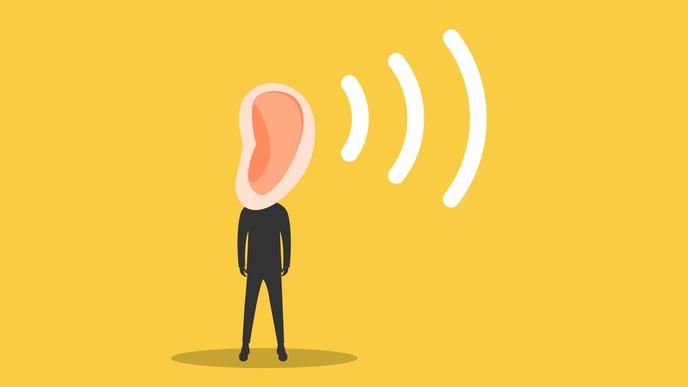
If previously empathy was associated more with personal communication - informal conversations over a cup of coffee or by the office water cooler - now it also manifests itself in digital formats: correspondence, online meetings, voice chats. The digital environment demands a new form of emotional intelligence from us - the ability to read not only words but also tone, context, pauses, and to understand how the interlocutor perceives the interaction through a screen.
In the age of AI, communication has become more fragmented. We often encounter not a person, but an interface. As a result, emotional engagement decreases. To compensate for this, it is important to develop digital empathy - the ability to be attentive to another person even in the format of messages. This is manifested in how you formulate thoughts, ask questions, express support, and how accurately you discern emotions from minimal signals.
Neural networks can already simulate emotional reactions, but sincerity, reading context and nuances remain with humans. Therefore, empathy is becoming a competitive advantage - in negotiations, leadership, and client communications.
How to develop empathy and active listening now:
-
Practice mindful presence during communication: during online meetings, do not multitask, focus your attention on the interlocutor.
-
Use reflective questions: "If I understand correctly, you feel that...?" - this helps to clarify emotions and shows involvement.
-
Practice nonverbal signals in the digital environment - facial expressions, intonation, and speech pace still matter even through a screen.
-
Develop the skill of written empathy: in messages, use soft formulations, express appreciation, maintain a friendly tone.
Empathy is not an innate talent, but a discipline of attention. AI can help with this: for example, applications for analyzing speech and emotions (Crystal Knows, Grammarly Tone Detector) provide feedback on how your message is perceived by the interlocutor.
Working in Hybrid Teams: New Rules of Interaction

The hybrid format is the standard of the modern work environment. Colleagues are in different cities, time zones, and cultures, but must act as a single team. Here, skills in communication, self-regulation, and digital cooperation are especially important.
AI technologies help - they automate tasks, structure information, and create process transparency. But it is the human factor that determines how effectively a team works.
How the principles of teamwork have changed:
-
Communication has become asynchronous. This is a method of communication where participants do not require an immediate response, allowing them to interact at different times. When communicating in chats and task trackers, it is important to be able to express thoughts clearly and in a structured manner.
-
The role of trust has increased. When a team does not see each other daily, mutual respect and openness become the main connecting elements.
-
Leaders are turning into facilitators. Instead of control - support; instead of instructions - dialogue.
How to enhance social skills in a hybrid environment:
-
Create at least the effect of "live presence." Even with remote work, it is important to maintain regular contact - not only on business matters. Weekly short informal calls help maintain the feeling of being a team.
-
Establish transparent communication rules. Agree on where tasks are discussed, where comments are given, and during which hours the team is available. This reduces stress and prevents misunderstandings.
-
Use AI tools for collaboration. For example, Notion AI helps structure information, and Otter.ai takes notes of meetings. But interpreting meaning, making decisions, and considering emotions are human tasks.
-
Develop cross-cultural sensitivity. In global teams, it is important to understand differences in communication styles so as not to perceive a colleague's directness or softness as a personal attitude.
Technology can be a catalyst for productivity, but it is soft skills that make collaboration alive. In an era where algorithms ensure efficiency, human warmth becomes the main factor of trust and motivation.
Lectera’s Online Courses by topic
Methods for Developing Other Soft Skills in the Digital Environment
Besides empathy and communication, the AI era requires increased attention from us to other social and cognitive skills - critical thinking, creativity, adaptability, and self-reflection.
- Critical Thinking
With the abundance of information, the ability to analyze, compare, and verify facts becomes vital. Neural networks can help in searching for data, but assessing their reliability and drawing conclusions is a human prerogative. Practice source analysis, ask clarifying questions, develop the habit of constructive doubt.
- Creativity
The paradox of AI is that by automating routine tasks, it frees up space for creativity. Use AI as an idea partner: ask it to suggest options, and then improve them manually. Such a "co-creative" approach develops strategic thinking and originality.
- Adaptability
Technologies change faster than habits form. The ability to learn, adapt, and not be afraid of experiments becomes key. Apply the principle of "micro-learning" - master one new tool per week, analyze how it helps you work better.
- Self-Reflection
In conditions of constant digital stimuli, it is important to periodically pause and assess how well your actions align with your goals and values. Use mood trackers, digital diaries, or applications like Reflectly to analyze your emotional state and the quality of your interactions with others.
How to Systematically Develop Soft Skills in the AI Era
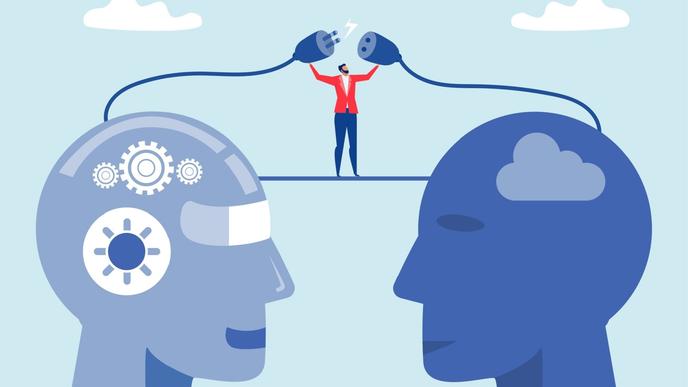
1. Create a personal soft skills development plan
As with mastering professional technologies, developing flexible skills requires structure.
-
Identify key competencies. Compile a list of soft skills important for your profession: communication, adaptability, leadership, emotional intelligence, time management.
-
Conduct a self-assessment. Use online tests (e.g., 16personalities, Emotional Intelligence Appraisal) to understand your strengths and weaknesses.
-
Set SMART goals. Not abstractly "improve communication," but specifically: "learn to give objective feedback" or "conduct effective online meetings."
-
Plan mini-actions. For example, conduct one networking conversation each week or ask a colleague for constructive feedback.
2. Practice soft skills in everyday situations
Flexible skills are not developed in isolation - they are formed by regular practice.
-
During video calls, consciously practice the skill of active listening: do not interrupt, note key ideas, summarize the discussion.
-
When working with AI assistants, practice the skill of formulating tasks: clear, logical prompts help develop clarity of thought.
-
When corresponding in messengers, work on emotional literacy: read the message before sending, avoid harsh phrasing, add short empathetic phrases ("thanks for the idea," "good point").
-
In project work, try roles that require communication: facilitator, mediator, mentor. This stimulates the development of leadership and negotiation skills.
3. Implement digital feedback
AI tools can be used not only for task automation but also for developing soft skills.
-
Use AI to analyze communication. Services like Reclaim.ai or Gong.io analyze your meetings and show how much you talk, whether you interrupt colleagues, and if you know how to ask questions.
-
Check your writing style. Tools like Grammarly Tone Detector or LanguageTool help assess the emotional tone of messages.
-
Track skill dynamics. Self-development applications (GrowthSpace, CoachHub) allow you to form individual soft skills development plans and receive feedback from coaches.
4. Develop emotional intelligence through self-observation practices
Emotional intelligence is a key competency that enhances all other skills.
-
Keep an "emotional diary." Record which events caused irritation, joy, anxiety - and which reactions you chose. After a few weeks, an understanding of triggers and growth points will emerge.
-
Apply breathing techniques before important meetings. This reduces stress levels and helps better control emotions.
-
Regularly ask yourself questions: "What am I feeling right now? Why am I reacting this way?" - this develops mindfulness.
-
Practice empathy in communication. Try in negotiations not just to prove your position, but first to acknowledge that you understand the feelings and interests of the other side.
5. Train creativity and adaptability through micro-tasks
AI can generate ideas, but creative thinking is the ability to connect unexpected things.
-
Ask AI non-trivial questions. Ask it to explain a complex topic using a metaphor, translate text into a different style - this stimulates imagination.
-
Try the "30 ideas in 10 minutes" format. Set a timer and come up with as many solutions to one problem as possible - without filtering.
-
Regularly learn new things. Subscribe to courses and micro-lessons that go beyond your profession. For example, if you are an analyst, try a course on storytelling.
6. Develop collaboration skills in digital teams
Soft skills manifest most strongly in teamwork.
-
Organize "reflective Fridays." At the end of the week, discuss with the team what worked and what didn't - without blame, in a constructive analysis format.
-
Learn to give feedback using the SBI model (Situation - Behavior - Impact): describe the situation, specific behavior, and its effect, avoiding subjective evaluations.
-
Apply "digital politeness." Respond to emails on time, warn about delays, use neutral phrasing. This creates a culture of respect even in an online environment.
-
Create micro-communities for learning. For example, a monthly exchange of ideas or practices between departments helps develop communication and horizontal connections.
7. Make soft skills part of your professional brand
In the modern world, not just technical competence is valued, but the ability to be a reliable partner and leader.
-
Reflect your skills in professional profiles. Add case studies where skills in communication, facilitation, or empathy were demonstrated.
-
Request recommendations. Let colleagues describe not only your results but also how you interacted with people.
-
Create a digital development ritual. For example, each month choose one soft skill to focus on and track progress through notes or an AI assistant.
In the era of artificial intelligence, it is human intelligence that becomes decisive. Machines can process information, but they cannot feel, empathize, or inspire. Our social skills are not just "soft competencies," but the foundation of professional resilience.
AI can be an ally if we remain mindful, curious, and attentive to people. By mastering technology but preserving humanity, we create a future where digital progress enhances not cold calculation, but the quality of human connections.
Share this with your friends via:
Latest News

Fall 2026 promises to be an eventful season for education worldwide.

Tickets for WE Convention 2026 are now available - with 25% off for EARLY BIRDS!

The private school Alpha School, which has opened campuses from New York to California, uses AI bots to teach children academic subjects for just two hours a day. The school has no traditional teachers, no homework, and tuition reaches $65,000 per year.

UK Prime Minister Keir Starmer has announced a major public-private partnership in the field of artificial intelligence. Google, Microsoft, Amazon and NVIDIA, together with the government, are launching an AI skills training programme for 7.5 million British workers.

International educational programmes provider Study Group has announced a change of ownership. The company has been acquired by Arete Education – an investment structure in the higher education sector created by Global University Systems (GUS) and US private investment firm Brightstar Capital Partners.
