












 Which American 2000s TV Series Are You?
 The Perpetual Student Syndrome: When Self-Development Becomes a New Form of Procrastination
 Test: Who Were You in a Past Life?
 Your Mythological Totem: Take the Test and Find Out Which Ancient Creature Protects You?
 Adulthood Test: Find Out How Old You Really Are
 Empathy Check. How Well Developed Is Your Emotional Intelligence?

 English
 Русский
 Deutsch
 Español
Feedback Without Stress: How to Give and Receive It to Grow, Not Defend
Feedback is one of the most powerful tools for professional and personal growth — and one of the most painful. We all want to improve, but not everyone is ready to hear that they might be wrong.
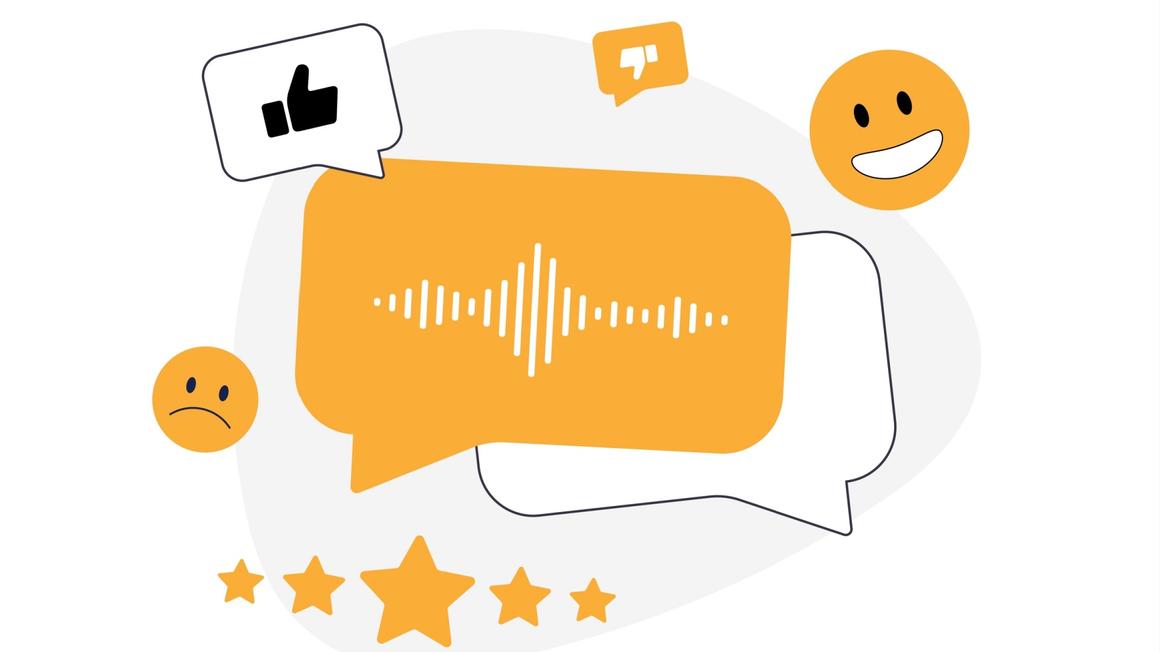
Even when a person sincerely asks for advice or evaluation, the reaction to criticism often feels uncomfortable: internally, we brace ourselves, want to justify or prove that "it's not quite like that." This is normal - the brain perceives any remark as a potential threat, not to competence, but to self-worth.
Nevertheless, without feedback, progress is impossible. It helps us see what we overlook, correct our direction, and act with greater precision. The problem is not feedback itself, but how it is given and how it is received. When handled with care, feedback stops being a sore subject and becomes a resource. It doesn't break - it guides. It doesn't humiliate - it strengthens. In this sense, feedback is not just communication; it's a form of care and professional maturity.
Why Feedback Causes Stress: What Happens in the Brain
When a person hears an evaluation - especially unexpected or negative - the amygdala, the part of the brain responsible for the "fight or flight" response, activates. It's the same mechanism triggered by physical danger. Research from Harvard Business School shows that even mild criticism can temporarily lower cognitive function - it becomes harder to reason, remember, and listen attentively. The brain momentarily switches from "analysis" to "self-defense."
In simple terms, at the moment of receiving feedback, we aren't learning - we're protecting ourselves. Our energy goes into maintaining internal balance rather than understanding what's being said. That's why the first reaction is almost always emotional: irritation, resentment, or justification. This isn't weakness or a lack of professionalism - it's a normal biological response to stress. That's why it's so important to give yourself and others time to process information before drawing conclusions.
The issue is that many people remain in defense mode. They perceive any feedback as a verdict, even if it's constructive. Meanwhile, those who need to give feedback are often afraid of sounding harsh - and either avoid honest conversations or soften their words so much that the meaning disappears. As a result, communication becomes inefficient: energy is wasted on interpretation instead of understanding. Recognizing that defensive reactions are natural helps us stop treating them as personal failures and shift from emotional to rational perception.
Once a person realizes that feedback isn't an attack but information, they change their mental frame - from emotional to analytical. At that moment, stress decreases. Psychologists call this cognitive reappraisal - the ability to reinterpret what's happening so that feedback becomes an opportunity rather than a threat.
How to Receive Feedback Effectively and Calmly

The ability to take feedback well develops gradually, like any skill. With each new situation, you become calmer, more attentive, more confident. The key is not to fight your emotions but to understand what they signal. Acceptance doesn't mean passivity - it means making a conscious choice to hear meaning, not just tone.
First - separate the person from the action. A remark isn't about who you are; it's about what you did or how something appears from the outside. "You're not listening to the team" isn't "you're bad" - it's a signal to rethink your approach to collaboration. This inner framing helps reduce anxiety and restore a sense of control. When you realize feedback concerns behavior, not your worth, your brain stops perceiving it as danger.
Second - take a pause. Emotions are immediate; understanding takes time. You can simply say, "Thanks, I need a bit of time to think about this." That's not avoidance - it's maturity. By taking a pause, you regain the ability to analyze rather than react. Often, after a few hours, the meaning behind someone's words looks completely different.
Third - turn feedback into specifics. A phrase like "You're ineffective in meetings" sounds like a sentence. But asking, "What exactly seems ineffective - the format, my communication, or the timing?" turns judgment into data. Specificity removes tension and transforms feedback into a tool for improvement rather than an emotional blow.
And finally, the most important thing - see feedback as a resource. Any evaluation is information about perception, not always about facts. Even if a comment is subjective, it shows how you're seen. That's a valuable perspective to adjust communication, build trust, and increase flexibility. Professionals who can calmly hear feedback are seen as mature and strong - because for them, feedback is not a threat, but a growth instrument.
How to Give Feedback Properly and Constructively

Now let's look at the other side. Giving feedback is just as much an art - and just as delicate - as receiving it. Some people try to "soften every word," padding it with caution until the message loses clarity. Others speak too harshly, and the person shuts down. True effectiveness lies in balance: honesty wrapped in respect.
First rule - talk about behavior, not personality. Remarks like "You're irresponsible" trigger resistance. But saying, "The report wasn't submitted on Friday, and it delayed the project," is concrete and objective. Facts move the discussion into a space where you can talk about solutions instead of self-worth.
Second rule - begin with context and intention. When someone understands why you're speaking, they listen more openly. "I'd like to discuss how we can improve this process" sounds calmer than "You're doing everything wrong." Context lowers anxiety and shows that your goal is a shared result, not judgment.
Third - make feedback a dialogue. Ask questions, clarify details, and find out how the person sees the situation. This turns feedback from a monologue into collaboration. Sometimes, if you just give someone the space to reflect, they'll find their own solution. Such an approach strengthens trust and makes feedback a natural part of team culture rather than a one-off event.
Fourth - timing matters. The best moment for feedback is when emotions have cooled but the situation is still fresh. Too soon - it sounds like accusation; too late - it loses relevance. Psychologists note that timeliness increases receptivity: the person still remembers the context but is no longer defensive.
To give feedback is to show respect. It's a way of saying, "I believe you can do better, and I value you enough to discuss it openly." This mindset makes communication more mature and partnership-based.
Lectera’s Online Courses by topic
How to Build a Feedback Culture in Your Team

If you're a manager - or plan to become one - you've probably wondered how to make feedback a natural part of your environment. For feedback to stop being a stress signal, the entire logic of its presence in the team needs to change. In organizations where feedback is rare, it feels like a verdict. People tense up at the mere word "feedback." But when it's built into everyday processes, it's seen as a normal part of interaction. Once feedback becomes habitual, fear disappears - and trust takes its place.
First - normalize the request for feedback. A leader sets the tone by openly showing that feedback isn't a "performance review," but a part of growth. The best way to start is with personal example: regularly ask your team, "What can I do better in our meetings?" or "Was my explanation of the task clear enough?" When a leader shows they aren't afraid of feedback, they remove anxiety for everyone else. It also helps to say it explicitly: "Feedback isn't about criticism - it's about improvement. We all learn from one another." Repeating such messages out loud gradually shifts the team's perception and creates psychological safety.
Second - teach leaders and employees how to give and receive feedback properly. Most feedback problems stem not from unwillingness, but from lack of skill. Short internal workshops or team sessions can help - reviewing real cases, discussing how to phrase things constructively, how to respond without shutting down. A manager can introduce simple models like Stop-Start-Continue or SBI (Situation-Behavior-Impact) to show that feedback has a clear structure, not improvisation. This brings a sense of safety: there's a known format that allows even difficult topics to be discussed calmly.
Third - link feedback to development, not punishment. When it appears only after mistakes, feedback inevitably feels like blame. To change this, balance it: give positive feedback as often as corrective feedback. For example, after a successful project, begin with "What worked really well, and why?" - and only then move to improvements. It's also essential to demonstrate visible outcomes: if someone acted on feedback and improved, acknowledge it publicly. When people see that feedback leads to growth rather than control, they begin to value it.
Fourth - make feedback part of regular processes, not special occasions. Include it in weekly reviews with a short "what worked / what could be improved" block, or discuss it in one-on-one meetings. This normalizes the exchange. Frequent, calm feedback loses its emotional weight - it becomes simply a language of teamwork, a way to stay aligned rather than a form of judgment.
And finally, remember: a feedback culture isn't a one-time initiative, but a living system that needs care. It requires visible examples from leadership, transparent rules, and human warmth. When people feel that feedback comes from respect, not irritation, they stop fearing it. Even tough conversations then turn into sources of trust and professional strength.
Share this with your friends via:
Latest News

Fall 2026 promises to be an eventful season for education worldwide.

Tickets for WE Convention 2026 are now available - with 25% off for EARLY BIRDS!

The private school Alpha School, which has opened campuses from New York to California, uses AI bots to teach children academic subjects for just two hours a day. The school has no traditional teachers, no homework, and tuition reaches $65,000 per year.

UK Prime Minister Keir Starmer has announced a major public-private partnership in the field of artificial intelligence. Google, Microsoft, Amazon and NVIDIA, together with the government, are launching an AI skills training programme for 7.5 million British workers.

International educational programmes provider Study Group has announced a change of ownership. The company has been acquired by Arete Education – an investment structure in the higher education sector created by Global University Systems (GUS) and US private investment firm Brightstar Capital Partners.
