













 Which American 2000s TV Series Are You?
 The Perpetual Student Syndrome: When Self-Development Becomes a New Form of Procrastination
 Test: Who Were You in a Past Life?
 Your Mythological Totem: Take the Test and Find Out Which Ancient Creature Protects You?
 Adulthood Test: Find Out How Old You Really Are
 Empathy Check. How Well Developed Is Your Emotional Intelligence?

 English
 Русский
 Deutsch
 Español
The Psychology of Decision-Making: 7 Traps Leaders Are Most Likely to Fall Into
The higher the level of responsibility, the more complex decisions become. And the less they resemble the neat logical diagrams from textbooks.

Leaders, entrepreneurs, and people whose actions affect profit, business efficiency, and other people rarely choose between "good" and "bad." More often, the choice lies between several uncertain options, each carrying risks, losses, and consequences that may echo for years.
Here's the uncomfortable part: the more important the decision, the stronger the brain's urge is not to analyze more carefully, but to restore a sense of calm. This is not a character flaw - it's physiology. In conditions of uncertainty, the brain conserves energy and tries to quickly close the "gap" that causes anxiety: it simplifies reality, replaces analysis with familiar patterns, and clings to whatever sounds convincing. That's why decision-making traps most often catch not beginners, but seasoned professionals - those who are used to deciding quickly and confidently and are reluctant to admit that this approach doesn't always work.
Research in behavioral economics and neuropsychology shows that up to 70-80% of complex managerial decisions are made under the influence of cognitive and emotional biases, rather than cold analysis. The paradox is that as experience and status grow, confidence in one's own rationality grows as well. The brain begins to treat past successes as proof of "correct thinking," even when reality has long since changed. That, in fact, is the core of several traps we're about to discuss. The good news? These traps are not a sentence. You can't "turn them off," but you can learn to notice them in time - and work around them.
1. The Illusion of Control
The illusion of control appears when a person believes they are managing a situation far better than they actually are. Most often, this trap catches experienced leaders - those who have already emerged victorious from difficult situations more than once. The brain automatically projects past success onto a new reality, even when the conditions, people, and context are fundamentally different.
It usually looks like this: a complex situation suddenly feels "very clear." You catch yourself saying things like "we've accounted for everything," "the picture is clear," "the risks are manageable." Not because the risks are actually gone, but because you've mentally pressed them down: "that's unlikely," "we can handle that," "we've been through worse." External factors - the market, customer behavior, politics, human unpredictability - are either underestimated or written off as "noise" that "shouldn't interfere." And if you feel almost no doubt while the situation is objectively complex - and people around you are even hinting at that - this is already a clear warning sign.
How to avoid it?
Deliberately reintroduce uncertainty - manually.
-
Write down what you truly control and what you don't. In the second column, be sure to include "people" and "external environment" - they are almost always the first to break plans.
-
Ask yourself: What happens to this decision if things don't go according to plan? Not in a vague "it will be unpleasant" way, but concretely - deadlines, money, reputation, team impact.
-
Ask your team to assess not the "probability of success," but the scale of damage in case of failure. This shifts the tone of discussion: instead of victory speeches, real safeguards appear.
-
And one more thing: if you catch yourself thinking "we'll manage no matter what," add Plan B and Plan C. Without them, this isn't confidence - it's a bet.
2. Confirmation Bias
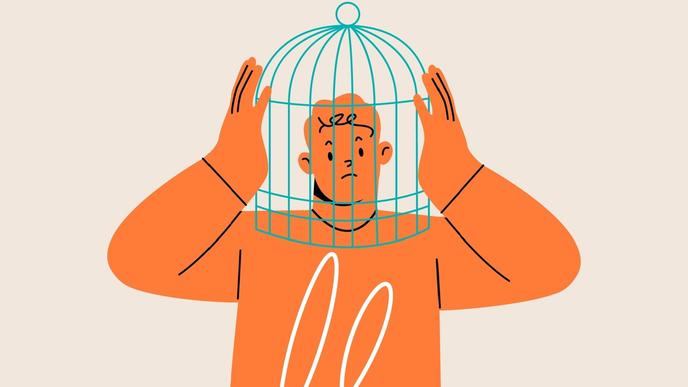
Confirmation bias is one of the most insidious traps. It activates when a decision has already been made internally, but the person continues collecting arguments to convince themselves - and others - that the choice was rational. On the surface, you're "analyzing." Internally, you're already defending a position.
In this state, information is filtered automatically. Supporting data feels solid and "right," while contradicting information seems insignificant, strange, or "not really about us." A typical marker is irritation toward alternative viewpoints - not because they're bad, but because they threaten the brain's sense of control. This is when the search for "convenient experts" and "the right people" begins: those who will confirm you're right, rather than those who will point out where you're taking a risk.
How to avoid it?
Build doubt into the process and make it mandatory - like a seatbelt.
-
Appoint a "devil's advocate": a person or stage whose job is not to support the decision, but to try to break it. This isn't about toxicity - it's about quality.
-
Create a list of 3-5 reasons why the decision could fail, and force yourself to write them without self-soothing.
-
Make it a rule: before final approval, you must find at least one solid fact that speaks against your preferred scenario. If you didn't find one, you didn't look hard enough.
-
A leadership trick: ask not "Do you agree?" but "What could go wrong here?" The first question gathers approval; the second gathers reality.
3. Emotional Inertia
Emotional inertia occurs when a decision is made not because it's the best one, but because the person is emotionally exhausted. Fatigue, irritation, anxiety, deadline pressure, endless debates - all of this creates a strong desire to "put a period at the end of the sentence" and close the issue at any cost.
The most recognizable symptom is that you want to decide for relief, not for results. Thoughts like "let's just decide and be done with it," "let's wrap this up," "we'll figure it out later" start looping in your head. You begin bargaining with quality: "not perfect, but fast." In a leadership role, this trap is twice as dangerous: you don't just make a choice yourself - you infect the entire team with this state. And then the whole system starts making decisions out of exhaustion.
How to avoid it?
Stabilize the state first, decide second.
-
If possible, take a pause of at least 12-24 hours. Yes, even if you want to decide "right now." Especially if you want to decide "right now."
-
Write the arguments down: what we're choosing, why, and what risks we're accepting. Paper is the best antidote to emotions.
-
Ask yourself a simple question: Am I thinking about the outcome - or just trying to stop feeling pressure? If it's the latter, the decision waits.
-
If the decision is truly urgent, use a short "brake": 15 minutes of silence, no messages or calls. It's banal - but often enough for the brain to reset.
4. The Sunk Cost Fallacy
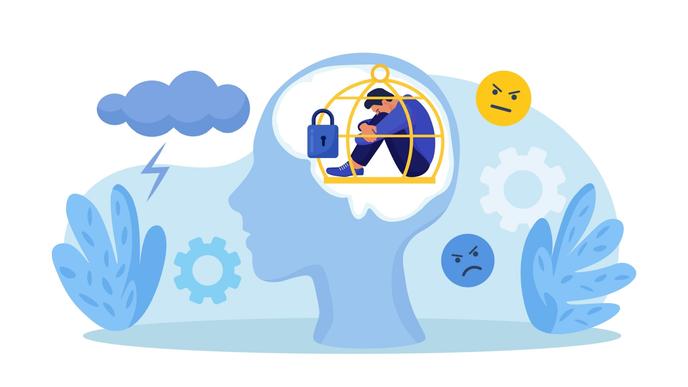
This trap forces people to continue clearly ineffective decisions simply because too much has already been invested: money, time, effort, reputation. Past investments begin to psychologically outweigh future consequences. And the more that's been invested, the stronger the feeling that "we can't stop now."
The marker here is simple: the argument sounds not like "this still makes sense," but like "we can't afford to stop." Leaders often replace the question "what's the best next step?" with "how do we avoid looking like losers?" And so a project turns into a suitcase without a handle - dragged for years because it was once expensive.
How to avoid it?
Turn the past into the past - and stop paying for it with the future.
-
Mentally reset the history: If we were starting today with no background at all, would we choose this path again?
-
Calculate the "cost of continuation": how much more time, money, and attention this will take away from other priorities. Often, the biggest loss turns out not to be money, but focus.
-
Set "exit points": define in advance the criteria under which the project is shut down or redirected. Without criteria, the brain will always find a reason to say "just a bit more."
-
And an important leadership reminder: stopping an unsuccessful project is not failure. It's resource management.
5. The Urgency Trap
The urgency trap appears when a decision feels immediate not because it truly is, but because of internal anxiety. Urgency becomes a way to escape uncertainty and restore a sense of control. "If we decide now, it'll feel better." Yes - it will. But that doesn't mean it will be better.
In this state, any pause feels risky, and time pressure becomes an argument in itself. Phrases like "if not now, we'll miss it" or "later will be too late" appear. Often, the real deadline is either vague or entirely artificial (created by people - and therefore changeable). And yes, leaders are especially vulnerable: they're often taught that good leadership equals speed. In reality, good leadership equals the quality of choice.
How to avoid it?
Separate urgency from importance and remove the drama.
-
Ask yourself: What exactly changes if this decision is made tomorrow instead of today? Not "in general," but point by point.
-
If "today" is imposed by someone else, clarify who set the deadline and why. Sometimes one simple "why is this urgent?" is enough to dissolve the urgency.
-
Break the decision into parts: what can be done now (data collection, preparation), and what actually requires a pause (choosing direction).
-
And a rule for complex decisions: if you're being rushed, you have the right to slow down. This isn't weakness - it's quality control.
6. Social Pressure and Status

Sometimes decisions are made not for results, but for image. The desire to look like a confident leader, to never doubt, to "hold the line" quietly takes over the choice. This is especially visible when there's an audience: a board of directors, partners, a team, investors.
The marker of this trap is that you start thinking about how it will look before thinking about what it will actually do. You avoid admitting doubt because "a leader must be confident." But confidence without verification is just a pose. And decisions made for the sake of a pose usually cost the company dearly.
How to avoid it?
Take the decision off the stage and put it back on the table.
-
Mentally remove the observers. Imagine the decision is being made in complete silence, with no reputational consequences. Would you choose the same thing?
-
Separate what's good for the business from what's good for your image. These are two different KPIs.
-
Normalize doubt: tell your team that doubt is part of the process, not a sign of weakness. A leader who can doubt out loud reduces toxic pressure for everyone.
-
And a practical move: instead of "I've decided," say "we're choosing." This shifts the decision from personal defense to shared responsibility.
Lectera’s Online Courses by topic
7. The Fear of Irreversibility
Some decisions feel terrifying because they seem final. In response, endless analysis kicks in: more data, more discussions, more delays. This creates an illusion of control but actually deepens stagnation. Time passes, competitors move forward, the team grows anxious - and you're still "clarifying inputs."
A recognizable symptom is revisiting the same questions again and again without gaining clarity. Instead of a decision, you get infinite preparation for a decision. Sometimes this disguises itself as "perfectionism," but more often it's simply fear of making a visible mistake.
How to avoid it? Make the decision not "forever," but "on a test basis."
-
Look for a reversible step: a pilot, trial period, MVP, or experiment with a small group.
-
Set a deadline not for the "perfect decision," but for the first step. Reality starts with action, not reflection.
-
Define review criteria in advance: when and by what indicators you'll decide whether to continue or change course.
-
Remember: most decisions can be adjusted. Lost time cannot.
Good managerial decisions are not about never making mistakes or having flawless intuition. They are about the ability to notice how you make decisions - and to stop autopilot in time. In uncertainty, the winners aren't the fastest or the loudest. They're the ones who can keep a cool head when there's noise inside.
That's why the most mature leadership skill today is metacognition - the ability to think about how you think. And if you've read this article to the end, you're already doing better than most.
Share this with your friends via:
Latest News

Fall 2026 promises to be an eventful season for education worldwide.

Tickets for WE Convention 2026 are now available - with 25% off for EARLY BIRDS!

The private school Alpha School, which has opened campuses from New York to California, uses AI bots to teach children academic subjects for just two hours a day. The school has no traditional teachers, no homework, and tuition reaches $65,000 per year.

UK Prime Minister Keir Starmer has announced a major public-private partnership in the field of artificial intelligence. Google, Microsoft, Amazon and NVIDIA, together with the government, are launching an AI skills training programme for 7.5 million British workers.

International educational programmes provider Study Group has announced a change of ownership. The company has been acquired by Arete Education – an investment structure in the higher education sector created by Global University Systems (GUS) and US private investment firm Brightstar Capital Partners.
