









 Which American 2000s TV Series Are You?
 The Perpetual Student Syndrome: When Self-Development Becomes a New Form of Procrastination
 Test: Who Were You in a Past Life?
 Your Mythological Totem: Take the Test and Find Out Which Ancient Creature Protects You?
 Adulthood Test: Find Out How Old You Really Are
 Empathy Check. How Well Developed Is Your Emotional Intelligence?

 English
 Русский
 Deutsch
 Español
How Not to Lose Focus When Learning Everything at Once: The Art of Selective Development
Modern people are constantly learning. Courses, podcasts, lectures, newsletters, webinars, books — the world offers knowledge at every step.
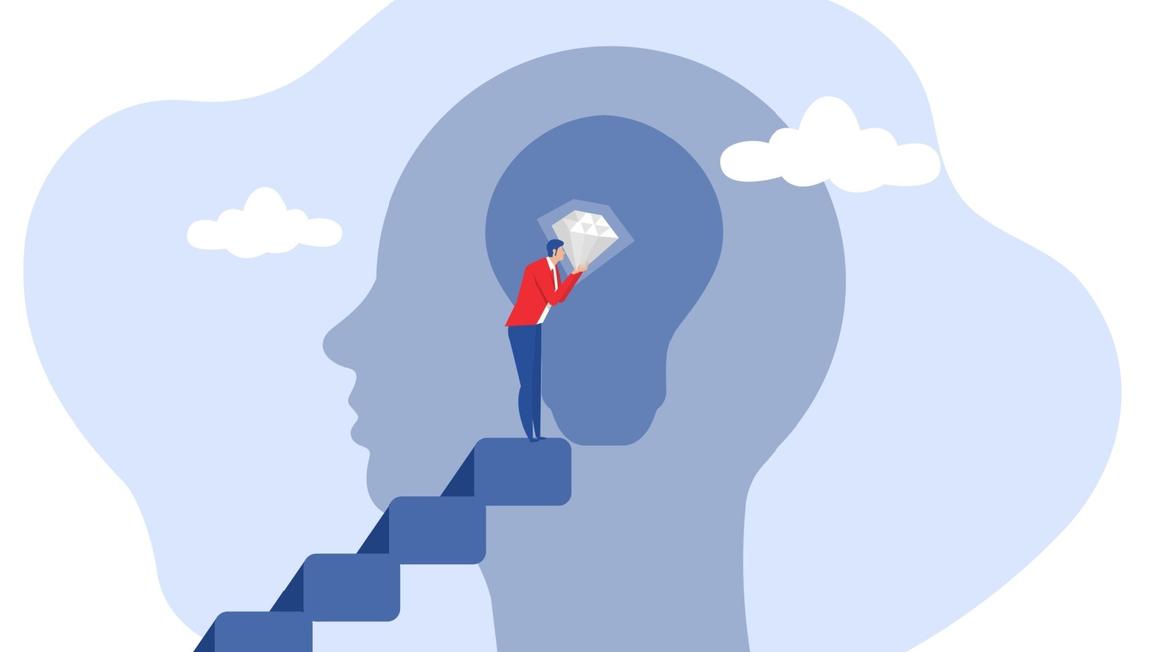
The educational environment increasingly resembles a "buffet," where one wants to try everything at once. But therein lies the paradox: the more opportunities for development we have, the harder it becomes to stay on course.
It often happens that you enroll in a new course hoping to gain clarity, but the opposite occurs - everything in your head becomes even more tangled. There are many ideas, yet they refuse to form a coherent system. Learning stops being inspiring and turns into another source of overload - as if an extra demanding task was added to your daily workload. However, learning doesn't have to be a marathon of endless courses and checklists. It can - and should - be conscious, thoughtful, and strategic. What matters is not the number of materials completed, but the ability to choose and apply what truly makes sense. Below, we'll explore how to maintain focus amid the flood of possibilities and build a personal path of growth that works for you - not against you.
Why We Get Tired of Development and What It Leads To
Our brain has limited cognitive resources - it cannot process an endless flow of new information. According to the Cognitive Load Theory, short-term memory can hold only a small number of elements at once. When this limit is exceeded, learning efficiency drops: attention scatters, and information fails to consolidate in long-term memory.
If you try to listen to a lecture, read an article, reply to messages, and juggle work tasks simultaneously, your brain is forced into constant switching. Such "multitasking learning" causes cognitive overload, which undermines not only concentration but also comprehension and retention.
The modern environment amplifies this effect - constant notifications, news feeds, endless recommendations, and courses. All of this creates information noise, which scientists have been writing about for decades. Research shows that when faced with continuous streams of stimuli, the brain spends more energy filtering the unnecessary than absorbing the useful. As a result, decision quality declines, memory worsens, and stress levels rise.
Prolonged cognitive overload leads to digital fatigue. We start to feel apathy toward learning, irritability, difficulty concentrating, and a growing desire to "disconnect from information." Sometimes this develops into burnout or a complete refusal to keep learning - simply because our internal resources are depleted.
At the same time, moderate and deliberate mental activity has been proven to support cognitive functions, improve brain plasticity, and help maintain clarity of thought longer. Neuropsychological research confirms: the key to development lies not in the number of stimuli but in rhythm and consistency. Learning becomes a resource only when it stops being an endless race.
How to Learn and Grow with Intention

Selective learning is not about rejecting curiosity but about learning to manage it. It is a strategy that allows you to grow deeply and meaningfully - to keep the joy of learning without driving yourself to exhaustion. Its essence lies not in limiting opportunities but in setting priorities: choosing not the amount of knowledge but its relevance. In an age of informational abundance, this skill becomes one of the most important professional competencies - a form of intellectual hygiene and respect for one's own resources.
Define Your Goals and Context
Start with a simple but honest question: "Why do I need this now?" Not in general, not "for the future," but right now - in the context of your current tasks, projects, or interests. Maybe you want to develop a specific skill, better understand a process you work with, or finally master a topic you've long avoided. When you articulate a goal clearly, your brain finds it easier to allocate attention and filter out distractions. It stops "collecting everything" and begins to channel energy in one focused direction.
When learning is connected to reality, it gains weight and meaning: knowledge immediately finds application, becomes part of experience, and turns into practice. This creates intrinsic motivation - you feel not abstract progress, but tangible benefit. Even a short course or a single article can become an important link in your personal development system. A clear purpose helps not only to choose what to study but also to know when to stop - because sometimes a pause is more effective than another start.
Set Priorities and Limit the Number of Focus Areas
We cannot be experts in everything - and that's not a flaw but a natural property of the human mind. It's better to choose one or two areas in which you want to go deeper, rather than a dozen where you'll remain on the surface. This kind of focus allows you to accumulate not fragmented facts but structured knowledge that gradually evolves into real competence. That's the foundation of professional maturity - the ability to build a solid base rather than a scattered collection of information.
Think of learning as breathing: the phase of concentration is the inhale, and the phase of reflection and integration is the exhale. Without exhalation, inhalation is impossible. You can't absorb new information endlessly without processing it. When you take a pause, your brain doesn't "rest" passively - it structures, links, and integrates the material. These periods of rest and reflection are essential for long-term memory consolidation. That's why people who give themselves time to "digest" information ultimately learn faster and retain knowledge longer.
Learn Less, But Deeper
Instead of enrolling in five courses at once, take one - but study it thoroughly: make notes, revisit key ideas, discuss them with others. Depth of learning is directly proportional to the time you allow yourself for comprehension and application. Superficial studying creates an illusion of knowledge, but without practice, it quickly fades. Thoughtful learning, on the other hand, forms genuine neural connections that solidify material in long-term memory.
Research in neuroplasticity shows that new knowledge becomes stable only after repeated exposure and practical use (which is why most learning programs, including Lectera's, focus on application). Each time you revisit a topic, the brain strengthens those neural pathways - much like muscles during training. Repetition, practice, and reflection are not boring routines; they are the foundation of effective learning. When you treat knowledge not as a checklist but as a living material to work with, it truly begins to work for you.
Lectera’s Online Courses by topic
Integrate Learning Into Life - Don't Make It Your Whole Life
Education should be a part of life, not its replacement. When learning pushes out rest, creativity, or quiet time, it loses its meaning. Knowledge exists only when applied - in projects, conversations, or personal decisions. Living through material turns information into experience, and that's an entirely different level of growth.
After every course or book, try to solidify what you've learned through action: discuss the idea with a colleague, write a note, or apply the approach at work. Small, consistent steps turn learning from theory into practice, from accumulation into motion. Most importantly, education stops being a separate zone of life - it becomes a natural process of growth, woven into daily experience. This way, you avoid overload and maintain a sense of balance between learning and living.
When you study with intention, the results become visible on every level.
First, the quality of understanding increases - you grasp material more deeply, connect topics, and recall and apply knowledge more easily. It becomes part of your thinking, not just stored information. New skills also find immediate use: you don't just listen; you experiment, test, and adapt them to your goals. Knowledge turns into a working tool. Finally, you preserve emotional stability. Purposeful learning doesn't drain - it nourishes. It leaves space for rest, lowers anxiety, and sustains a sense of progress without pressure.
Selective development is the art of attention. It doesn't restrict - it liberates. In a world of endless information, the ability to focus becomes the new form of intelligence. You don't need to know everything; you need to understand why you know what you know. Then learning stops being a race and becomes a natural movement forward - with curiosity, enjoyment, and without burnout.
Share this with your friends via:
Latest News

Fall 2026 promises to be an eventful season for education worldwide.

Tickets for WE Convention 2026 are now available - with 25% off for EARLY BIRDS!

The private school Alpha School, which has opened campuses from New York to California, uses AI bots to teach children academic subjects for just two hours a day. The school has no traditional teachers, no homework, and tuition reaches $65,000 per year.

UK Prime Minister Keir Starmer has announced a major public-private partnership in the field of artificial intelligence. Google, Microsoft, Amazon and NVIDIA, together with the government, are launching an AI skills training programme for 7.5 million British workers.

International educational programmes provider Study Group has announced a change of ownership. The company has been acquired by Arete Education – an investment structure in the higher education sector created by Global University Systems (GUS) and US private investment firm Brightstar Capital Partners.
