













 Which American 2000s TV Series Are You?
 The Perpetual Student Syndrome: When Self-Development Becomes a New Form of Procrastination
 Test: Who Were You in a Past Life?
 Your Mythological Totem: Take the Test and Find Out Which Ancient Creature Protects You?
 Adulthood Test: Find Out How Old You Really Are
 Empathy Check. How Well Developed Is Your Emotional Intelligence?

 English
 Русский
 Deutsch
 Español
Top 4 Skills That Are Best Developed in Winter
Winter is not just a time of year when everything seems to freeze. In fact, it is precisely the slowing down and the external “reset” of nature that create unique conditions for inner growth.

When daylight hours become shorter and social activity fades, our brain switches into a special mode: concentration strengthens, emotional background calms down, and the number of distractions decreases. This is the period when the outside world quite literally nudges us to restructure, reboot our thoughts, and choose the direction for future development.
During these months, we can lay the foundation for the entire year ahead-without unnecessary rush, pressure, or the need to "keep up with everything." That is why the skills developed in winter often become the most stable ones. They form deeply, calmly, and thoughtfully, and due to seasonal cyclical patterns, they easily turn into habits. Let's explore which abilities take root especially well during the cold months, and why winter is the ideal time for strategic accumulation of strength, resources, and new possibilities.
Skill №1. Concentration and Intellectual Discipline
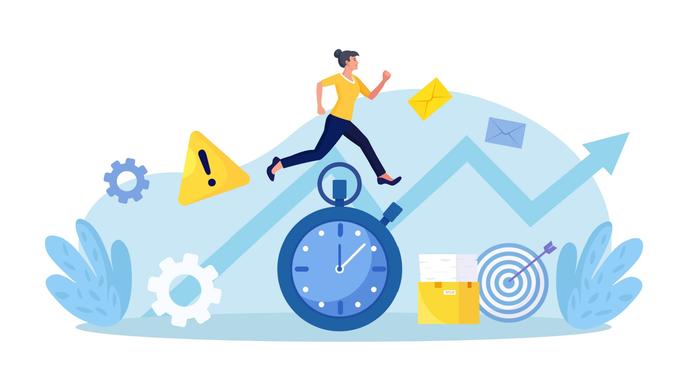
In winter, all natural processes around us slow down: fewer social events, shorter daylight hours, a calmer city rhythm. And our brain adjusts to this pace-it becomes easier for it to switch into a quiet mode, reduce the intensity of task-switching, and work more deeply. This is why developing concentration in winter is easier than during any other season: this overall deceleration helps us slow down internally, narrow our focus, and finally get rid of the scattered attention that follows us most of the year.
During these months, a unique environment for intellectual discipline takes shape: fewer external irritants, fewer chaotic tasks, and therefore a greater chance to train mono-focus work. If you use this time intentionally, winter can become a "season of intellectual breakthrough," when you master complex topics, process large volumes of information, or strengthen your ability to dive deeply into a task.
To train the ability to concentrate deeply, try:
- The One-Chair Method
You choose a specific task, sit down, and promise yourself not to get up until at least one part of it is completed. Even if you want to walk around, change position, or distract yourself-stay in the flow. Your brain quickly learns: if you're sitting at the desk, it means you are working. This method builds discipline, helps overcome internal resistance, and creates the right trigger: "I sit down - I dive in."
- Concentration Interval Technique
This continues the concept of "deep work," but in a softer version. You choose a 30-45-minute slot, turn off everything that may distract you, and work without interruption. Then take a short break. These intervals are especially useful in winter: they don't overwhelm you but provide noticeable progress on complex tasks.
- Micro-rituals of Winter Mindfulness
After an intense intellectual block, it's very helpful to "switch your state of consciousness"-to calm down, consolidate the result, and give your brain a signal that the work is done. Winter makes it easy to develop such rituals: hot tea, a candle, five minutes of looking out the window, reading one page of a quiet book. This is not just rest-it is mindfulness training, the ability to notice the moment, listen to yourself, and properly finish intellectual cycles. Over time, such rituals create a healthy work rhythm, prevent burnout, and become an internal resource.
- The "One Intellectual Focus per Day" Practice
There is a rule: if every winter day you take at least one action toward a big, complex goal-by March you will end up in a completely different place. For example, read 10 pages of a serious book, study one concept, or watch one lecture. Small steps in winter turn into a powerful cumulative effect.
Skill №2. Strategic Thinking and Long-Term Planning

Most people plan impulsively: when inspiration strikes, when energy is high, when "you suddenly want something." But real strategic thinking is the ability to see the big picture years ahead, calculate resources, anticipate consequences, and build development roadmaps. Winter is perfect for developing this skill: the world slows down, and we begin to see our goals more clearly. And besides, you are probably one of those people who likes to reflect on results, right? This means it will be easier to outline future directions when the previous cycle has just been reviewed and understood.
Name three areas of life that are your priorities. And three that you maintain at a "baseline level." Write long-term guidelines for each. In winter, such reflections become especially honest and precise-there is a depth that is often lost in other seasons.
Enhance this with the practice of "winter forecasting": imagine you are looking at your life the way an analyst looks at a company. What risks might arise in the coming months? What resources do you have now, and which will you need later? Try creating several development scenarios-from optimistic to realistic-and note which steps would be crucial in each. This method helps not only to dream, but to plan with real-world conditions in mind.
It is also useful to create a "winter strategic sheet"-one page where you list three main directions of the year, three key skills you want to develop, and three projects you need to complete. Add a mini-roadmap for each: what needs to be done first, what will be the intermediate steps, and which people or resources may be needed. Such a sheet becomes an anchor for the entire year, and winter becomes the ideal starting point for systematic, calm, and confident work with your goals.
Skill №3. Emotional Stability
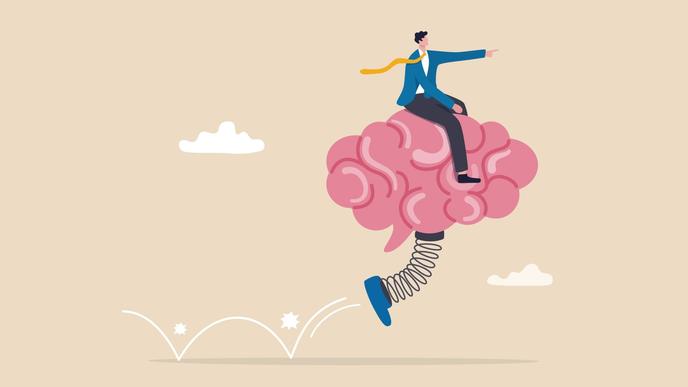
Cold weather decreases external emotional load: fewer interactions, fewer irritants, less informational noise. This creates ideal conditions for strengthening psychological resilience. Emotional stability is the ability to maintain your inner balance regardless of external circumstances. And winter provides a unique environment for training this: calm, steady, and safe. The following methods will help you:
- Keeping an "emotional journal"
This is a simple but very effective way to understand your reactions instead of dissolving in them. Each day, note what triggered a strong emotion-positive or negative-what you felt in your body and in your thoughts. Over time, you begin to notice repeating triggers and patterns that previously slipped by. Such a journal helps not only to understand yourself better but also to gradually reduce emotional turbulence.
- Short daily silence practices (5-7 minutes)
In winter, when everything around is already quiet, these practices feel especially natural. You simply sit down, put away your phone, close your eyes, and allow your nervous system to "reboot." This can be conscious breathing, looking out the window, or simply being present in the moment. These mini-pauses reduce anxiety, restore clarity, and improve your ability to respond calmly.
- Working with mental "freeze-frames"
When you start to feel internal tension or irritation, try to mentally press pause: stop, name the emotion, and describe what exactly caused it. This is a powerful technique because it shifts you from "reacting" to "observing." When you verbalize or write down your emotions, they stop controlling you automatically. Regular use of freeze-frames reduces impulsive reactions and makes you more emotionally resilient.
- Developing new reactions
Choose one situation that typically knocks you off balance: perhaps a sharp comment from a colleague, slow answers from people, or everyday delays. Winter makes it easier to train an alternative style of responding-more calm, conscious, and gentle. Each time the familiar irritating moment occurs, try to respond one degree calmer than usual. Over time, the new model replaces the old one, and emotional stability becomes automatic.
Lectera’s Online Courses by topic
Skill №4. Ecological Home Management
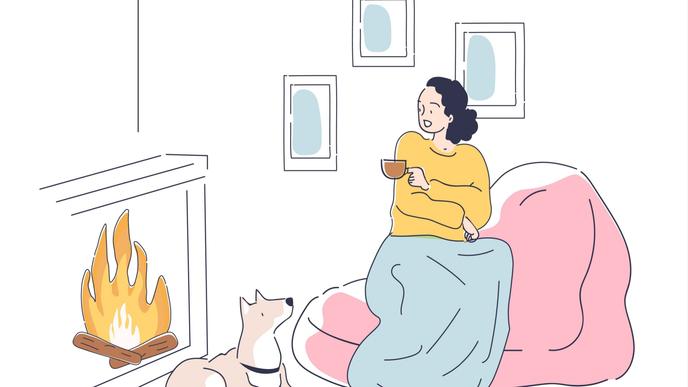
Ecological home management is not about perfect order or endless cleaning. It's about organizing household processes in a way that doesn't drain your energy, doesn't force you, and doesn't make you complete chores through willpower alone. Everything happens softly, naturally, and integrates into your routine so organically that you almost stop noticing it. Essentially, ecological home management is when the home does not "take away" your strength but supports you and helps you live in a calm, sustainable rhythm. Especially in winter, when we spend a lot of time indoors, the internal environment becomes a true foundation of psychological comfort.
It is easier to rebuild household habits in winter because the natural rhythm slows down and the load decreases. This allows you to shift some attention to your home-not as a "general cleaning," but as a process of steady soft improvement of your environment. Ecological home management is built on the idea of small actions that don't create pressure: instead of "I must clean the entire apartment," you think, "I'll tidy up this one small area." Instead of "I must cook daily," you think, "I'll prepare something in advance so I save energy tomorrow." This philosophy avoids pressure and punishment, making the home a place of restoration rather than a list of obligations.
- Micro-steps to maintain the environment
One of the key principles of ecological housekeeping is micro-steps. These are small actions that take 1-5 minutes but create a cumulative effect. For example: wipe a surface while the kettle boils; put away clothes while listening to a voice message; take the trash out on your way to buy bread. These micro-actions are barely noticeable, but they create a sense of order without overload. In winter, this becomes especially important: energy levels drop, large tasks feel heavier, but micro-steps give you a feeling of control and inner stability.
- Creating a comfort zone
This is when your home is arranged so it is easier to work, rest, and carry out tasks. For example, you might designate one small area that is always clean and pleasant-a desk, a windowsill, or a favorite corner. When your home contains at least one "perfect space," the mind naturally begins striving for similar order in other zones. In winter, with short daylight hours, it helps to add visually warming elements: soft light, textile textures, candles, calm colors. This is not about aesthetics as decoration-it's about creating an environment that reduces stress and increases your internal resource.
- Self-care through space
Finally, ecological home management is not about following "correct rules." If you are tired, sometimes it is better to lie down and give yourself 20 minutes of rest than force yourself to wash the floor. If you're cold, warming the home, making a hot drink, turning on warm light-this is also part of housekeeping, but in a caring, not forceful form. In winter, you must guard your energy especially carefully, and the ecological approach helps maintain order not in spite of your well-being, but thanks to attention to it. Order then comes not from tension but from calmness-and becomes a natural part of life.
Winter is not a "dead season" at all. It is a season of adjustment, accumulation, and inner engineering. Right now, you can lay the skills that will shape your entire year: the ability to concentrate, restore energy, create an aesthetic space around yourself, support intellectual growth, build high-quality relationships, and understand your true priorities.
Share this with your friends via:
Latest News

Fall 2026 promises to be an eventful season for education worldwide.

Tickets for WE Convention 2026 are now available - with 25% off for EARLY BIRDS!

The private school Alpha School, which has opened campuses from New York to California, uses AI bots to teach children academic subjects for just two hours a day. The school has no traditional teachers, no homework, and tuition reaches $65,000 per year.

UK Prime Minister Keir Starmer has announced a major public-private partnership in the field of artificial intelligence. Google, Microsoft, Amazon and NVIDIA, together with the government, are launching an AI skills training programme for 7.5 million British workers.

International educational programmes provider Study Group has announced a change of ownership. The company has been acquired by Arete Education – an investment structure in the higher education sector created by Global University Systems (GUS) and US private investment firm Brightstar Capital Partners.
