








 Which American 2000s TV Series Are You?
 The Perpetual Student Syndrome: When Self-Development Becomes a New Form of Procrastination
 Test: Who Were You in a Past Life?
 Your Mythological Totem: Take the Test and Find Out Which Ancient Creature Protects You?
 Adulthood Test: Find Out How Old You Really Are
 Empathy Check. How Well Developed Is Your Emotional Intelligence?

 English
 Русский
 Deutsch
 Español
Freelancing, Remote Work, Office Jobs, or Consulting: How to Choose the Work Format That’s Right for You
Just ten years ago, the question “Where do you work?” was little more than a formality. The answer was obvious — in an office. At most, an office with flexible hours or “Well, I run my own business.” Today, that question has become far more complex and interesting. There are more work formats than ever before, and choosing between them is no longer a minor detail or a checkbox on a form — it’s a full-fledged career decision.

According to labor market studies from 2024-2025, over 60% of professionals worldwide work outside the office at least part-time, and about one-third plan to change their work format within the next couple of years. This question is especially relevant for professionals aged 25-40 - those who have already tried the "classic" model and realized it doesn't work for everyone.
What's more important is that today a work format affects not only income, but also stress levels, sense of freedom, and even self-esteem. The same format can make one person calm and productive, and another chronically exhausted - the kind of tired that comes with an eye twitch. That's why it's worth taking a closer look at the options available today and understanding who they're really suited for.
Office Work: Stability, Structure, and Social Capital
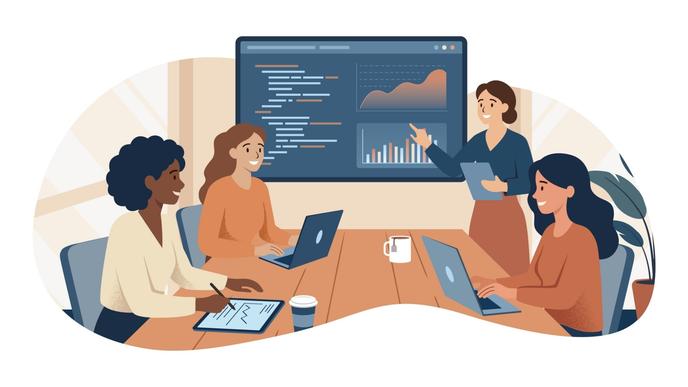
The office remains the most familiar and understandable format. It's how our parents worked - and their parents before them. Today, it's most often chosen by early-career professionals and those who prefer large corporations with well-established processes, including government institutions. Research shows that the office model is especially common in fields where work heavily depends on continuous employee training or close team coordination.
For many people, the office is more than just a workplace - it's a social environment. It's easier to "read the rules of the game," build a reputation, and feel like part of a system. For example, for junior specialists, the office often accelerates growth: tasks are discussed face-to-face, feedback comes faster, and there are more chances to stand out and be noticed.
Pros of office work:
- a structured day and clear routine;
- live communication and fast information exchange;
- more opportunities for internal career growth;
- development of social and management skills.
At the same time, office work almost always means commuting - often complicated by traffic and confusing routes. Add a fixed schedule and less personal autonomy, plus noise, constant distractions, and the need to "stay switched on" even on low-energy days, and it becomes clear why offices can become draining over time.
Who office work is best for:
Those who value stability, a sense of belonging, and clear boundaries. Often ideal at the beginning of a career or during periods when a clear growth trajectory is needed.
Remote Work: Freedom That Requires Maturity

Remote work is no longer exotic. According to surveys, it's most often chosen by mid-level and senior specialists, as well as parents and people who prioritize work-life balance. At the same time, companies increasingly reserve remote roles for employees who have already proven their effectiveness.
Remote work looks especially appealing compared to office life. In practice, however, it demands a high level of self-organization. There's no manager "standing behind you" and no clear end to the workday - everything depends on your ability to manage yourself.
Pros of remote work:
- flexible schedules and time savings;
- the ability to work from anywhere in the world;
- better focus and fewer unnecessary interactions;
- access to international markets and projects.
However, remote work often blurs the line between work and personal life. Many remote employees admit they work more than they did in the office simply because "the workday never really ends." Add feelings of isolation and a lack of live interaction, and it becomes clear why not everyone can sustain this format long-term. That's why transitioning to remote work isn't just about changing location - it requires a shift in mindset, rhythm, and communication style. For example, the Lectera course Transition to Remote Work Without Stress focuses on how to set boundaries, stay productive, and avoid burnout when the office disappears from your daily routine. It's especially useful for those switching formats for the first time or feeling that remote work has started to consume all their personal time.
Who remote work is best for:
People with experience, strong self-discipline, and the ability to set boundaries. Those who don't rely on external control and are comfortable working independently.
Freelancing and Project Work: Autonomy Without Guarantees
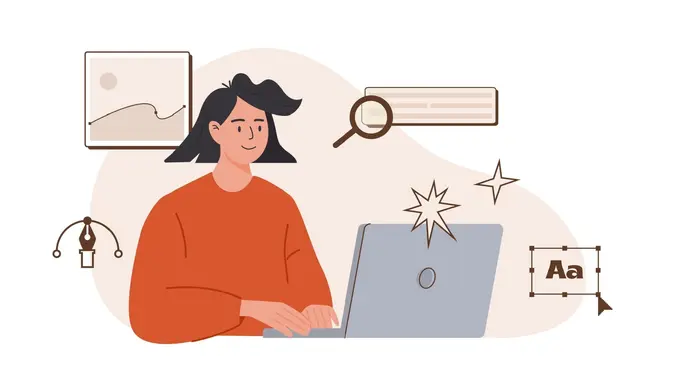
Freelancing and project-based work are formats for those who want maximum freedom. Studies show they're most often chosen by professionals with in-demand skills: developers, designers, marketers, analysts, and consultants. Many come to freelancing after several years in traditional employment.
Project-based logic means you don't work "from 9 to 6," but toward a specific result. A designer might take on a one-month project, a marketer - a product launch, an analyst - a research task. This creates a sense of movement and variety, but also requires constant involvement.
Pros of freelancing:
- control over schedule and workload;
- potentially higher income;
- rapid growth of expertise;
- freedom to choose clients and projects.
At the same time, freelancing is the most unstable format. Income can fluctuate, projects can end simultaneously, and finding new clients becomes a job in itself. Without a financial buffer and strong boundaries, freelancing can easily turn into a source of anxiety and burnout.
Who freelancing is best for:
Those who are comfortable with uncertainty, know how to sell their expertise, and are ready to take responsibility not only for their work, but also for their workload and income.
Consulting: A "Almost Your Own Business" Format

Consulting is often overlooked, even though it's one of the most interesting work formats. Typically, professionals move into consulting after 8-10 years of experience, when they've outgrown the role of executor. A consultant works with multiple companies at once, helping them solve problems at the level of strategy and decision-making.
In essence, consulting is a hybrid of expertise and entrepreneurship. You have a name, a reputation, a network of contacts, and a steady flow of requests. For example, a former head of marketing may consult startups, while an ex-HR director might help companies build hiring systems.
Pros of consulting:
- high hourly rates due to the value of experience;
- flexibility and freedom to choose clients;
- work at the level of meaning and strategy;
- rapid growth of influence and expertise.
However, this format requires a strong personal brand and emotional resilience. There's no guaranteed salary, and responsibility for results is often higher than in traditional employment. Consultants frequently face overload if they don't know how to say no or limit the number of projects. It's also crucial to communicate your expertise in a way that makes clients choose you. Many experienced professionals work "in the shadows" for years simply because they don't know how to package their experience. That's exactly what the Lectera course Personal Brand Basics. First Steps Towards Popularity Growth focuses on - helping experts position themselves, build an expert image, and turn experience and connections into a stable flow of requests.
Who consulting is best for:
Experienced professionals with a strong network and deep expertise who are ready to think like entrepreneurs and build their own professional ecosystem.
Lectera’s Online Courses by topic
So How Do You Choose the Right Format?
Before changing your work format, it's worth pausing and honestly answering a few questions:
- Do I need external structure, or can I manage on my own?
- How do I react to income instability?
- How important is live communication to me?
- What matters more right now: growth, money, balance, or security?
- Do I have a financial safety cushion?
Don't rush. Try different options and, if possible, discuss formats with your current or future employer - including gradual transitions or trial periods. In any case, a work format isn't about "what's right." It's about what fits your personality and life stage. The best choice is the one that supports you in the long run, not just the one that looks good from the outside.
Today, we have a rare privilege: work can adapt to the person. The key is choosing consciously.
Share this with your friends via:
Latest News

Fall 2026 promises to be an eventful season for education worldwide.

Tickets for WE Convention 2026 are now available - with 25% off for EARLY BIRDS!

The private school Alpha School, which has opened campuses from New York to California, uses AI bots to teach children academic subjects for just two hours a day. The school has no traditional teachers, no homework, and tuition reaches $65,000 per year.

UK Prime Minister Keir Starmer has announced a major public-private partnership in the field of artificial intelligence. Google, Microsoft, Amazon and NVIDIA, together with the government, are launching an AI skills training programme for 7.5 million British workers.

International educational programmes provider Study Group has announced a change of ownership. The company has been acquired by Arete Education – an investment structure in the higher education sector created by Global University Systems (GUS) and US private investment firm Brightstar Capital Partners.
