












 Which American 2000s TV Series Are You?
 The Perpetual Student Syndrome: When Self-Development Becomes a New Form of Procrastination
 Test: Who Were You in a Past Life?
 Your Mythological Totem: Take the Test and Find Out Which Ancient Creature Protects You?
 Adulthood Test: Find Out How Old You Really Are
 Empathy Check. How Well Developed Is Your Emotional Intelligence?

 English
 Русский
 Deutsch
 Español
The Age of Freelancing: Why More and More Specialists Are Choosing Project-Based Work
Today, freelancing is a full-fledged industry. And more importantly, it is practically a new form of entrepreneurship — without bank loans, office rent, or hiring employees.

Let's explore how the world of freelancing works, in which fields freelancers are already outpacing agencies, and where big business still wins.
The modern freelancer is an entrepreneur. Previously, it was believed that an entrepreneur was someone who owned a business with employees, an office, and share capital, while a freelancer was simply "self-employed." Today, those boundaries are blurring. The freelancer themselves:
-
finds clients and negotiates terms;
-
takes responsibility for results and bears risks;
-
manages their own time, income, and taxes;
-
builds a personal brand and reputation.
The only difference is in scale and the number of people on the team - freelancing is considered micro-business. And, by the way, in the US, 72% of workers already have an additional source of income. This is not just a "side hustle" - it is a new economic reality.
Moreover, according to FlexJobs, over 72 million professionals are working independently in the US right now, and by 2027, that number will reach 86 million. Why is this happening? The answer is simple: employment instability. In 2025 alone, more than 112,000 employees were laid off in the technology sector worldwide. People have realized: having one employer is risky. But having several projects and clients - that is a safety net.
The Most Popular Fields: Where Freelancers Rule the Roost Today
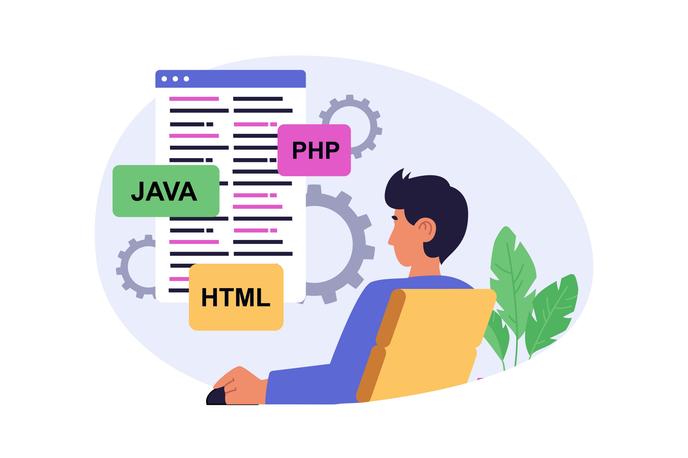
Not all sectors are equally good for freelancing. Here are the most suitable ones:
IT and Development - a Classic
Developers, testers, data analysts, DevOps engineers - all of these professions are not tied to a specific place or time. Many companies are more willing to hire such specialists for a project than to keep them on staff.
Interest in freelance development remains consistently high. Especially in the segments of artificial intelligence, machine learning, and cybersecurity - where demand exceeds supply.
Content and Creativity - an Unexpected Rise
Here, a real revolution has taken place. The paradox is that many expected that with the arrival of neural networks, copywriters would become unnecessary. But reality turned out to be the opposite. Companies need more content than ever. They need not just texts, but strategy, expertise, and a unique brand voice. AI helps with drafts and ideas, but the final product still requires a human.
Design and Visuals - Competition, but Demand Exists
Graphic designers, web designers, UI/UX specialists have traditionally been strong in freelancing. Tasks here are usually clearly defined, which is convenient for project work. But there is a nuance: competition is high. Those who either specialize very narrowly or build a personal brand survive.
SMM and Marketing - a Goldmine for Small Businesses
Small and medium-sized businesses cannot afford a full-fledged high-level marketer. But giving up a presence on social media is not an option either.
The result - demand for freelance SMM has grown by 367% over the past year. Tasks can vary - from managing accounts to setting up ad campaigns or conducting audits.
Education and Tutoring - an Unexpected Leader
And this is not just about the school curriculum. Those who teach narrow, in-demand skills earn the most: programming, analytics, design. Top tutors on specialized platforms can earn more than $50,000 per year.
Where Freelancers Haven't Yet Taken Root
But do not think that freelancers have displaced everyone. There are areas where clients still choose large structures. And there are good reasons for this. Agencies win where a system, strategy, and large-scale project implementation are needed. Moreover, the choice between a freelancer, an agency, and an in-house team depends on the specific goals of the business.
Large, Complex Projects
If a business needs a full marketing strategy, not just a couple of blog articles, it goes to an agency. An agency can cover all areas at once: strategy, content, SEO, design, analytics, ad setup. A freelancer is just one of those links.
Complex B2B Niches with Deep Expertise
If a company operates in medicine, finance, or complex B2B equipment, it is difficult for a freelancer to dive deep enough into the product. Such tasks often require an in-house editorial team or at least a dedicated contractor who has worked exclusively on this topic for years.
Guarantees and Stability
Here, too, everything is simple: if something happens to a freelancer, you are left alone with the problem. An agency will provide backup - they have established processes and always have someone who can replace you.
Strategic Outsourcing with KPIs and Responsibility
The outsourcing market is transforming: from "selling hands" to managing processes and results. Clients need guarantees, reporting, and KPI fulfillment. This is difficult for a freelancer to provide, but quite possible for an agency.
Therefore, the ideal scheme for many companies today is hybrid. The strategy and key projects go to an agency, while freelancers are brought in for specific tasks within that strategy.
How to Become a Freelancer and Not Regret It

If after reading all this you thought, "So why not?" - here is a brief plan.
First: Determine What You Are Selling
The most common fear among beginners is "I don't know what to take on." Start with what you already know how to do, alongside your main job. Freelancing does not have to be your only source of income from day one. Start small - a few orders a month, test hypotheses, see if there is demand.
It is important to clearly define your specialization. Not "I do everything related to texts," but "I write SEO articles for online stores" or "I create presentations for IT startups." This will make you stand out from the crowd.
Second: Build a Portfolio
Even if you have no commercial projects. Create 2-3 "spec" works on relevant topics. Offer a discount to an entrepreneur you know in exchange for a case study and a testimonial. Put everything in one place - on a simple website or in a PDF presentation.
Third: Set Up Client Search Channels
A beginner's mistake is to rely on a single freelance marketplace. You can do that, but there is a lot of competition and prices are low. It is better to combine:
-
Marketplaces - for starting out and getting your first reviews.
-
Professional communities (Telegram channels, LinkedIn, specialized forums) - the orders there are of higher quality.
-
Personal brand - maintain a blog about your expertise. Clients are looking not just for a "doer," but for a "problem solver."
-
Networking - tell your former colleagues. Surprisingly, most orders come through referrals.
Fourth: Be Prepared for Slow Periods
Freelancing has a downside: income is unstable. One month you are overwhelmed with orders, the next - unexpected silence. This is normal. Experts advise having a financial cushion for at least 3-6 months before transitioning to full-time freelancing.
What Skills a Freelancer Needs Today - and Will Need Tomorrow
The market has changed, and the requirements for those who work for themselves have become much stricter.
Hard Skills: The Foundation Without Which You Can't Go Anywhere
The most in-demand specializations today:
-
Development and IT - a classic. Demand for developers, testers, and DevOps remains consistently high. Specialists in AI/ML, cybersecurity, and cloud technologies are especially valued.
-
Digital marketing and SEO - every company wants online visibility. The ability to set up ads, optimize websites, and manage social media remains on top.
-
Design (UI/UX, graphics, web) - competition is high here, but good designers with a portfolio and an understanding of user experience are always needed.
-
Content and copywriting - contrary to fears, neural networks have not killed this field, but changed it. What is valued now is not just texts, but strategy and the ability to create a unique brand voice.
-
Data analytics - companies are drowning in data, and they need those who can extract meaning from it and make predictions.
-
Narrow expert niches - finance, law, medicine. There are fewer freelancers here, and rates are higher.
Meta-Skills: What Turns an Executor into a Partner
The future belongs to those who combine professional expertise with a broad outlook and "human" skills:
-
Strategic thinking and problem-solving ability
The client does not come for a "set of actions." They need a result. A freelancer who understands the business task and can offer a solution, rather than just doing as told, becomes indispensable. This is about the ability to see the big picture.
-
Communication and expectation management
Spoiler: conflicts and misunderstandings are the main project killers. The ability to articulate thoughts clearly in negotiations, ask the right questions, and warn about risks in time is worth its weight in gold. The client needs to be confident that the process is under control.
-
Adaptability and willingness to learn
Yesterday you were a great targeting specialist; today business demands integration with neural networks and automated funnels. The market changes quickly. Those who can "retrain" and expand their toolkit will have the advantage.
-
Self-discipline and time management
Discipline is becoming an increasingly important quality. The ability to plan, set priorities, and see things through to completion without external control - that is what distinguishes a professional from an amateur.
-
Financial literacy
A freelancer must know how to handle money, set aside funds for taxes, and create a safety cushion.
The Future of the Freelance Market: What the Numbers Say
The Market Is Growing Like Crazy
The volume of the freelance platform market in 2025 was estimated at around
8billion.Thisisseriousbusiness.Anditwillonlyincrease.Accordingtoforecasts,by2030−2031itcouldmorethandouble-to
8billion.Thisisseriousbusiness.Anditwillonlyincrease.Accordingtoforecasts,by2030−2031itcouldmorethandouble-to20 billion. Companies are increasingly hiring freelancers to solve specific tasks - it is convenient and often cheaper than keeping a full-time specialist.
Freelancing Is Becoming Mainstream
In the US, it is expected that by 2027, contingent workers (freelancers, contractors, temporary employees) will make up the majority of the workforce. Researchers are even introducing the term "new traditional employment."
New Centers of Attraction
It used to be thought that freelancing was the domain of city dwellers. Now everything is different, and smaller cities are becoming new hubs for remote work, and companies are increasingly looking at talent without being tied to geography.
Demand for AI and IT Specialists Will Continue to Grow
Everything here is logical - technology is evolving, and companies need people who can implement and maintain these solutions. Demand for AI, Data Science, and cybersecurity will only increase.
A Game-Changing Trend: How AI Is Transforming Freelancing
The hottest topic of the last two years is artificial intelligence. Fears that neural networks would leave freelancers without work were real, but reality has proven more complex and interesting.
The main takeaway for 2026: AI will not replace humans. But a human with AI will replace a human without AI.
-
AI Takes Over Routine
Artificial intelligence handles drafts, data analysis, idea generation, planning, report writing, and even simple coding perfectly. This frees up the freelancer's time for what truly matters - strategy, creativity, and client communication.
-
The Value of "Low-Level" Work Is Declining
Tasks like "write 100 product cards using a template" or "make five simple banners" are increasingly being automated. They are harder to make money from because competition among those offering such services using neural networks is huge, and prices are falling.
-
New, More Valuable Roles Are Emerging
The real freelancer is becoming an AI-augmented specialist. They do not just use a neural network; they know how to give it the right instructions (prompting).
Examples of new services that have already appeared on the market:
-
setting up AI funnels and chatbots for businesses;
-
deep prompting and generation of complex content (strategies, scenarios);
-
expertise and refinement of AI content - editing, fact-checking, adapting to a tone of voice;
-
automation of routine business processes using AI tools.
Accordingly, the pricing model is also changing. The client does not care how many hours you worked; they care about the result. Value lies in solving the problem, not in the hours spent at the keyboard. Hourly billing is gradually giving way to project-based billing or even result-based pricing.
Lectera’s Online Courses by topic
Honestly About the Downsides
Freelancing is freedom, and freedom has its price. You are responsible for taxes and paperwork yourself. You find clients yourself. Moreover, you risk burning out. When there are many orders and there is a fear that there will be none later, it is easy to start working 24/7. Without clear boundaries between work and home, overwork becomes the norm. And that is a direct path to burnout.
Freelancing has become a conscious choice for millions of professionals around the world. By choosing this path, you gain freedom and the opportunity to earn more. But you pay for it with stability and the fact that all issues - from finding a client to paying taxes - fall on you.
Large companies still prefer agencies for strategic, long-term projects with high risks. But for creative, operational, and highly specialized tasks, freelancers often prove to be more effective - faster and more flexible.
So the question "Who are you - an employee, a freelancer, or an entrepreneur?" sounds different today: "How many sources of income do you have, and how much control do you have over your career?"
Share this with your friends via:
Latest News

Fall 2026 promises to be an eventful season for education worldwide.

Tickets for WE Convention 2026 are now available - with 25% off for EARLY BIRDS!

The private school Alpha School, which has opened campuses from New York to California, uses AI bots to teach children academic subjects for just two hours a day. The school has no traditional teachers, no homework, and tuition reaches $65,000 per year.

UK Prime Minister Keir Starmer has announced a major public-private partnership in the field of artificial intelligence. Google, Microsoft, Amazon and NVIDIA, together with the government, are launching an AI skills training programme for 7.5 million British workers.

International educational programmes provider Study Group has announced a change of ownership. The company has been acquired by Arete Education – an investment structure in the higher education sector created by Global University Systems (GUS) and US private investment firm Brightstar Capital Partners.
