








 High Tech High: Project-Based Learning with Public Presentations for a New Generation
 Which American 2000s TV Series Are You?
 The Perpetual Student Syndrome: When Self-Development Becomes a New Form of Procrastination
 Test: Who Were You in a Past Life?
 Your Mythological Totem: Take the Test and Find Out Which Ancient Creature Protects You?
 Adulthood Test: Find Out How Old You Really Are

 English
 Русский
High Tech High: Project-Based Learning with Public Presentations for a New Generation
One of the main complaints about school in the 21st century sounds like this: children study a lot, for a long time, and at the cost of all their nerve cells, but mostly things that in real life none of them...

One of the main complaints about school in the 21st century sounds like this: children study a lot, for a long time, and at the cost of all their nerve cells, but mostly things that in real life none of them will even remember, simply because they will never need them. So, there is still a huge gap between modern education and what the real labor market actually requires - so deep that only the Mariana Trench could compare to it. And no one has yet figured out how or with what to close it... But some have managed to build a bridge.
For example, the High Tech High methodology - or rather, "school" might be the more accurate word. It is often described as a project-based learning school, but that definition is still too narrow. In reality, it is more of a full-fledged educational philosophy. Here, learning is built around real-world tasks, interdisciplinary connections, public presentations, collaboration, internships, and work that matters not only to the teacher and the students themselves, but often to the world and to different communities as well. That is exactly why High Tech High is so often cited as an example when people talk about the innovative school of the 21st century.
The History and Advantages of High Tech High
High Tech High appeared in San Diego in 2000. It was founded by a coalition of educators and representatives of the civic and technological community who wanted to invent a new kind of public school: more modern, more practice-oriented, more connected to real life, and at the same time accessible not only to the "chosen few," but to all kinds of children. The first school was conceived as a small charter school for around 450 students, but over time the idea grew into a whole network. Today, High Tech High brings together 16 charter schools and teaches around 6,350 students.
Despite its name, High Tech High is not the kind of school where children were simply given more computers. Here, "high tech" describes a new way of thinking rather than a set of gadgets. The main thing this methodology aims for is to connect academic knowledge, real tasks, project work, collaboration, and preparation for a world where success depends not only on the amount of material studied, but also on the ability to analyze, create, communicate, work in teams, and learn throughout life.
Partly for this reason, the model quickly became visible far beyond San Diego. High Tech High launched its own Graduate School of Education, through which more than 5,000 teachers and school leaders from the United States and other countries pass every year to study the experience of this network. In other words, this is no longer just a single successful school, but an influential educational ecosystem that not only works on its own, but also teaches others how to rebuild school around more modern goals.
The Main Principles of the High Tech High Model
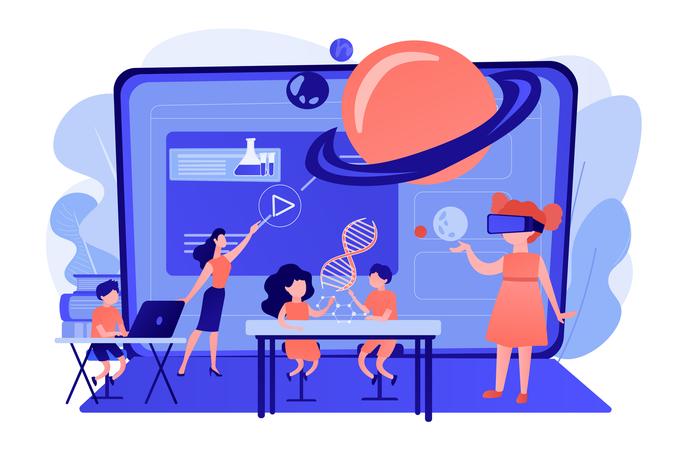
High Tech High has four main pillars, and these are exactly what make the system coherent rather than simply "a school with projects."
1. Equity
High Tech High's official website states directly that this is an "equity project" - a project built around educational equity. Schools in the network intentionally form a diverse and integrated student community and admit children through a neighborhood-based lottery rather than entrance exams. The logic here is very important: strong, modern, engaging education should not be a privilege reserved only for motivated, affluent, or "convenient" students.
2. Personalization
At High Tech High, they try to see the student not simply as part of a group, but as a separate person with interests, strengths, and their own pace. A student does not learn just to check a box, but through projects that allow them to explore topics that matter to them and reflect on their own development at the same time. Small classes, mentoring, trusting relationships with adults, and the general feeling that people at school actually know you - rather than merely count you on a list - all play an important role here.
3. Authentic Work
This is perhaps one of the strongest ideas in High Tech High. Projects here are designed so that student work is meaningful and goes beyond school formality. The model description emphasizes that school projects bring together "head and hand," involve inquiry across several disciplines, and lead to the creation of "meaningful and beautiful work." Students engage with the outside world through field research, community initiatives, consultations with experts, and internships. In other words, the product of their learning should not look like "just another presentation for the teacher"; it should have a real audience, a real purpose, and real value.
4. Collaborative Design
High Tech High very consistently shows that good education is not built according to the principle of "the administration came up with it - the teachers carried it out - the children adapted." Teachers here co-design courses and projects, participate in professional development and in making important decisions, and student voice is seen as part of the school's very design. In this sense, High Tech High is a constantly evolving environment where both adults and children remain participants in the shared learning process.
5. Deeper Learning
High Tech High is often associated with so-called "deeper learning." This is an approach in which it is important not simply to cover the material, but to learn how to use knowledge in new situations. Deeper learning research highlights six key competencies: mastery of academic content, critical thinking and complex problem-solving, collaboration, effective communication, learning how to learn, and academic mindset. This set is especially well suited to a world in which it is no longer enough simply to remember the correct answer - a person needs to know how to understand, act, and transfer knowledge into practice.
School profiles across the network emphasize that teachers design learning with academic standards and key skills relevant to the modern labor market in mind. The outcome of education is measured not only by whether a topic was "covered," but by how well the student learned to think, connect ideas, present results, receive feedback, and improve their work.
How High Tech High Works in Practice

The most interesting thing about High Tech High is, of course, how its beautiful philosophy turns into everyday school reality in practice. The core of learning happens through project work: students investigate a problem, work in groups, gather data, read, write, discuss, consult specialists, create prototypes, present publicly, revise their work after criticism, and only in this way gradually master academic content.
At the same time, projects at High Tech High are almost always interdisciplinary. For example, one and the same learning case may simultaneously include humanities-based analysis, scientific inquiry, technical design, written argumentation, and public presentation. Say students are doing a project on urban ecology: they have to study the state of the environment and collect data, but also understand the social causes of the problem, analyze urban infrastructure, visualize the results, write explanatory texts, and in the end present their conclusions to an audience. Because of this, students stop perceiving subjects as separate "boxes" that never intersect in real life. They begin to see a coherent whole: mathematics, writing, science, social context, and design can work together if the task is real.
High Tech High's effectiveness is also supported by what could be called the publicity of the result. On the school's social media, this appears as a full-fledged term: "Presentations of Learning," or POLs. These are end-of-semester presentations before an audience that may include experts from the community, and they are directly referred to as "our final exams." In such presentations, what is assessed is not only memory, but also the student's ability to show the process of their work, reflect on the experience, answer questions, and convincingly present the result.
On top of that, all 11th-grade students at High Tech High are required to complete an internship in an outside organization. It lasts four weeks in a full-immersion format, each student has a mentor in the workplace, and the outcome is a presentation of the completed work. And this is not symbolic "practice for the sake of checking a box," where students simply go to a certain place every morning and silently observe someone else's work for a set number of hours. It is a meaningful project that is supposed to bring real benefit to the host organization. Preparation for the internship and reflection afterward are also built into the learning process: students keep journals, create photo essays, conduct in-depth interviews with their mentors, and build portfolios.
Lectera’s Online Courses by topic
What Projects at High Tech High Look Like
For example, in the project Toys, 12th graders at High Tech High International developed and created toys for children with disabilities. First, they studied the therapeutic needs of a specific child, then discussed ideas with the family and therapists, after which they made prototypes and refined them based on feedback. In the process, students learned both the human side of working with a client and engineering tools: laser cutters, 3D printers, Arduino, and electronic circuits. The final stage was an exhibition-presentation where the child's family received the finished product. This is a good example of how engineering, empathy, design, communication, and real usefulness can all come together within one task.
Another strong example is the XONR8 project at High Tech High Chula Vista. Here, students studied the American criminal justice system while working together with the California Innocence Project, an organization that helps people who have been wrongfully convicted. They analyzed real case materials and prepared recommendations on whether the organization should take a case on. At the same time, they read Just Mercy by Bryan Stevenson and The New Jim Crow by Michelle Alexander - two important books about the problems of the American justice system, focused on judicial errors and court proceedings. A project like this shows that High Tech High takes students seriously, not merely as children "who can only be trusted with a mock-up," but as people capable of engaging in serious intellectual and civic work.
The High Tech High project database, which is freely available on the school's official website, covers a very wide range of topics and formats. Among the published examples are documentary films, work with veterans, migration research, game design, ecological and engineering tasks, and artistic and scientific exhibitions.
High Tech High is interesting not only as an effective alternative to traditional schooling, but also as a fully workable educational model that has already proven its viability. It shows that learning can be modern, practice-oriented, and academically serious at the same time, while avoiding rote memorization for the sake of rote memorization and formal assignments that are forgotten immediately after being checked. Here, knowledge does not exist separately from life but is immediately tested in action, and that is exactly why a student in such a system learns to think, ask questions, interact with others, and, most importantly, prepare for real life and for one day finding their place in it.
Share this with your friends via:
Latest News

Fall 2026 promises to be an eventful season for education worldwide.

Tickets for WE Convention 2026 are now available - with 25% off for EARLY BIRDS!

The private school Alpha School, which has opened campuses from New York to California, uses AI bots to teach children academic subjects for just two hours a day. The school has no traditional teachers, no homework, and tuition reaches $65,000 per year.

UK Prime Minister Keir Starmer has announced a major public-private partnership in the field of artificial intelligence. Google, Microsoft, Amazon and NVIDIA, together with the government, are launching an AI skills training programme for 7.5 million British workers.

International educational programmes provider Study Group has announced a change of ownership. The company has been acquired by Arete Education – an investment structure in the higher education sector created by Global University Systems (GUS) and US private investment firm Brightstar Capital Partners.
