






 In the Danger Zone: What to Do If AI Is Taking Your Job
 High Tech High: Project-Based Learning with Public Presentations for a New Generation
 Big Picture Learning: the dream school for any child and adult
 Which American 2000s TV Series Are You?
 Test: Who Were You in a Past Life?
 Your Mythological Totem: Take the Test and Find Out Which Ancient Creature Protects You?

 English
 Русский
In the Danger Zone: What to Do If AI Is Taking Your Job
Just a couple of years ago, artificial intelligence seemed like something curious but distant: interesting to try out, something you could poke at for a bit, so to speak, but still easy enough to ignore and forget about. Today, however, things are different.
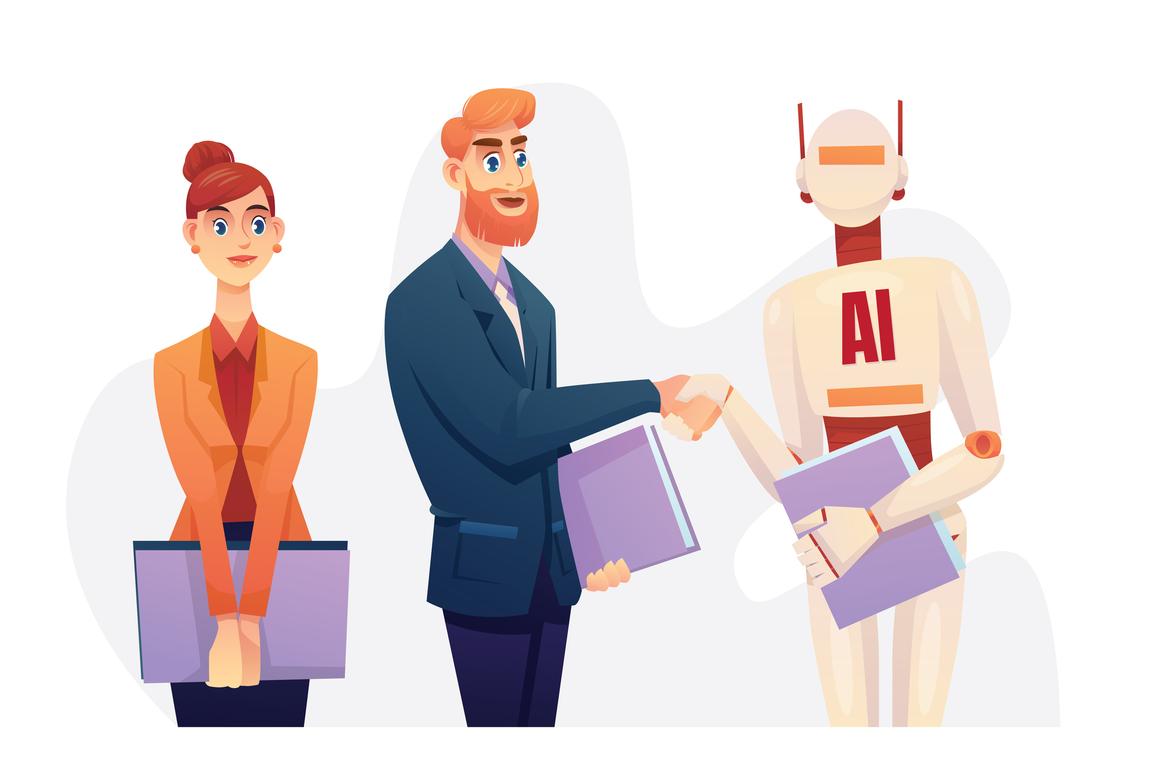
According to Gartner's forecast, global spending on AI will reach $2.52 trillion in 2026, which is 44% higher than just a year earlier. In other words, the pace at which this market is developing is simply enormous, and this has long since gone beyond the bounds of an ordinary economic experiment.
It is hardly surprising that, against this backdrop, more and more people shudder at the mere mention of AI. Admit it: you, too, have probably wondered at least once, "What if I end up without a job at all?" Neural networks are already writing emails, creating presentation drafts, translating texts, compiling analytics, helping with code, and replying to customers certainly faster than a human can. The anxiety here is understandable - but how justified is it really? After all, factories once displaced manual labor too, yet many professions still survived. So what are we supposed to do?
Is It Really Worth Being Afraid of AI?
In short, being afraid is pointless simply because there is nothing you can do to stop technological development. You would not deny that life has in fact become easier and more multifaceted with the arrival of AI, would you? AI is by no means some kind of universal evil, and it is still not such a global threat that it should send us into hysterics. However, there are reasons to be concerned.
The labor market is being rapidly restructured. According to the World Economic Forum, by 2030, changes in the labor market will affect 22% of all jobs: around 170 million new roles will appear, while 92 million will be adapted or replaced. According to estimates by the International Labour Organization, 25% of global employment falls within professions that may also potentially be affected by generative AI, and in high-income countries that figure rises to 34%. But the ILO's key conclusion is the following - and it is an encouraging one: more often than not, we are not talking about the complete disappearance of a profession, but rather about the restructuring of tasks within it.
In other words, if most of your work consists of repetitive, predictable, and easily describable actions, then that is precisely the part of your job that is becoming cheaper faster than anything else.
What AI "takes over" first:
-
template-based drafts and standard texts;
-
initial translation that does not involve complex cultural context;
-
routine customer replies and FAQs;
-
summaries, transcriptions, and short synopses;
-
simple pieces of code, test scaffolding, and documentation;
-
initial information sorting and basic desk research.
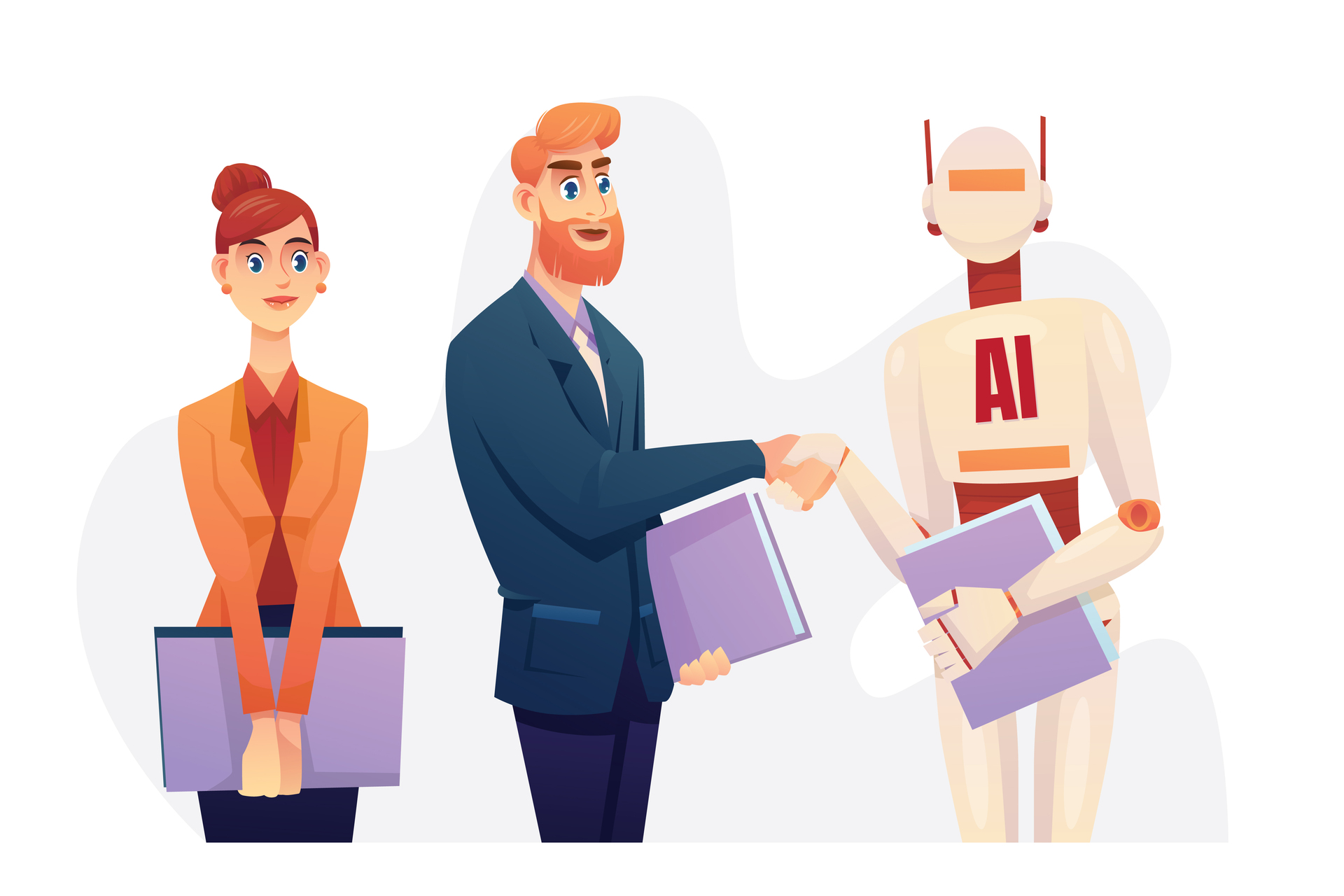
That is exactly why the focus needs to shift. Instead of asking yourself, "Will I be replaced one day?" it is more useful - and more accurate - to ask, "What in my job can AI already do, and what, because of that, do I need to do better?" It is like the saying that if you cannot stop something, you should lead it; not fight the tool, but learn to outperform it and use it to your advantage. In the end, that is what AI was originally meant for: to help people, not replace them.
What to Do If Your Profession Is in the Risk Zone
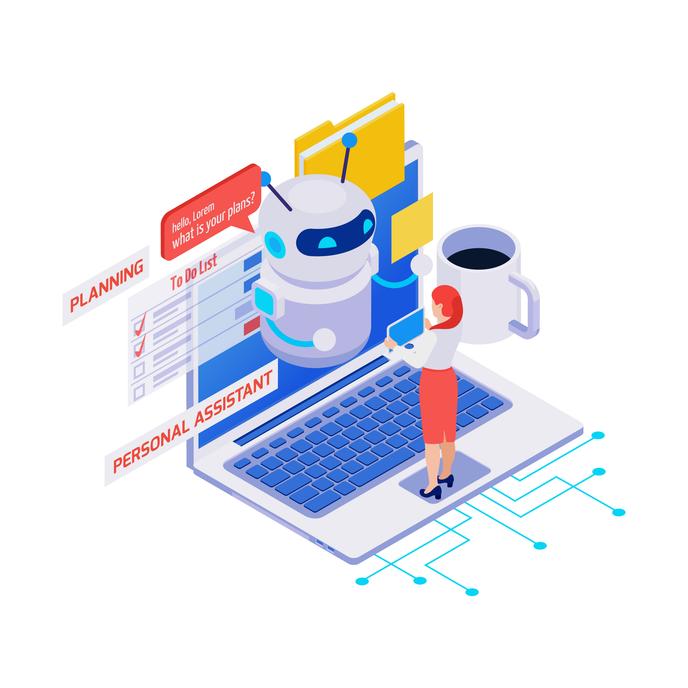
The worst possible strategy right now is to pretend that nothing is happening. The second worst is to rush off and study everything indiscriminately. Assess your profession soberly: which tasks are already being automated, where AI really does save time, and where it still stalls and falls short. And from there, that is exactly what your next steps should be based on. Of course, the direction of those steps depends on the specific profession.
Translator
If you are a translator, the bad news is that machine translation has long since stopped lagging behind human translation. According to industry research, it is used in more than 50% of professional translation tasks. But there is good news too: this does not eliminate the translator as a specialist. Because it is precisely in those situations where a text stops being just a set of words and becomes culture - with all the importance of tone, ambiguity, and subtext - that AI still runs into major problems. This is especially noticeable, for example, in literature or in the translation of games with rich lore.
What should you do? Move away from "translation in general" and into the more expensive, higher-value part of the profession:
-
master machine translation post-editing instead of fighting against it;
-
move into niches where precision and context matter: legal, medical, financial, and technical translation;
-
develop transcreation skills - that is, not literal transfer of a text, but adaptation of meaning, tone, and cultural nuance;
-
work with terminology, glossaries, consistency, and quality QA.
Put simply, AI can already produce a draft quickly. But it still breaks down easily on idioms, wordplay, hidden references, advertising tone, and cultural nuances. Wherever a text needs not just to be translated but reassembled so that it truly lives in another language, the human being is still ahead.
Editor, Copywriter, Author
Here too, AI is no longer a "threat from the future," but an ordinary co-worker in the shop. It can quickly sketch out a structure, suggest headlines, compile a summary, offer angles for entering a topic, and write a passable - but very average - draft. And that is exactly where its strength lies: it accelerates quantity. But when it comes to quality, things are far less clear-cut.
Research into human-AI creativity shows something rather curious: with the help of LLMs, people do in fact generate more ideas and spend less effort doing so, but that alone does not guarantee a stronger result. Moreover, in such experiments AI often produces content that appeals "moderately to everyone," while it is precisely human involvement that lifts individual works to a higher qualitative level. As with translation, everything comes down to those areas where tone, cultural heritage, and editorial taste matter.
What should you do:
-
hand over rough work to AI: headline options, тезисы, research skeletons, interview transcriptions, first versions of intros;
-
strengthen yourself the things the machine still struggles with: authorial voice, rhythm, irony, sense of proportion, an unexpected angle, the exact telling detail;
-
work more with live sources - interviews, case studies, observations, real stories - because AI still often "hallucinates" and invents things that do not exist;
-
develop the editorial function: selection, assembly, cutting, building logic, distinguishing living text from "content mass."
This is exactly where AI still has a weak spot. It often sounds smooth, but too "safe." It loves formulaic turns of phrase, overexplains the obvious, has a weak grasp of humor in a narrow cultural context, and does not always understand where a text sounds artificial and where it sounds genuinely human. That is why, for an author today, the main path is not to write "like a neural network," but on the contrary, to write in a way a neural network still cannot.
Programmer
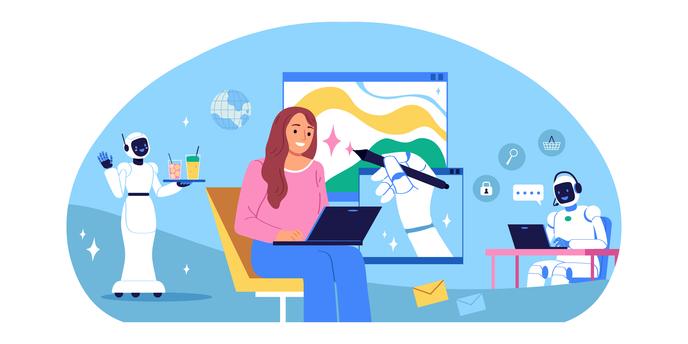
Perhaps no profession receives as many anxious forecasts as software development. AI already writes code, completes functions, helps with refactoring, generates tests, and produces documentation. But as soon as the conversation moves away from a small fragment and toward real engineering work inside a large project, the excitement begins to cool noticeably.
Research from MIT CSAIL states this directly: the popular myth reduces software development to "got a task - wrote a function." In reality, the programmer's work is much broader: architecture, migrations, legacy maintenance, testing, security, code review, untangling complex logic, working with constraints, and managing risks. The same research emphasizes that AI is good at automating routine work, but fully autonomous development is still a very long way off. And in 2025, UTSA separately showed that LLMs often generate insecure code and can even "hallucinate" nonexistent packages, creating direct security risks.
What should you do:
-
use AI where it is already genuinely useful: boilerplate, tests, documentation, refactoring options, rapid prototypes;
-
tie your value less to the speed at which you can write simple code;
-
move more into areas that are harder to automate: architecture, security, systems thinking, review, product sense, and understanding business logic;
-
strengthen your ability to verify AI-generated code rather than trusting it blindly.
To put it bluntly, AI is dangerous primarily for the programmer who wants to remain nothing more than "a person who writes code quickly, and that's it." But it can greatly strengthen the one who knows how to think about the system as a whole and can see further than a single function.
Support Specialist, Customer Success, Account Manager
This is one of the areas where automation will move very quickly. Gartner predicts that by 2029, agentic AI will be able to independently resolve up to 80% of typical customer support inquiries without any human involvement. For simple questions, repetitive cases, and FAQs, this is indeed an almost ideal scenario: fast, cheap, and available around the clock.
But as soon as the conversation goes beyond "where is my order?" and "how do I reset my password?", the human returns to the stage. In 2025, MIT Sloan proposed a very useful framework called EPOCH, an acronym made up of the following capabilities: empathy, presence, opinion/judgment, creativity, and hope. AI still cannot truly do any of these things. Yet it is precisely these qualities that complex conversations with customers depend on: defusing tension, not escalating conflict, sensing the risk of churn, explaining an unpleasant decision, and preserving the relationship after a mistake.
What should you do:
-
calmly hand routine work over to AI: first replies, ticket classification, call summaries, searching for the necessary information;
-
move yourself into the more expensive part of the profession: escalations, retention, negotiations, empathy, conflict handling, and complex cases;
-
develop not only product expertise, but also the skill of hearing the customer's real problem rather than simply "replying according to the script";
-
learn to work in a hybrid model: AI handles the standard cases, while the human takes over wherever trust and context-sensitive solutions matter.
Support as a function is not going to disappear. But the profession will rapidly be "cleansed" of mechanics. And the sooner a specialist in this area stops being a "human FAQ," the better it will be for them.
Lectera’s Online Courses by topic
Analyst and Research Work
If your job is to gather information, make initial assessments, prepare summaries, and turn large volumes of text into short conclusions, AI is already standing very close by. McKinsey notes that knowledge management today is among the functions with one of the highest levels of AI use. But there is also an important detail there: companies that actually get real value from AI are much more likely to define in advance when and how the model's outputs must undergo human validation.
Because AI is excellent at quickly producing a "first pass" on a topic, but it still regularly confuses what is important with what is secondary, does not always understand what is missing from the data, and sounds overly confident even where the conclusions are still raw. For an analyst, this is both a risk and an opportunity.
What should you do:
-
hand rough work over to AI: gathering open sources, initial grouping, short summaries, first hypotheses;
-
strengthen yourself the parts the machine does worse: framing the question, checking source reliability, interpretation, finding gaps in the data, and formulating recommendations;
-
learn more not just to "find information," but to understand which information actually matters;
-
develop business context and the skill of explaining conclusions in clear language to the people who make decisions.
This is exactly where an important dividing line runs. AI can already be a very fast junior analyst. But a good analyst is valuable not because they can quickly assemble a table, but because they know how to ask the right question and not draw a foolish conclusion from a beautiful dashboard.
AI really is changing the market - and there is no point in trying to wrestle with that. But that is not a reason to write yourself off in advance. On the contrary: right now, it has become especially clear which parts of a profession were merely routine and which parts were always the real value. And if you shift into that stronger part of your work - the one that requires taste, an author's vision, creativity, sensitivity to context, and empathy - then you have every chance not to lose to the machine, but to become even stronger alongside it.
Share this with your friends via:
Latest News

Fall 2026 promises to be an eventful season for education worldwide.

Tickets for WE Convention 2026 are now available - with 25% off for EARLY BIRDS!

The private school Alpha School, which has opened campuses from New York to California, uses AI bots to teach children academic subjects for just two hours a day. The school has no traditional teachers, no homework, and tuition reaches $65,000 per year.

UK Prime Minister Keir Starmer has announced a major public-private partnership in the field of artificial intelligence. Google, Microsoft, Amazon and NVIDIA, together with the government, are launching an AI skills training programme for 7.5 million British workers.

International educational programmes provider Study Group has announced a change of ownership. The company has been acquired by Arete Education – an investment structure in the higher education sector created by Global University Systems (GUS) and US private investment firm Brightstar Capital Partners.
