


















 English


SEO
What Is SEO (Search Engine Optimisation)?
SEO, or Search Engine Optimisation, comprises a range of strategies to improve a website's position in the search engine results, such as Google, Bing, etc. Addressing the question of what SEO is, it is a tool that helps your website "stand out". You might have wondered how some sites manage to appear right on the first page of Google. SEO addresses this question and can help your website climb the ranks, leading to increased visibility, triumph, and profitability for your brand. SEO is comparable to advertising, which attracts customers interested in your products without requiring a direct payment per click, unlike, for instance, contextual advertising.
Why do you need SEO? The goal of search engine optimisation is to draw in spontaneous traffic, visitors from search results, who are searching for something similar to what you provide. The core principles of SEO revolve around understanding how search engines crawl, index, and rank websites. Search robots, also known as spiders or crawlers, constantly browse the Internet, collecting data about sites and updating their indexes. When a user inputs a query, the search engine examines it and provides the most relevant, top-quality results that answer the query. Therefore, SEO can be viewed as a way to assist search engines in understanding your site better, improving its ranking and making it easier to discover.
Why Is SEO Necessary?
Search engine optimisation of a website means investing in the future of your business, since it will offer you multiple advantages:
-
Drawing free traffic from a search. As previously mentioned, SEO attracts targeted visitors to your website, people actively looking for products or services related to what you offer. This traffic is free and unlimited, unlike most other advertising, because millions of people use Google.
-
Enhanced brand visibility and trust. Potential shoppers frequently visit the brand's official website and want information about it before placing an order or reaching out to an administrator. If Google provides it immediately, even though a keyword or without the brand name itself, then your brand is seen as extremely popular and reliable.
-
Improved conversion rates and sales. The targeted traffic gained via SEO typically exhibits a high conversion rate because these visitors are already interested in your products or services. This streamlines the process of converting them from leads into customers, including repeat consumers, resulting in higher sales and business profits.
-
Long-term impact. Unlike contextual advertising, the effect of SEO lasts much longer. Even if you stop active efforts, your site will still draw traffic from search engines, provided you properly improved existing pages during the initial phase.
-
Enhanced user experience. SEO optimisation involves enhancing the website's accessibility and flexibility, benefiting both search engines and users. For instance, designing a structure that is simple to navigate positively impacts the user experience and increases the likelihood that they will come back to you as buyers.
-
Competitive advantage. As a result, SEO enables you to distinguish yourself from your competitors. A higher position in search results than theirs will attract more traffic and sales, helping you secure the top spot in your niche.
The Main Directions of SEO

Search engine optimisation is a complex, multi-layered process that incorporates internal optimisation (On-Page SEO), external optimisation (Off-Page SEO), and technical SEO. But first, let's focus on the initial steps.
Internal and external optimisation are two distinct aspects of work, but it is common to start with internal optimisation. This involves working directly on the website, its content, and its structure. This includes:
-
Content optimisation that encompasses creating high-quality, unique, and relevant content that addresses user requests. The content must be not only useful but also well-structured, utilising headings, subheadings, lists, and other formatting features to enhance readability. Equally important is the content's originality (avoiding duplication) and its convenience.
-
Working with meta tags. Filling in the title, description, and keywords for each page ensures that search engines will recognise them, or they will be overlooked. These tags function as brief summaries that assist search engines in understanding the page's content and displaying it in search results for relevant queries. Although the keywords meta tag is now less significant than before, due to advances in artificial intelligence and enhancing clarity, adaptable algorithms, along with the title and description, remain critical in search results.
-
Website structure. The structure should be logical and user-friendly, allowing easy navigation and linking between pages. Put simply, users should be able to quickly find the information they need without spending hours navigating through different sections. Subsequently, search engine robots will be able to index every page and display it effectively without problems.
-
Image optimisation. This mainly comprises including alt attributes to images. It is also essential to compress images to decrease file size and select the appropriate format for uploaded photos, ensuring algorithms can efficiently explore and display them. Likewise, this will increase the website's loading speed and make it more appealing to users and search engines.
-
Internal linking. Include links connecting various pages of the website. This helps search engines better understand the site structure and ensures authority is distributed across pages.
External optimisation involves efforts to enhance a website's authority and appeal through external factors. Essentially, this optimisation reflects strategies used in online marketing and PR, as it encompasses:
-
Posting links on other platforms (link building). If an authoritative resource that already ranks highly in search results links to your website, it will also enhance your site's ranking. Links are one of the most crucial factors for ranking factors, as they demonstrate that your site is a trustworthy source of information.
-
Brand mentions. For example, in social media, forums, blogs, etc. The more often your brand name appears, the more recognisable it becomes, and therefore, the search engine will identify the site associated with it.
-
Crowd marketing. This involves engaging in discussions on forums and social media, where users ask questions related to your area. Providing helpful answers and suggestions that mention your website, without turning into intrusive advertising, can attract visitors and boost the reputation of the resource you're promoting.
-
General work involving reputation. Keep an eye on your company's online reviews and address negative feedback promptly. A positive reputation can sway users' choices to visit your site and increase how often it is mentioned externally.
The third area, technical SEO, focuses on enhancing the technical aspects of the website to make it more accessible for search engines and users. This includes:
-
Page loading speed. All photos, audio, text, video, and other features should load and open instantly. Slow loading lowers the site's ranking.
-
Mobile responsiveness. Make sure your website loads and shows accurately on mobile devices. This is particularly crucial given the substantial rise in mobile traffic over recent years due to the popularity of smartphones. Consider how often you use websites on your phone while travelling on the underground or having lunch, that's it!
-
Using the secure HTTPS protocol. Search algorithms generally avoid websites with different protocols because they cannot guarantee that user data won't be exposed to intruders.
-
Micro-markup. Add micro-markup to your website pages to provide search engines with more details about your content, which can greatly improve its visibility to search spiders.
Technical optimisation involves creating a robots.txt file and an XML sitemap, resolving 404 errors, and addressing other technical issues. In a nutshell, it includes all the software aspects of establishing websites and the technical components on which they depend.
How SEO Functions in 2025
SEO is always changing, and approaches that succeeded in the past might not be as effective today. In 2025 (and in the next five years), SEO effectiveness will be based on the following principles and factors:
-
Google algorithms. Google regularly updates its search tools to deliver the most pertinent and high-quality results for users. Therefore, one of their latest innovations is artificial intelligence, which is capable of independently examining past queries and user interests to suggest the most compelling and interesting pages. Google now emphasises user experience; therefore, enhancing it is essential. Focus on mobile responsiveness and interactivity, such as enabling users to engage with website elements or virtually "touch" products. These trends align with Google's preferences and should be embraced as well.
-
Behavioural factors. These metrics encompass the time a user spends on a website, as well as the actions they perform. This includes bounce rate, viewing depth, etc. All of this influences how websites rank in search engines. What does this mean for you? The longer users stay on your website and the more interactions they have, the more likely search engines are to position your website higher in search results.
-
The significance of high-quality content and E-E-A-T. Google is recognised as the world's leading search engine. This is why your aim should be to pursue promotion in Google: Values quality, uniqueness, and useful content. The idea of E-E-A-T (Experience, Expertise, Authoritativeness, Trustworthiness) is also becoming more prominent. To fulfil the E-E-A-T criteria, professionals must create content grounded in practical experience, demonstrating authority and trustworthiness by avoiding misinformation and inaccurate facts. Google strives to ensure that users obtain information from reputable sources, and throughout the COVID-19 pandemic, additional content verification measures were put in place to ensure trustworthiness. If there is even a suspicion of fake news, the search engine will penalise your website by lowering its ranking.
-
Voice search. As voice assistants such as Siri, Alexa, and Google Assistant become more popular, the capability to activate voice search on a website is becoming increasingly essential. Voice search requires proper optimisation, particularly with long-tail keywords and short responses to user questions, known as AEO.
-
Website optimisation for AI (AIO). In other words, creating a website under the assumption that robots rather than humans will primarily find it involves a different way of thinking, as you understand, stemming from that of humans. Therefore, technical parameters such as loading speed, code quality, and header organisation are a priority. Subsequently, bots evaluate the logical and competent structure of the HTML and determine if the wording on the page is coherent. The more informative it is, the better. Likewise, it is vital to minimise hidden text and duplication, as modern bots tend to penalise these practices.
SEO Promotion: Stages of Work

SEO promotion includes a set of actions that also influence marketing, but overall optimisation can be broken down into these key stages:
- SEO website audit. Perform a comprehensive review of current pages to identify technical issues, content errors, and other features that could cause problems with ranking. The audit also involves examining loading speed, mobile compatibility, website structure, content quality, and all the various features we discussed earlier. In summary, you must identify precisely what requires optimisation and create a comprehensive list and plan.
- Gathering and grouping keywords. This method involves selecting the keywords for which your site will rank highly in search results. Your keywords should be relevant to your business and have a high search volume, meaning they are well-liked or widely used among users. Using keywords that no one searches for will result in nobody finding your website. Clustering keywords means grouping them by subject to create more organised and relevant content, serving as the second step in this stage.
- Creating optimised content. The website includes content that either already complies with SEO standards or has been altered to do so. This involves enhancing the quality and accuracy of the content, integrating keywords, including answers to common questions, and adding elements such as images, their attributes, internal links, and meta tags. These enhancements help search algorithms recognise the site.
- Working with external factors. Once internal optimisation is finished, external activities start, including sharing your website links on reputable and appropriate platforms, encouraging brand mentions within the network, and engaging in discussions on forums and social media. Therefore, the marketing department participates in optimisation, and a marketing campaign commences.
- Examining results and the procedure optimisation strategy. This phase happens every two to three months or constantly. It includes monitoring the site's rankings in search results, traffic, conversions, and other metrics, which then updates adjustments to existing SEO strategies and implements relevant improvements.
Note: When selecting keywords, prioritise those with ordinary competition; these can be neither too popular nor too niche. Highly competitive keywords are difficult to rank for, while very niche keywords attract minimal searches and traffic. Divide the keywords into two rows, highlight the principal ones and place the secondary ones in less prominent positions. If your business isn't as big as Coca-Cola, it's usually more effective to concentrate on mid- and low-frequency keywords rather than high-frequency ones.
How to Evaluate SEO Effectiveness

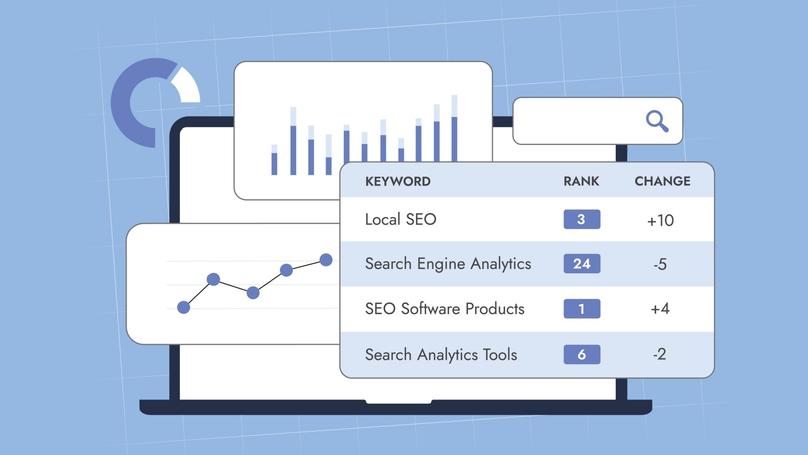
The SEO efficiency assessment occurs at the end of the fourth stage and is also regularly repeated at frequent intervals throughout the fifth stage. Naturally, the primary factor is your website's position in search results for the keywords targeted during optimisation, meaning within your semantic segment. This directly reflects the relevance of the pages.
Additionally, it's important to consider:
-
The location of the keywords outside your site's semantics. Sometimes, your semantics rank low in search results, but for keywords used a second time or not recorded, you appear at the top. This can occur if you select keywords that are too common and highly competitive, meaning too broad, and you have not included more specific and targeted options.
-
Increase in organic traffic. The higher you're ranking in search results, the more traffic you will attract. If your site ranks high but organic traffic is low, there is likely an error somewhere; for example, keywords that are used too rarely.
-
Increased leads/sales. Remember that SEO is simply about increasing your website's visibility. Following this, your marketing and sales teams get involved. Their strategies must collaborate, not just to retain leads but to turn them into buyers.
-
Enhancing behavioural patterns factors. Users should spend more time on your website, leading to an increase in interactions. This is because SEO also focuses on enhancing user convenience. SEO optimisation cannot be considered properly implemented if users are feeling inconvenienced.
To examine the effectiveness of SEO, various analytics tools such as Google Search Console are utilised. This free Google tool offers insights into your website's search rankings, traffic, indexing issues, and all key SEO metrics. Alternatively, you can use the traditional Google Analytics, which enables tracking of site traffic, user behaviour, and conversions. This data is usually enough to evaluate how well your pages are optimised and to improve the overall user experience.
Among the paid options tools, Ahrefs, Semrush, and Serpstat have been proven to be the best. They also help you identify and examine competitor keywords, providing a deeper insight into the SEO landscape for strategy development. However, their core functions are quite similar to those of Google Search Console, so medium and small businesses can easily manage their tasks with the free options.
Frequently Asked Questions (FAQs)

Here are some further SEO questions we haven't answered above that you might have:
How long does it take to observe results?
SEO is a long-term strategy, and the initial results might only be visible after several months. Gaining substantial and lasting results that you will clearly notice typically involves 6 to 12 months or longer. Your success largely depends on how competitive your niche is, how often you use your chosen keywords (which reflects your goals), and external factors like Internet trends that can influence user queries. It is vital to keep in mind that SEO optimisation requires constant effort and evaluation, and that it is a long-term effort focused on the future.
Is it possible to promote your brand solely through SEO?
Yes, you can promote solely through SEO, but it might take longer and demand more effort. Integrating SEO with other marketing channels like contextual ads, social media, and email campaigns can speed up the process and improve promotional effectiveness. Relying solely on SEO isn't enough if you plan to grow your company, target a global rather than local market, are a medium-sized business instead of a small one, or have just launched your venture.
How do SEO and contextual advertising differ?
SEO is organic promotion in search engines, particularly in search results, where users do not need to pay for each click. Contextual advertising is paid promotion shown in search results and on various websites, where your advertising account is charged each time a user visits your site, usually by clicking on an ad. SEO promotion also has a long-term impact, while contextual advertising delivers immediate results. The choice between SEO and contextual advertising depends on your goals and budget.
Conclusion
SEO, in simple terms, is a valuable tool for attracting visitors to your website, boosting brand awareness, and driving sales. However, SEO is a complex and constantly evolving procedure that demands expertise, experience, ongoing monitoring, and support from marketing or foundational marketing knowledge. Integrating SEO into your core marketing strategy can produce substantial results. However, it's crucial to remember that results don't happen instantly; patience is essential. If you lack confidence in your skills, it's better to consult professional SEO specialists or enrol in relevant educational courses, for example, Lectera's course "SEO - To Google's Top. Website Optimisation for Promotion". Effective SEO is an investment in your business's long-term success online!