
















 English


Conversion
What Is Conversion in Digital Marketing?
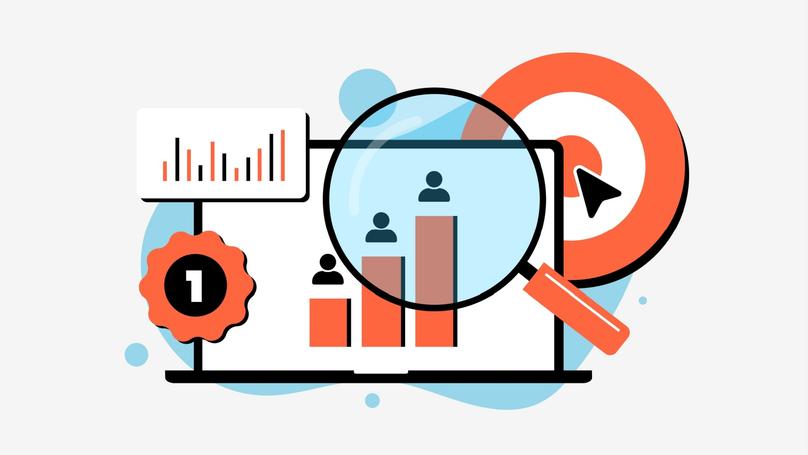
Conversion in digital marketing is a specific, goal-oriented action that a user takes on your website, in an app, or within a digital marketing campaign - thise exact action is the object of that the campaign. is designed to encourage. In other words, what is conversion? It's when your potential customer does exactly what you expect them to do: makes a purchase, subscribes to a newsletter, fills out a contact form, and so on. For example, if your goal is to sell an eBook, a successful purchase of that eBook by a site visitor would count as a conversion. A conversion could also be a phone call to your company, a request for a quote, or even something as simple as adding an item to a wishlist. The key is that the action aligns with your business objectives. In some cases, conversion metrics refer specifically to the ratio (number) of users who completed the desired action compared to the total number of website or page visitors.
Why is conversion marketing important? Because the higher your conversion rate, the more effective your website and marketing campaign are. Put simply, conversion rate definition means that if you're investing heavily in marketing but your conversion rate is close to zero, something is off - you may have chosen the wrong strategy, targeted the wrong audience, or made some other critical mistake. When done right, conversion helps you:
-
Increase profits. More conversions mean more sales. A high conversion rate indicates that you're not just attracting customers - you're successfully motivating them to take action.
-
Optimize costs. Once you've learned how to convert incoming visitors into customers effectively, you can cut back on expensive ads and focus on specific channels that bring in quality traffic.
-
Improve ROI (Return on Investment). A high conversion rate indicates that your marketing investments are yielding a greater return, making your business more attractive to potential investors.
-
Scale your business. Conversion helps you attract new customers and expand your audience, unlocking growth opportunities. With strong conversion rates, it becomes much easier to enter new markets.
Without conversion optimization a business won't last long, which is why a high conversion rate can be considered a direct synonym for profitability.
Types of Conversions

In the world of conversions, there are two main types: macro conversions and micro conversions, which can then be further broken down into specific methods or strategies.
Macro conversions are the primary goals of your business: the actions that generate profit and represent the final result of your marketing efforts. This is the "big finish" for your visitor, the reason they came to your site in the first place. Examples of macro conversions:
-
Purchasing a product or service. This is the most common and straightforward example of a macro conversion. It could be the purchase of a physical product in an online store, a paid subscription to a digital service, or buying a ticket to an event.
-
Subscribing to a paid plan. Especially relevant for SaaS companies. When a user moves from a free trial to a paid plan, it's a clear sign that your product delivers real value.
-
Filling out a request for a commercial offer. Crucial for B2B companies offering complex products or services that require a tailored approach. A completed request form is often the first step toward closing a major deal.
-
Registering for an event. If your goal is to attract attendees to your webinar, conference, or workshop, then successful registration counts as a macro conversion.
-
Requesting a callback. This helps establish contact quickly with a potential client and addresses their questions or concerns.
Micro conversions, on the other hand, are the smaller steps a visitor takes on the way to a macro conversion. These don't directly generate revenue but indicate how interested the visitor is in your offer - and they help identify areas for website improvement. Think of micro conversions as digital breadcrumbs that guide visitors toward your desired outcome. Examples of conversions:
-
Adding a product to the cart. This indicates that the visitor is interested in buying and ready to take the next step, although they may still require a bit of reassurance or a reminder.
-
Viewing a specific page (e.g., the pricing page). Indicates the visitor is evaluating your offer and considering the cost. This is a great moment to emphasize the value you provide or suggest a discount.
-
Watching a video. If you use video to promote your product or service, each view can be considered a micro-conversion. Maybe more video content would help push them further down the funnel?
-
Downloading a file (like a PDF guide). This means the visitor is seeking more detailed information. It's an excellent opportunity to follow up later and ask whether the guide was helpful and whether they're ready to buy.
-
Registering for a free webinar. A key step in guiding the user into your conversion funnel and sales. In a webinar, your speaker can give it their all and thereby turn viewers into buyers.
-
Sending a message to support chat. This user is actively seeking help and likely requires some extra guidance. A timely and helpful response can often turn a potential sale into a sale.
-
Spending a certain amount of time on the site. If a visitor stays on your website for an extended period, it's a strong signal that they're engaged with your content. Why not set up a retargeting campaign?
-
Interacting with site elements (like clicking buttons or filling out form fields). This helps you understand which parts of your site draw the most attention. You can then highlight those elements, expand on them, or create similar features and banners to boost engagement.
As you may have noticed, every micro conversion assumes that you'll take the next step, either guiding the customer toward another micro conversion or directly to a macro conversion. But when it comes to evaluating effort in the "micro conversions vs macro conversions," debate, there's no one-size-fits-all answer. Too many micro conversions can overwhelm users and prevent them from reaching the final goal, like a dense forest where it's easy to get lost. At the same time, without micro conversions, a customer is unlikely ever to reach a macro conversion.
Here are some examples of different types of conversions across a specific business niche:
-
E-commerce
Macro: Purchasing a product. Case: An online clothing store increased its conversion rate by 15% by simplifying the checkout process and adding one-click payment options.
Micro: Adding an item to the cart, viewing a product page. Case: An online cosmetics shop increased the number of add-to-cart actions by 20% by introducing high-quality product photos and detailed descriptions.
-
SaaS (Software as a Service)
Macro: Subscribing to a paid plan. Case: A SaaS company increased its conversion to paid plans by 10% by offering more flexible pricing options and a free consultation to help users choose the right plan.
Micro: Signing up for a free trial, viewing the pricing page. Case: A SaaS company increased trial signups by 25% after adding a persuasive product video to its homepage.
-
B2B
Macro: Submitting a request for a commercial offer. Case: A B2B company increased quote requests by 8% by shortening the request form and adding a confidentiality guarantee.
Micro: Downloading a presentation, viewing a case study. Case: A B2B company increased presentation downloads by 12% by improving visual design and adding a summary.
-
Blog
Macro: Subscribing to the newsletter. Case: A blog increased its subscriber count by 18% by adding a pop-up encouraging users to sign up for updates.
Micro: Commenting on an article, sharing it on social media. Case: A blog boosted article comments by 10% by enabling a commenting system that allows social media login.
What Is Conversion Rate and How to Calculate It?
Conversion rate (CR) is the percentage of visitors to your website or marketing campaign who completed a desired action - also known as a conversion. It shows how effectively you're turning visitors into customers, subscribers, or leads (depending on your specific goal). In simple terms, the conversion rate is like litmus paper - it reveals how well your sales funnel is performing.
The formula for calculating conversion rate looks like this:
(Number of conversions / Total number of visitors) * 100% = Conversion rate
For example, if your website had 1,000 visitors and 50 of them made a purchase, your conversion rate would be (50 / 1000) * 100% = 5%. That means 5 out of every 100 visitors became customers. The formula is the same for micro conversions: if 1,000 people visited a product page and 200 added the item to their cart, the conversion rate for the micro conversion "add to cart" would be (200 / 1000) * 100% = 20%.
Tracking your conversion rate is critical for:
-
Measuring effectiveness. It helps you evaluate how well your website, advertising, and overall marketing efforts are performing. You can compare conversion rates across different website pages, ad campaigns, or time periods to see what's working and what's not.
-
Making informed decisions. By monitoring your CR, you can identify problem areas and make data-driven improvements. For example, if a specific page has a low conversion rate, it could indicate issues with design, content, or user experience.
-
Return on Investment (ROI). Improving your conversion rate has a direct impact on marketing ROI. Even a slight increase in CR can lead to a significant profit boost, without the need to spend more on advertising.
Factors That Influence Conversion Rates
Many factors can influence your conversion rate, and each one can have a significant impact on your success. By improving each of these elements, you increase the likelihood that a visitor will complete a desired action. Here's what you should focus on:
-
Website design and UX (User Experience). Intuitive design, easy navigation, and a visually appealing layout all contribute to a positive user experience and a higher conversion rate. Visitors should be able to find what they're looking for quickly and enjoy browsing your site. If the website feels outdated, clunky, or confusing, they'll likely close it and look for a more pleasant alternative in the search results.
-
Page load speed. In today's digital world, slow-loading websites can be a dealbreaker. Studies show that most users aren't willing to wait more than 3 seconds for a page to load. Every extra second decreases your conversion rate. Optimize your images, enable caching, and apply other performance-enhancing techniques to boost your site's speed.
-
Content quality. The information on your site should be helpful, up-to-date, and relevant to your target audience. Your content needs to answer visitors' questions, solve their problems, and communicate the value of your offer. Use high-quality photos and videos, write clearly and professionally, and don't forget about SEO optimization.
-
Calls to action (CTA). Clear, visible, and persuasive CTAs guide visitors toward conversion. A strong CTA should spark a desire to click and take the next step. Use contrasting colors, bold fonts, and action-oriented language to make your CTAs stand out.
-
Trust signals. Customer reviews, certifications, awards, and recognizable brand logos all contribute to building credibility and convincing visitors that your business is trustworthy. People are more likely to trust a company that others recommend. Place testimonials and trust indicators in visible spots to help visitors feel confident in your product or service.
How to Improve Your Conversion Rates
How to increase conversion rate? To turn more visitors into customers, you need to work on conversion rate optimization (CRO) consistently. Here are several effective strategies and tools that can help you do just that:
-
A/B testing. This method compares two versions of a page, element, or process to determine which one performs better. For example, you can test different headlines, calls to action, button colors, element placements, and more. Create two versions of a page (A and B) and split the traffic between them evenly. After a specific period, you'll see which version leads to more conversions. A/B testing enables you to make data-driven decisions instead of relying on intuition - and continuously improve your results.
-
Personalisation. This means tailoring content, offers, and the overall user experience to each visitor. It can involve displaying different products, recommendations, or content based on a visitor's interests, purchase history, or location. Imagine walking into a store and the salesperson offers precisely what you need - based on your previous purchases. Personalization makes your site more relevant and appealing to each user, which increases conversions.
-
Improved mobile experience. Today, most users access the internet from mobile devices, so your site must be fully responsive and optimized for smartphones and tablets. Your mobile version should be user-friendly, fast, and functional. Make sure your website displays correctly across various screen sizes, that controls are easily accessible, and that pages load quickly.
Try using the following tools to optimize your site:
-
Google Optimize. A free (with limitations) tool from Google for A/B testing and personalization. It integrates easily with Google Analytics and allows you to run experiments without requiring coding skills.
-
Hotjar: A tool for session recordings, heatmaps, and on-site surveys that helps you understand how visitors interact with your site. You can see where they click, how they scroll, and where they hesitate.
-
Optimizely: A paid platform for A/B testing, personalization, and advanced analysis. It offers more sophisticated features than Google Optimize and is suitable for large companies with high traffic.
-
Crazy Egg. A tool for creating heatmaps and analyzing user behavior. It shows you which elements of your site attract the most attention and which ones are being ignored.
Common Mistakes That Hurt Conversions
Even the most beautiful and functional website can lose customers due to frustrating mistakes. Be especially careful to avoid the following:
Long forms. Overly long or complicated forms can deter visitors. Only ask for the information you truly need. Reduce the number of fields, enable auto-fill, and offer social media login options whenever possible.
Poor mobile experience. A website that isn't mobile-friendly is a surefire way to lose a large portion of potential customers. Make sure your site has a responsive design, displays correctly on all devices, and loads quickly on mobile.
Weak CTAs. Unclear, hard-to-spot, or unconvincing calls to action won't motivate users to convert. As mentioned earlier, use bright colors, appealing fonts, and strong action words. The shorter, the better. For example: "Enter your email and get 15% off" - it's clear, benefits-focused, and concise. A classic.
Lack of trust signals. If your site doesn't display reviews, certifications, or other trust indicators, visitors may doubt your credibility and choose a competitor instead. Highlight testimonials, add logos of well-known partners, and display security badges prominently. Also, make sure your presence on third-party platforms (where users may check your reputation) is backed up by positive reviews and trust signals. These factors significantly influence success.
Conclusion
Conversion means marketing - it is a core element of any successful online business. Understanding what a conversion rate is, how it works, how to measure it, and how to improve it can help you significantly boost profits, reduce costs, and scale your business.
Focus on conversion optimization to turn more visitors into customers, and you'll be well-positioned to succeed in the world of digital marketing. Remember, optimizing conversions is a continuous process - one that requires ongoing analysis, testing, and refinement.
The importance of conversion in marketing cannot be overstated. In the digital age, your ability to guide users to take action - to click that CTA - makes all the difference. Never settle for "good enough." Constantly seek new ways to convert visitors into loyal customers.