





 Which American 2000s TV Series Are You?
 The Perpetual Student Syndrome: When Self-Development Becomes a New Form of Procrastination
 Test: Who Were You in a Past Life?
 Your Mythological Totem: Take the Test and Find Out Which Ancient Creature Protects You?
 Adulthood Test: Find Out How Old You Really Are
 Empathy Check. How Well Developed Is Your Emotional Intelligence?

 English
 Русский
 Deutsch
 Español
The Perpetual Student Syndrome: When Self-Development Becomes a New Form of Procrastination
Imagine this: you've been thinking about changing jobs for a while. You've already saved a few vacancies, your résumé is almost ready, but before sending out your first applications, you decide to prepare a little more.

You take a course in your new field, then realize it would be a good idea to improve your English, learn a few AI tools, and sign up for a webinar on job interviews while you're at it. A few months go by. You really have learned more, and your résumé now includes new skills and certificates - but you still haven't sent out a single application.
This kind of situation isn't limited to careers. Someone might spend years learning a foreign language but avoid having their first conversation with a native speaker. Someone else takes entrepreneurship courses but can't bring themselves to launch their own project. Another person reads books on public speaking while continuing to turn down opportunities to give presentations at work.
The desire to learn itself isn't the problem here. Skills become outdated quickly, new tools and professions are constantly emerging, and the ability to keep learning has become one of the greatest advantages a professional can have. The problem begins when learning turns into endless preparation for something we keep putting off until later.
Why Learning Can Sometimes Feel Easier Than Starting
Learning gives us a satisfying sense of progress. You've watched a few lectures, completed some assignments, learned how to use a new tool, earned a certificate - the day definitely wasn't wasted. And most importantly, you can see the result almost immediately.
Taking action in the real world is more complicated. You can prepare perfectly for a job interview and still get rejected. You can study sales, call your first potential client, and hear "no." You can take a course on starting a business, launch your project, and discover that no one is interested in your original idea.
That's why the thought "I just need to prepare a little more" can be so appealing. It allows us to postpone the moment when our knowledge has to be put to the test. And from the outside, this behavior doesn't look like procrastination at all: you're not lying on the couch scrolling through social media - you're genuinely doing something useful.
That's exactly what makes this habit so difficult to recognize. We tend to think of procrastination as doing nothing, even though it's perfectly possible to put off an important task while looking extremely productive. Instead of writing a report, you organize your work emails. Instead of calling a client, you polish your presentation one more time. Instead of sending out your first job applications, you take yet another course on how to find a job.
How to Tell If You're Stuck in Preparation Mode
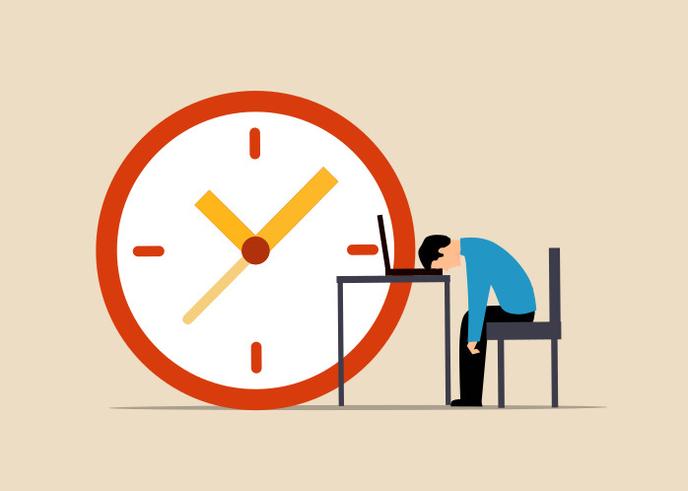
The number of courses you take doesn't really tell you anything. One person can complete five educational programs in a row and immediately start using the skills they've learned at work. Another can spend a month studying a single subject while putting off that first real step the entire time.
So instead of looking at how much you're learning, pay attention to what happens after you learn. There are several signs that can indicate your preparation phase is starting to drag on.
You keep finding yet another gap in your knowledge. At first, it seems like you're missing just one skill for a new job. You learn it - and then discover another gap. Then another. The bar for feeling ready keeps moving higher, and the moment when you finally know "enough" never comes.
You start the next course before you've had a chance to apply what you learned in the previous one. The knowledge you've gained remains in your notes, saved materials, and certificates, while your attention has already shifted to a new subject.
You can explain in detail how something should be done, but you've never actually done it yourself. For example, you know how a good presentation should be structured, you've studied negotiation techniques, or you understand the principles of promotion, but you haven't yet put that knowledge to the test in a real situation.
Your learning isn't connected to a specific task. You enroll in a program because the subject seems promising, but you don't yet know exactly where you're going to use what you learn.
None of these signs on its own means that you should stop learning. Instead, it's a reason to ask yourself one simple question: what am I going to do with this knowledge?
If the answer comes easily, your learning is genuinely helping you move toward your goal. If, instead of an answer, you find yourself thinking about the next course, it may be time to step out of preparation mode for a while and try putting what you've already learned into practice.
How to Stop Preparing Endlessly and Start Applying What You Know
If you recognized yourself in at least one of the points above, that doesn't mean you need to close all your courses and never open a textbook again. Instead, it may be worth changing your approach to learning slightly. Here are a few ways to do that.
1. Start with the Task, Then Choose What to Learn
Compare these two goals: "I want to understand marketing" and "I want to learn how to promote my own project on social media." The first has virtually no boundaries. You could study advertising, analytics, content, consumer behavior, and dozens of other areas - and each time discover yet another subject you don't know enough about.
With the second goal, it's much easier to understand exactly what knowledge you're missing. Perhaps you need to learn how to create a content plan, work with an advertising platform, or analyze campaign results. That means you can choose your learning based on a specific need.
Before signing up for your next course, try answering two questions: what do I want to be able to do after completing it, and where will I use it? The more specific your answers are, the less likely it is that what you learn will remain simply interesting information that might come in handy "someday."
2. Don't Move On to the Next Topic Too Quickly
Sometimes, after completing a good course, you immediately want to keep going: move on to the next level, take a related program, or read the books your instructor recommended. There's nothing wrong with that, as long as you've already started putting what you learned before into practice.
But first, give yourself some time to test your new knowledge. Learned a new AI tool? Try using it to solve several real tasks at work. Completed a negotiation course? Pay attention to which techniques you're actually able to use in meetings. Finished a team management course? Choose at least one tool and test it in your work with your team.
Practice quickly reveals what you're really missing. And you may well discover that the next course you need is completely different from the one you originally planned to take.
3. Set Yourself Small Practical Tasks
Putting your knowledge into practice doesn't have to start with something big. After taking an entrepreneurship course, you don't need to quit your job the very next day and start a company. After completing public speaking training, you don't have to immediately step onto a stage in front of a thousand people.
Start with a situation where the cost of making a mistake is low. For example:
- give a short presentation during a work meeting;
- use a new technique in a conversation with a regular client;
- use AI to complete one task that you previously handled manually;
- create a test advertising campaign for your own project or a practice project;
- conduct part of your business correspondence in the language you're learning.
These small experiments are especially useful because they give you feedback. Understanding how a tool works in theory is one thing; seeing what you can actually do with it and where you run into difficulties is quite another.
4. Don't Wait Until You Feel Completely Ready
Before taking your first serious step, it almost always feels like you could have prepared better. Read one more book before a job interview. Watch a few more examples before giving your first presentation. Take an advanced course before launching a project.
But there is no finish line in learning after which you suddenly know absolutely everything. In fact, the deeper we go into any subject, the more new questions arise.
So instead of asking yourself, "Do I know enough yet?" it's more useful to ask, "Do I know enough to take the next step?"
You don't need to know everything about a new profession before your first job interview. You don't have to explore dozens of existing tools before you start using artificial intelligence at work. And your first conversation in a foreign language certainly doesn't require perfect grammar. You can learn the rest once you understand exactly what you're missing.
Lectera’s Online Courses by topic
Keep Learning for Life Without Remaining a Perpetual Student
Today, continuous learning really is becoming part of professional life. New technologies emerge, employers' expectations change, and familiar tools can evolve dramatically in just a few years. That's why the idea of getting an education once and never having to learn anything again has long since stopped working.
But lifelong learning doesn't mean constantly staying in preparation mode. What matters much more is learning how to alternate between learning and practice: gain new knowledge, test it on a real task, look at the result, and only then decide what you should learn next.
And perhaps this is the main difference between continuous learning and perpetual student syndrome. In the first case, every new piece of knowledge helps you move forward. In the second, you keep preparing for the moment when you'll finally be ready to begin.
Learning throughout your life is a great strategy. The key is not to spend your whole life postponing the moment when you actually use what you've already learned.
Share this with your friends via:
Latest News

Fall 2026 promises to be an eventful season for education worldwide.

Tickets for WE Convention 2026 are now available - with 25% off for EARLY BIRDS!

The private school Alpha School, which has opened campuses from New York to California, uses AI bots to teach children academic subjects for just two hours a day. The school has no traditional teachers, no homework, and tuition reaches $65,000 per year.

UK Prime Minister Keir Starmer has announced a major public-private partnership in the field of artificial intelligence. Google, Microsoft, Amazon and NVIDIA, together with the government, are launching an AI skills training programme for 7.5 million British workers.

International educational programmes provider Study Group has announced a change of ownership. The company has been acquired by Arete Education – an investment structure in the higher education sector created by Global University Systems (GUS) and US private investment firm Brightstar Capital Partners.
