









 Which American 2000s TV Series Are You?
 The Perpetual Student Syndrome: When Self-Development Becomes a New Form of Procrastination
 Test: Who Were You in a Past Life?
 Your Mythological Totem: Take the Test and Find Out Which Ancient Creature Protects You?
 Adulthood Test: Find Out How Old You Really Are
 Empathy Check. How Well Developed Is Your Emotional Intelligence?

 English
 Русский
 Deutsch
 Español
When Hype Hurts Sales: How Brands Can Overcome Audience Hype Aversion
Throughout history, marketing has often been built on a fairly simple logic: the louder the launch, the more noise around the brand, and the more visible the excitement, the higher the chance that the product will “take off” and become a bestseller.
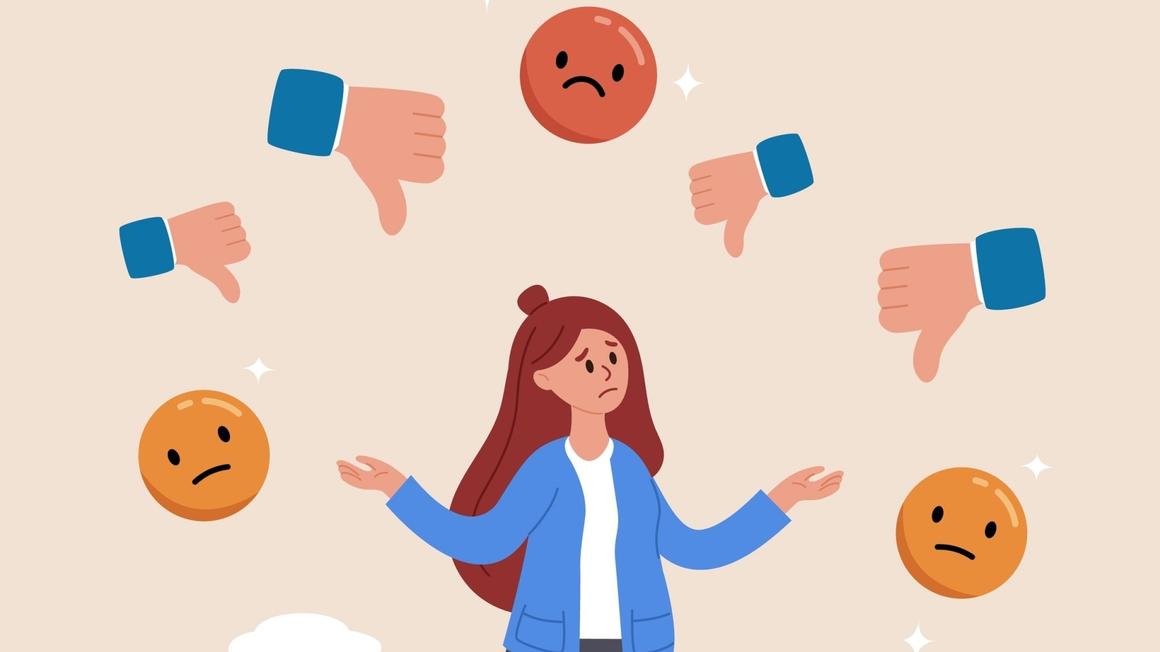
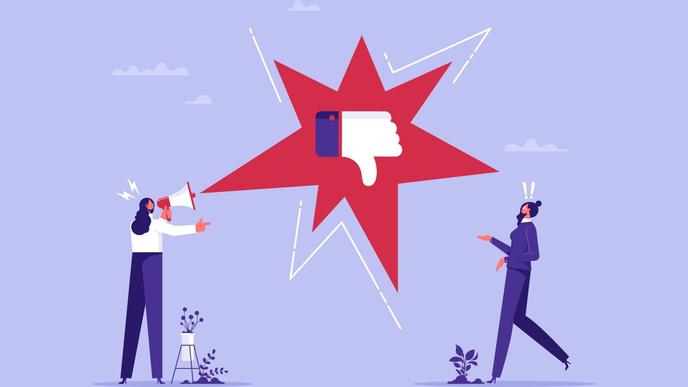
But who would have thought that in 2026 this connection would suddenly snap like a rope that has been yanked too many times? Today's audience, thanks to exactly this kind of "marketing," has already learned to distinguish quite well between real value and a well-inflated soap bubble. That is why hype on its own no longer guarantees either trust or, all the more so, sales. Sometimes it even produces the opposite effect: irritation, skepticism, and the desire to keep one's distance. And this is called hype aversion, and it represents a colossal problem for the market today.
What Hype Aversion Is and How to Tell You Have Run Into It
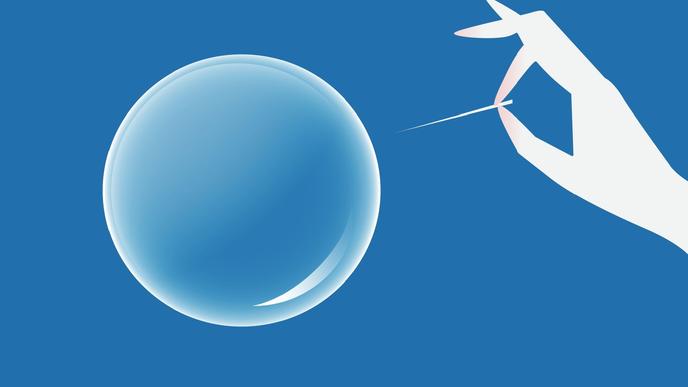
In simple terms, hype aversion is an emotional rejection on the part of the audience, a negative reaction to overly loud and intrusive promotion that automatically starts being perceived as "overrated," even if the product really is good. When a person constantly hears grand promises, finds themselves squeezed by urgency - "buy, buy, buy now!" - and sees nothing but positive reviews, they become… wary. An involuntary thought appears: if this is being sold to me so aggressively, then surely there must actually be something wrong with it, right?
It is a kind of reverse psychology that starts working against the brand. Hype aversion, however, did not appear out of nowhere or overnight. Over the past few years, audiences have simply lived through too many disappointments. Quibi, for example, was launched as a major breakthrough in mobile video, but just a few months later it announced it was shutting down. Clubhouse, at the height of the pandemic, seemed like a new format of communication and gathered an almost cult-like level of interest around itself - remember when you could register only by invitation? - and then rapidly deflated, laying off more than half its staff in 2023. Even Meta, which had actively moved into the NFT space, began winding down support for digital collectibles in 2023, clearly having changed its mind. All of this reinforced a very simple reflex in audiences: the louder the promise, the higher the chance that emptiness lies behind it.
This is especially noticeable in categories where a purchase requires trust: education, digital services, beauty, wellness, finance, B2B products, and career tools. In those areas, virality alone is no longer enough. If a person sees a loud launch for a course, an app, or a platform, but does not understand how exactly it works in real life, they will move through the sales funnel with resistance. First of all, they will start looking for reviews, independent breakdowns, and real-life cases, and all product sales will end up hinging on those - while all the resources have already been spent on hype that did not help and will not help.
Signs that your potential audience is already in a state of hype aversion:
- Reach is high, but conversion is weak. The campaign gets noticed, people know about the product, but purchases or sign-ups happen worse than expected.
- The ads get views, but trust moves elsewhere. People actively read reviews, search for analyses, and ask acquaintances, but do not click the buttons in the ad itself.
- The comments show fatigue. Phrases like "oh wow, another breakthrough," "mmm, yet another must-have," or "first show how it actually works" signal that the audience does not see real value and is not buying into the promise.
- Calmer formats work better. A product demonstration, a client case, a comparison, an FAQ, or a clear usage scenario gets more traction than other kinds of posts.
- People postpone the decision, even though the product interests them in general. They do not reject it directly, they subscribe, follow, add it to favorites… But they are still waiting for something.
If you see these signs, then your attempts to "hype up" the product have failed - and it is time to urgently change course before it is too late.
What Mistakes Brands Make When They Try to Sell Through Hype
And, in addition to the subheading, which hype-building tools definitely no longer work today:
- No real value
The brand talks a lot about the launch, builds reach, brings in influencers, fuels discussion in the comments, but never answers the customer's main question: why do they need this product? Is it really indispensable? Then prove it. The story of Juicero has become a textbook example of marketing overheating: the startup sold an expensive "smart" juicer as a technology of the future, only for it later to emerge that the juice packs made specifically for the device could simply be squeezed by hand - without the machine at all.
- Impossible promises
As soon as phrases like "it will change everything," "it will revolutionize the market," or "the best solution for everyone" start appearing in communication, the audience rolls its eyes. This kind of language may attract attention, but it certainly does not inspire trust. If a company is selling an automation service, the client cares more about hearing how much time it saves than about promises of "a new era of efficiency."
- Constant pressure through urgency
Countdowns, scarcity, "last chance," and "today only" may push people to act once or twice. But if a brand does this constantly, it very quickly starts to look like manipulation. The audience does not suffer from amnesia. The brightest example here is the Sunlight jewelry retail chain in Russia and the CIS, which for ten years has been regularly sending users messages about its "imminent closure and total liquidation sale."
- Faceless social proof
Formulas like "everyone has already bought it," "everyone is talking about it," or "everyone is switching" have long stopped being universally convincing. An overheated audience wants to understand who exactly is using the product, in what situation, and what result they are getting. Without that, social proof turns into mere advertising background noise. So if you want to use this hype tool, you need partnerships with target bloggers. A lot of partnerships, and unfortunately, at a very non-budget-friendly price.
- Suspense dragged out for too long
The brand spends too long selling anticipation: intriguing, warming things up, hinting, talking about status and rarity, but barely showing the product in action. For an audience already in a general state of hype aversion, that is like a red rag to a bull. The longer there are no specifics, the stronger the suspicion that behind the pretty wrapper there may be no substance at all. Just think of the tiny pocket gadget robot, the Humane AI Pin. The product was presented for a long time almost as a new chapter in personal devices: lots of talk about "after the smartphone," about a new way of interacting with AI, about the device of the future. But when full reviews began to appear, it became clear that in daily life the product worked roughly, slowly, and did not solve the range of tasks people had already mentally built around it.
- Inappropriateness and ethical violations for the sake of buzz
Misplaced hype most often arises when a brand tries to tie a product to an already existing event, trend, or headline-making topic. For example, releasing a limited collection for a premiere, a product "inspired by" a viral trend, an attempt to urgently insert itself into a cultural moment or a particular story. Sometimes this really works, but only if the connection between the two events is organic and understandable to the audience. If the thematic launch looks random, forced, or obviously commercial, the opposite effect appears. Burger King UK and International Women's Day immediately comes to mind here. The brand wanted to latch onto the buzz around March 8 and launch a campaign about gender inequality in the restaurant industry, but opened with the tweet "Women belong in the kitchen." Can you imagine what happened next? A good example of an appropriate collaboration, meanwhile, is the footwear brand Crocs. Each of its collaborations bears a recognizable Crocs signature while treating the partner source with care: Balenciaga, Salehe Bembury, Simone Rocha…
Lectera’s Online Courses by topic
How Businesses Can Work With Hype Correctly and Organically

- Show not excitement, but a usage scenario
If a person comes to you on the wave of buzz, then in the very next touchpoint they should see how the product works in real life. Not "the most talked-about service of the season," but "a tool that helps a sales team collect a lead base in one day and avoid losing inquiries." Not "the biggest beauty hit of the month," but "a serum that is convenient to use in the morning before makeup and doesn't pill under SPF."
A good example is Spotify Wrapped. Every year, its marketing campaign creates a huge wave of discussion, but it is not sustained by virality alone. The user gets a very clear personal scenario: view their statistics, share them, compare themselves with others, and then return to the product again. That is why the hype does not just hang in the air, but quickly turns into action inside the service. In 2023, Wrapped engaged a record 227 million monthly active users.
- Lower the temperature of your promises
An overheated audience responds better to precision; no one needs abstraction. A strong product does not have to promise a revolution. It only has to clearly show what problem it solves, who it suits, and, most importantly, where its limitations lie. There is no need to emphasize its weaknesses, but you do need to outline its boundaries, because everything in the world has them. One product cannot solve a million problems at once.
- Bring in proof as early as possible
Case studies, reviews, numbers, demonstrations, comparisons, trial access, live interface previews, a step-by-step product walkthrough - all of this reduces tension better than another dose of noise. Think of Figma. At its conferences, the company always backs up presentations with demonstrations of features, interfaces, and real work scenarios. In 2024, Figma introduced Figma AI, UI3, and Figma Slides not as an abstract "future of design," but as a set of tools for specific tasks within an already familiar ecosystem. In simple terms, they always back up words with action and with verifiable, trustworthy facts.
- Work with narrow segments, not with everyone at once
Only a narrow segment allows you to build communication that is calm and genuinely meaningful. For example: "a service for small beauty salons that need to manage client bookings, reminders, stylist databases, and repeat sales in one window." Or: "a landing-page builder for private psychologists, coaches, and nutritionists who need to launch a clean page quickly without a designer or excessive setup."
- Leave yourself room to maneuver, and leave the audience the opportunity to verify things personally
People with hype aversion are not inclined toward quick and impulsive purchases. They need to compare, look, verify, ask questions. That is why demo versions, trial periods, calm email sequences, FAQs, live walkthroughs, case-study pages, and clear onboarding work better. When a brand does not rush people, but helps them understand, trust grows.
- Do not dissolve into the trend
Hype can help attract attention, but it should not break the company's usual tone of voice or its values. If a brand has been built on expertise, reliability, and calm argumentation, it should not suddenly switch into the language of sensation just for virality. This is especially important for niche and complex products - in those categories, hype practically does not work in principle.
- Make sure hype does not get ahead of the market's readiness
Attention can be accelerated quickly; stable demand cannot. If the market still does not understand why it needs your product in everyday life, hype will only increase the gap between expectation and actual experience.
Here it is useful to keep two contrasts in mind. Spotify's hype returns every year because the audience has long understood the format and waits for it. Figma's loud announcements are more easily accepted because the user immediately sees practical value in a familiar environment. Google Glass, by contrast, became an example of how a powerful media image can get ahead of the readiness of the mass market - and then buzz only intensifies disappointment.
The same principle works on a smaller scale too. If a wellness brand comes out with the message "this is the ritual of the year," but does not explain who actually needs the product, when, and under what conditions, the audience feels pressured. If an edtech company promises "a complete career transformation," but does not show the program, the format, the workload, and the real results of graduates, attention may come, but trust will not. If a SaaS service says "all teams are already switching to AI," but does not show how exactly it fits into everyday work, part of the audience will simply postpone the decision.
Today, it is no longer enough for a business to simply shout loudly about a product and artificially create excitement around it. The audience has become more experienced, more cautious, and more sensitive, and therefore, first, it is hard to convince, and second, it is hard to deceive - so do not even try. The brands that win today are the ones that know how to quickly convert attention into trust: to show usefulness, provide proof, ensure a positive user experience, and at the same time remain true to themselves and their image. Hype can still work for sales, but only when it is backed by a strong value framework and high-quality execution.
Share this with your friends via:
Latest News

Fall 2026 promises to be an eventful season for education worldwide.

Tickets for WE Convention 2026 are now available - with 25% off for EARLY BIRDS!

The private school Alpha School, which has opened campuses from New York to California, uses AI bots to teach children academic subjects for just two hours a day. The school has no traditional teachers, no homework, and tuition reaches $65,000 per year.

UK Prime Minister Keir Starmer has announced a major public-private partnership in the field of artificial intelligence. Google, Microsoft, Amazon and NVIDIA, together with the government, are launching an AI skills training programme for 7.5 million British workers.

International educational programmes provider Study Group has announced a change of ownership. The company has been acquired by Arete Education – an investment structure in the higher education sector created by Global University Systems (GUS) and US private investment firm Brightstar Capital Partners.
