













 Which American 2000s TV Series Are You?
 The Perpetual Student Syndrome: When Self-Development Becomes a New Form of Procrastination
 Test: Who Were You in a Past Life?
 Your Mythological Totem: Take the Test and Find Out Which Ancient Creature Protects You?
 Adulthood Test: Find Out How Old You Really Are
 Empathy Check. How Well Developed Is Your Emotional Intelligence?

 English
 Русский
 Deutsch
 Español
Beyond IQ: Why We Need Existential Intelligence and How to Develop It
In fact, intelligence remains a concept not yet fully understood, which is why there is no single definition for it.

We all know about IQ - the intelligence quotient, which was long considered the primary measure of intellect. Not long ago, everyone also began talking about emotional intelligence - the ability to recognize, understand, and control one's own emotions, as well as to read and manage the emotions of others. But even this is now insufficient.
In a world where artificial intelligence easily beats us at chess and writes poetry, and where stress and uncertainty have become the norm, another, deeper type of thinking is coming to the fore - existential intelligence. This is the ability to grapple with global questions, to reflect, to philosophize. Let's explore why it's being discussed precisely now and how to enhance it.
Multiple Minds
For a long time in psychology, an approach dominated according to which intelligence was reduced merely to the ability to solve logical problems, memorize information, and process data quickly. This is precisely what the classic IQ test measures.
Over time, it became clear that a high IQ does not guarantee career success or personal happiness. At the end of the last century, psychologist Howard Gardner proposed the theory of multiple intelligences, which revolutionized the understanding of the mind as a whole. According to it, each of us possesses a set of relatively independent abilities, which are developed to varying degrees in everyone. Later, other researchers, such as Daniel Goleman, popularized the concept of emotional intelligence, and modern neuroscience and psychology continue to expand this list.
Today, among the key types of intelligence recognized by the scientific community, we distinguish:
-
Logical-mathematical: Responsible for analysis, deduction, working with numbers and abstract concepts. In the brain, this variety of intelligence is managed by the prefrontal cortex and the parietal lobes.
-
Linguistic: That is, sensitivity to words, the ability to express thoughts clearly, mastery of languages. Responsible for this are Broca's and Wernicke's areas in the left hemisphere.
-
Emotional: Identification and management of one's own emotions and the emotions of others. This is handled by the amygdala, insular lobe, and prefrontal cortex.
-
Spatial: Involves the perception and manipulation of visual images. This is managed by the right hemisphere, occipital and parietal lobes.
-
Bodily-kinesthetic: That is, muscle memory, the ability to control one's body and sense oneself in space. Responsible for these skills are the motor cortex, cerebellum, and basal ganglia.
-
Interpersonal and Intrapersonal: The first - understanding the motives and moods of other people; the second - deep self-knowledge, reflection. This is handled by special nerve cells - mirror neurons, the prefrontal cortex, and the anterior cingulate cortex.
-
Naturalistic: Sensitivity to nature, the ability to classify living organisms. This is managed by areas responsible for visual perception and categorization.
-
Existential (or philosophical, spiritual): The ability to reflect on themes of life, death, meaning, and humanity's place in the universe.
But it's important to understand that the brain works as a unified system, and all these brain regions - the "neural base" - constantly interact with each other.
Existential Intelligence: Your Inner Philosopher

If logical intelligence helps us solve problems, and emotional intelligence helps us build relationships, then existential intelligence helps us live meaningfully - with feeling, sense, and deliberation, as the saying goes. This is the ability that Howard Gardner in his later works called "the intelligence of the big question." Typically, people with developed existential intelligence ponder not how to implement a particular project, but why it is needed overall. That is, they think on a more global level; they are concerned with themes of freedom, love, solitude, responsibility, and the search for one's own path.
Put simply, existential intelligence is a person's ability to contemplate the fundamental questions of existence, the meaning of life, death, and humanity's place in the universe. It is a philosophical mindset oriented toward deep reflection. It is not measured by standard IQ tests and is often characterized as the ability to see the big picture in a broad sense.
Why Existential Intelligence Was Isolated as a Separate Type
In fact, this type of intelligence is simply weakly tied to the others. One can have a brilliant logical mind but feel existential emptiness and simply be unable to reason about eternal themes. One can possess a high EQ but find no answers to questions about one's own purpose. Modern research in the field of positive psychology (e.g., the work of Martin Seligman) and cognitive neuroscience shows that brain areas associated with self-reflection, moral judgments, and deep thinking (for example, the medial prefrontal cortex and posterior cingulate cortex) are active precisely during contemplation about oneself and one's place in the world. This is not merely emotion or logic - it is a meta-level of thinking.
Key Signs of Developed Existential Intelligence:
-
Propensity for Global Reflection: People with this type of thinking often ponder the fate of humanity, the causes of evil, and the structure of the world.
-
Perception of Situations in a Broad Context: If you see a situation not in isolation, but in connection with larger-scale processes (historical, social).
-
Interest in the "Unknowable": The important thing is not even the result of cognition, but the very process of philosophizing and immersing oneself in themes that cannot be fully rationalized, for example, metaphysics and religion.
-
High Sensitivity: The ability to deeply feel the essence of things and to recognize cause-and-effect relationships in the context of being.
-
Awareness of Finitude and Acceptance of Uncertainty: Accepting mortality as part of life and the ability to live with uncertainty when there are no answers to the main questions.
-
Altruism and Values: A tendency to prioritize spiritual values over material ones and to care for others.
In an era of information noise and constant multitasking, this particular type of intelligence becomes especially important for mental health and resilience. Thus, existential intelligence helps in coping with crisis situations. You must agree, a philosophical attitude toward all sorts of problems and adversities develops in us resilience, endurance, and stability both against internal difficulties and external ones.
Furthermore, a developed existential intelligence implies that a person constantly expands their views and horizons, better understands themselves and their uniqueness.
The Practice of Meaning: How to Develop Existential Intelligence

ExQ, like any other intelligence, can and should be trained. It is not an innate gift, but a skill that develops through specific practices. Here are several life hacks based on methods of existential therapy and modern mindfulness research:
-
Keep a "Big Questions Journal." Dedicate 10 minutes in the evening not for logging tasks, but for reflection. Ask yourself one open-ended question per week. For example: "What is most valuable in my life right now?", "What am I avoiding and why?", "What small action did I take today that expressed my core values?" Write freely, without self-criticism, in a stream of consciousness.
-
Practice Contemplation. Find 5-10 minutes a day to simply look at the starry sky, a fire in a fireplace, flowing water, or even a city from a high point. Don't think about tasks. Just observe the scale and flow of time. This is a kind of meditation that takes thinking beyond the immediate.
-
Read Slow Literature. Instead of, or alongside, clipped articles and social media, immerse yourself in works that pose eternal questions. This isn't necessarily complex philosophy; it can be classic novels, for example, by existentialists - Sartre, Camus. Consider which thoughts of the characters you agree with and which cause resistance, how you would formulate your own ideas on the topic.
-
Practice "Philosophical Dialogue." Make it a habit to discuss with close ones or colleagues not only everyday and work topics, but also questions without a clear answer, for example about what freedom is in the modern world, how the infodemic affects us. The goal is not debate, but broadening horizons.
-
Acknowledge "Small Deaths." Existential psychologists say that contact with life's finiteness helps to realize life. We're not talking about something gloomy, and certainly not about physical death. There is the concept of a "small death" - any completion of a cycle, for example, the end of a project, parting with old habits, moving. Experience these moments consciously, analyze what this stage gave you, what experience you want to gain in the future.
Lectera’s Online Courses by topic
Brain Fitness: How to Keep Your Intellect in Tone
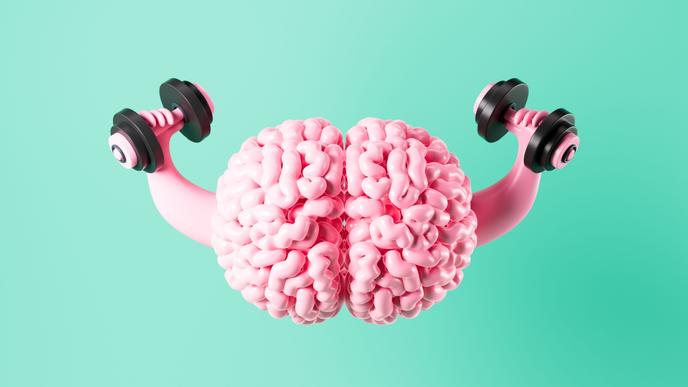
Developing existential intelligence is part of general mental hygiene. To keep the brain plastic and active throughout life, a comprehensive approach, confirmed by neuroscience, is needed.
What to do:
-
Learn New Things Consciously. Not for a checkmark, but following curiosity. A new language, musical instrument, programming, a craft. The key is regularity and stepping out of the comfort zone. This creates new neural connections.
-
Train Your Body. Regular aerobic exercise, such as running or swimming, increases blood flow to the brain and stimulates the production of brain-derived neurotrophic factor (BDNF).
-
Get Enough Sleep. During deep sleep, memory consolidation and literal brain cleansing occur. 7-9 hours is not a luxury, but a necessity for our cognitive functions.
-
Nourish Your Brain. Omega-3 fatty acids (found in fish, nuts), antioxidants (berries, greens), complex carbohydrates, and sufficient water are the basic diet for a clear mind.
-
Be Socially Active. Live communication, joint activities, discussions are a powerful stimulus for the brain, protecting against cognitive decline.
The brain, like muscles, atrophies without load. Unused neural connections weaken (synaptic pruning). This leads not only to worsening memory and thinking speed with age, but also to cognitive rigidity - the inability to adapt to new things, to look at the world from different points of view.
In the modern world, it is important to be able to maintain resilience in uncertainty and every day find one's own, not imposed, reasons to wake up with interest in a new day. Your existential intelligence is the internal compass that allows you to orient yourself in new circumstances and feel your place in the world.
Share this with your friends via:
Latest News

Fall 2026 promises to be an eventful season for education worldwide.

Tickets for WE Convention 2026 are now available - with 25% off for EARLY BIRDS!

The private school Alpha School, which has opened campuses from New York to California, uses AI bots to teach children academic subjects for just two hours a day. The school has no traditional teachers, no homework, and tuition reaches $65,000 per year.

UK Prime Minister Keir Starmer has announced a major public-private partnership in the field of artificial intelligence. Google, Microsoft, Amazon and NVIDIA, together with the government, are launching an AI skills training programme for 7.5 million British workers.

International educational programmes provider Study Group has announced a change of ownership. The company has been acquired by Arete Education – an investment structure in the higher education sector created by Global University Systems (GUS) and US private investment firm Brightstar Capital Partners.
