





 Which American 2000s TV Series Are You?
 The Perpetual Student Syndrome: When Self-Development Becomes a New Form of Procrastination
 Test: Who Were You in a Past Life?
 Your Mythological Totem: Take the Test and Find Out Which Ancient Creature Protects You?
 Adulthood Test: Find Out How Old You Really Are
 Empathy Check. How Well Developed Is Your Emotional Intelligence?

 English
 Русский
 Deutsch
 Español
Learn a Foreign Language, Art History, or Read a Book in Your Sleep: The Concept of Hypnopedia
Wouldn't it be great to play an audio lecture or podcast at night and wake up with new knowledge?

Scientists have been pondering this very question - how to learn in your sleep with minimal effort - for several decades now. A definitive answer still eludes us, but research continues, and it's possible that in the near future a special device will appear, for instance, to learn a foreign language while asleep.
In an era where time is the scarcest resource and the need for constant skill upgrades is an objective reality, the idea of acquiring knowledge while you rest is tempting. We've looked into whether sleep can be productive, how neuroscience explains this phenomenon, and why sleep-learning apps have yet to replace conscientious studying while awake.
What is Hypnopedia
This is the term for the concept of assimilating information during sleep. Of course, it's not about turning on an audio course on quantum physics at night and waking up a genius. Modern science speaks of targeted, or goal-oriented, memory enhancement during specific sleep phases. There are two main phases in total; they repeat, alternating with each other in cycles of approximately 90 minutes:
-
REM phase (Rapid Eye Movement), or the phase of rapid sleep, associated with dreaming and emotional processing;
-
NREM phase (Non-Rapid Eye Movement), that is, the phase of slow-wave sleep.
They differ primarily due to the processes that occur in our brain and also influence memory. As is known, the brain is still capable of processing external stimuli during sleep, so from a neuroscience perspective, it is, in principle, possible to remember something while we sleep and later reproduce it while awake.
Why Hypnopedia Became an Obsession
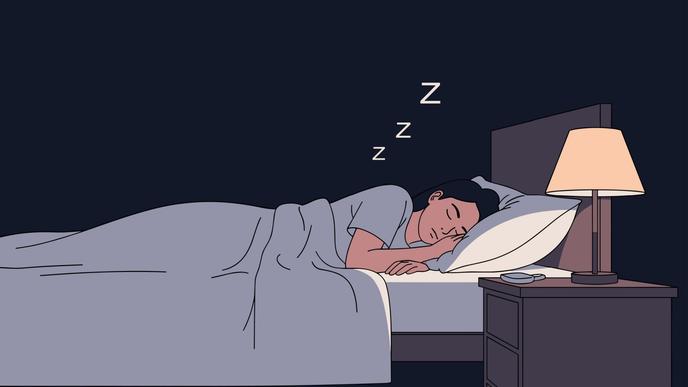
Interestingly, even ancient Greek priests and Buddhist monks used their disciples' sleep state to explain sacred scriptures to them. But in scientific circles, this idea gained prominence at the beginning of the 20th century. Back then, Time magazine published an article about a technique for teaching Morse code to radiomen at a naval base in Florida. Readers learned from the material about how one soldier fell asleep with headphones on and, upon waking, was able to reproduce all the information from the radio broadcast he was listening to while unconscious. As a result, this method for mastering Morse code was indeed implemented and even improved learning outcomes.
And in 1927, a Czech businessman living in New York, Alois Benjamin Saliger, even invented a special "psycho-telephone" designed to play educational materials (likely recorded phrases) directly into the ear of a sleeping person. The idea was interesting, but it yielded no results.
What other advantages were seen in this method of memorizing information?
-
Effortless Learning. The key hypothesis was that sleep, being a natural state, opens a direct channel to the unconscious. It was assumed that the mind, freed from all our filters and stigmas, becomes more receptive to new things, like a sponge. In theory, the teacher wouldn't have to overcome the student's resistance or fatigue, and the learner wouldn't have to exert effort to concentrate. The process of cognition was envisioned as a smooth and non-violent introduction of knowledge into the psyche, bypassing laziness and distraction.
-
Time That Works for Us. From a time-management perspective, the idea is brilliant. We spend about a third of our lives sleeping - time considered biologically necessary but still unproductive in the classic modern understanding. Hypnopedia promised to turn these hours into a hidden educational resource. This created two tempting prospects: either free up the waking period for creativity, rest, and solving practical tasks, or, while keeping the usual study hours, radically accelerate overall progress through round-the-clock background learning. In conditions of growing time pressure and the necessity for lifelong learning, this approach seemed like a logical salvation.
-
A Lever for Societal Transformation. Summing up these advantages, enthusiasts saw hypnopedia as a tool for overhauling the entire education system. Reducing the time and energy costs of learning while simultaneously increasing its effectiveness could, in their opinion, lead to a qualitative leap in the development of human capital. But dreamers went even further: they discussed the possibility of transmitting during sleep not only languages or formulas, but also complex ethical principles, norms of social interaction, and artistic taste. In other words, hypnopedia was perceived as a technology for programming not only knowledge but also the personality itself in the right way.
It was precisely this mixture of scientific potential and powerful socio-philosophical subtext that made hypnopedia so attractive not only to laboratories but also to thinkers and writers, especially in the genre of science and social fiction.
Reflection in Literature: Warnings and Utopias
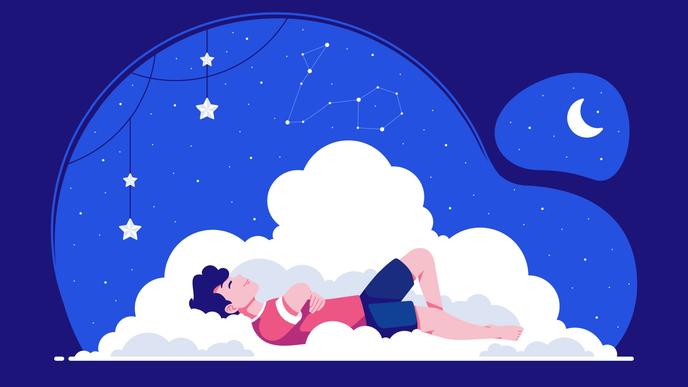
Writers, anticipating science, immediately recognized not only the educational but also the manipulative potential of the method. In their works, they pondered the possibilities and likely outcomes of applying such a method:
-
Aldous Huxley in Brave New World turned hypnopedia into the cornerstone of a totalitarian state. Using this technology, the state from childhood forms flawless but free-will-deprived citizens, instilling in them strict social roles, consumer ideals, and unquestioning loyalty to the regime. In Brave New World Revisited, the same technology serves as a tool for religious influence.
-
Robert Heinlein in Starship Troopers suggested that hypnopedia could become a key tool for the accelerated training of elite soldiers, into whose consciousness tactics and weapon-handling skills are literally "uploaded."
-
The Strugatsky Brothers in The Ugly Swans portray hypnopedia as a secret pedagogical technology of the future, with the help of which mysterious mentors raise a generation of child geniuses, alien to the world of ordinary people.
-
Daniel Keyes in Flowers for Algernon brings the plot closer to reality, describing hypnopedia as part of a medical experiment. Scientists try to use it to enhance the protagonist's intelligence, demonstrating both the hopes and possibilities, as well as the ethical risks of such intervention in consciousness.
However, the scientific study of hypnopedia fairly quickly cooled the initial enthusiasm and dispelled the boldest hopes for a breakthrough in education.
What Scientists Think
If one can actually learn anything in sleep, it is only during the rapid sleep phase, when the brain is active. For instance, a 2017 study by French scientists determined that a person in the REM stage of sleep can indeed remember and later identify while awake sounds they heard in their sleep and had not heard before. But this stage is very short and can last only five minutes in the first sleep cycle, reaching a maximum of an hour in the last one.
A few years later, another study was conducted in which volunteers were taught non-existent words endowed with meanings. For example, "tofer" meant key, and "guga" meant elephant in the experiment's fictional language. Participants were connected to an EEG, and during the REM phase, scientists saw that new neural connections might form at peak moments of brain activity. The researchers pronounced the words so that they sounded at those peak moments. Then the participants took a test, determining whether the named object could be larger or smaller than a shoebox. Those participants who heard the words at the peaks of brain activity performed 10% better on the test than others.
At the same time, another study revealed that word memorization is also possible, but conversely - during the slow-wave sleep phase. Participants, while still awake, were shown pictures (e.g., an image of a dog) and a corresponding sound was played (in our example, barking). After that, already during sleep, participants were again played the sound of a dog barking, and then they heard a word in Japanese (unfamiliar to them) that meant "dog." Later, while awake, they took a test - now they were played recordings of various Japanese words and shown two pictures, needing to choose the one corresponding to the word. It turned out that the participants identified as familiar the words that had sounded during the slow-wave sleep phase.
Several more experiments showed no positive results whatsoever, confirming that there are no advantages to receiving information during sleep. Volunteers continue to be regularly tested, for example, using electroencephalography (EEG). Other scientific works nevertheless prove that when experimental participants were told terms aloud that they had heard during sleep, they recognized them as familiar but could not provide their definition.
There have been many such studies, but the conclusion remains the same - deep sleep cannot in any way replace full-fledged learning, even self-study. Several more experiments have still failed to prove that words heard and repeated several times in sleep are memorized.
Sleepwalking Apps
On the wave of these discoveries, mobile applications appeared, promising to teach you anything in your sleep - from Spanish to programming. They typically offer first daily mini-lessons and then a nighttime audio session repeating the material in a quiet voice or mixed with soothing sounds.
Of course, you won't be able to fully learn using such apps, but there can be potential benefit - for example, they can help review and reinforce already learned material. They can also act as a placebo effect - regular listening before sleep can discipline and tune the brain to the importance of the material. However, most services use overly generalized patterns, not tied to your individual sleep characteristics and not personalized. Still, it can be an interesting self-experiment.
Although it's not worth getting carried away - some researchers believe that such attempts to feed the sleeping brain new information often lead to a slowdown in learning processes. Instead of support, there is interference with finely tuned natural mechanisms. At night, our brain performs crucial internal work: it reviews the day's impressions, consolidates significant data into long-term storage, and clears working memory of unnecessary information. This process requires not external stimuli but, on the contrary, silence and tranquility.
Lectera’s Online Courses by topic
How to Sleep to Become Smarter
The collapse of the hypnopedia concept does not diminish the enormous role of sleep in learning and productivity. Therefore, the most powerful tool of hypnopedia is quality sleep itself. Its influence on career success is colossal: it regulates emotions, boosts creativity, strengthens resolve, and, of course, preserves knowledge. Here are the main rules to follow:
-
Sleep enough. 7-9 hours of sleep is, in fact, not a luxury but a necessity for memory consolidation. Sleep deprivation affects the hippocampus, the brain's memory center, blocking the intake of new information.
-
Review new information obtained during the day before sleep. Right before going to bed, review flashcards, key points of a report or lecture, exam tickets, new foreign words. This is the last thing your brain will actively process during sleep.
-
Observe sleep hygiene. That means darkness, silence, and coolness. It is also very important to avoid gadgets an hour before sleep (blue light suppresses the production of melatonin, the sleep hormone).
-
Take care of deep sleep. It is the deep stages of slow-wave sleep, which predominate in the first half of the night, that are critical for consolidating facts and motor skills. They are facilitated by:
-
Schedule: Going to bed and waking up at the same time, even on weekends (at least approximately).
-
Physical activity during the day, but not later than 3 hours before sleep.
-
Avoiding alcohol and heavy food at night. Alcohol fragments sleep, destroying its natural structure.
-
A cool shower before bed helps lower body temperature, which is a natural signal for falling asleep.
-
Don't overload your brain. In the evening, you shouldn't be overly active and try to finish all the tasks you didn't manage during the day. This will only make your sleep worse. Therefore, it's better to do less and focus on one specific task but complete it well.
The concept of hypnopedia, although it hasn't shown significant results, teaches us the main thing: productive wakefulness begins with quality sleep.
Share this with your friends via:
Latest News

Fall 2026 promises to be an eventful season for education worldwide.

Tickets for WE Convention 2026 are now available - with 25% off for EARLY BIRDS!

The private school Alpha School, which has opened campuses from New York to California, uses AI bots to teach children academic subjects for just two hours a day. The school has no traditional teachers, no homework, and tuition reaches $65,000 per year.

UK Prime Minister Keir Starmer has announced a major public-private partnership in the field of artificial intelligence. Google, Microsoft, Amazon and NVIDIA, together with the government, are launching an AI skills training programme for 7.5 million British workers.

International educational programmes provider Study Group has announced a change of ownership. The company has been acquired by Arete Education – an investment structure in the higher education sector created by Global University Systems (GUS) and US private investment firm Brightstar Capital Partners.
