






 Which American 2000s TV Series Are You?
 The Perpetual Student Syndrome: When Self-Development Becomes a New Form of Procrastination
 Test: Who Were You in a Past Life?
 Your Mythological Totem: Take the Test and Find Out Which Ancient Creature Protects You?
 Adulthood Test: Find Out How Old You Really Are
 Empathy Check. How Well Developed Is Your Emotional Intelligence?
 English
 Русский
 Deutsch
 Español
“They Stole Everything!”: How Creators Can Protect Their Content in the Age of AI Copy-Paste
Just five years ago, the only kind of theft a creator might encounter was discovering that someone had published their work under a different name.
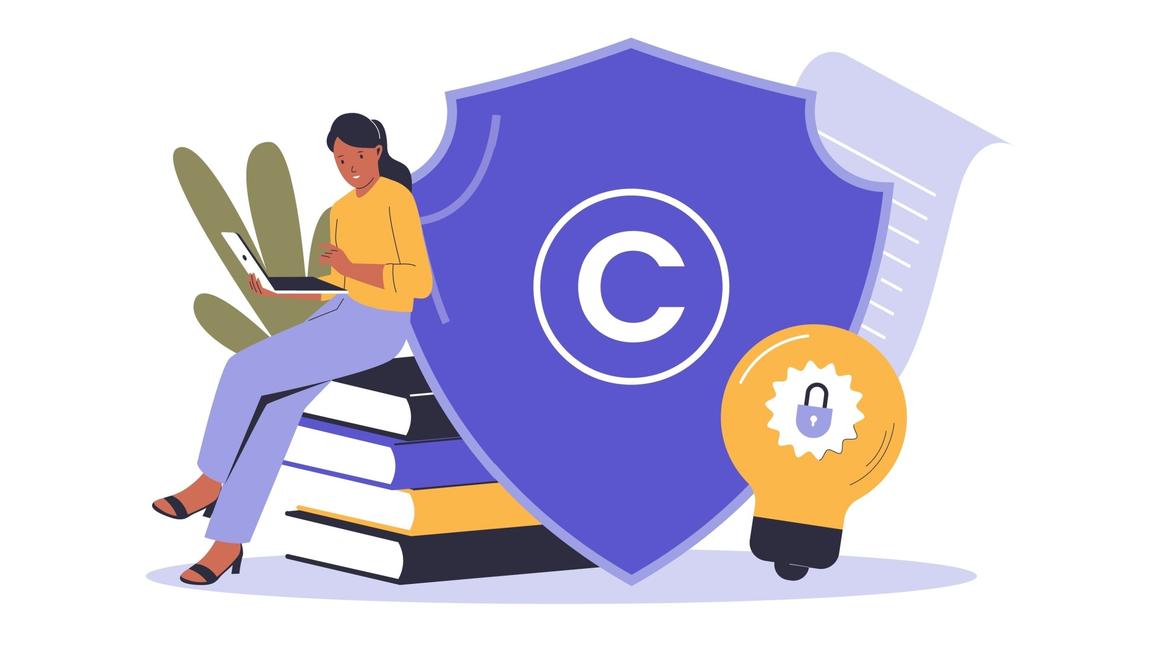
Today, however, in the era of generative networks, theft has become far more complex, tangled, and sophisticated. Now the conflict begins much earlier - already at the stage when models are trained on other people's work, which still causes controversy and active debate. Sometimes it goes beyond mere imitation of style and turns into full-fledged synthetic copies, even the theft of human faces! This is no longer just "plagiarism on the internet," but a new system in which a machine can reprocess, reproduce, and scale someone else's creative capital faster than the author can even realize and prove that their work has been brazenly and unauthorizedly used.
There is something else that matters too: with this topic, it is easy to swing into the kind of panic extreme that sounds like, "Neural networks are stealing! We're defenseless!" But in reality, that is not entirely true. It's not, right?.. In any case, it is far more useful for a creator to understand what "real AI theft" actually looks like and what they can really do here in order, first, to protect themselves and, second, not lose their mind in the process.
What Exactly Can Be "Borrowed" From a Creator in the Age of Generative Networks
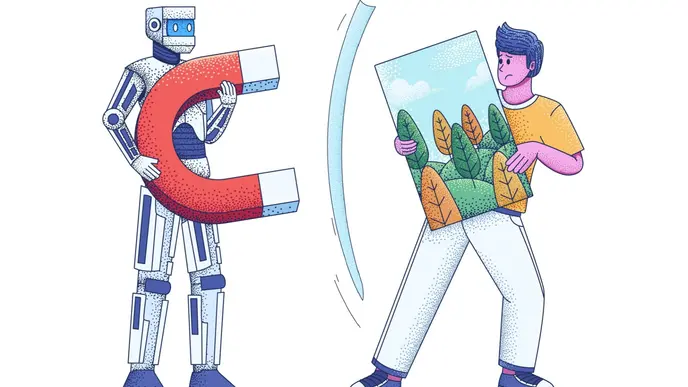
The first layer of the conflict is model training on other people's work. This is exactly where artists, photographers, publishers, and owners of content libraries are arguing the most right now. In 2023, Getty Images filed a lawsuit against Stability AI, claiming that the company had used more than 12 million Getty photographs to train the Stable Diffusion neural network without a license. And this is not an isolated flare-up: the U.S. Copyright Office, in the part of its report devoted to model training, directly identifies the use of protected works for training as one of the central unresolved problems of the generative era.
The second layer is the deliberate or accidental imitation of a specific creator's work. And this is precisely where the question that torments artists most arises: does the model really "draw from their work"? Technically, a generative model usually does not store someone else's image as a ready-made template and then paste it into the result piece by piece in every case. It learns from massive image datasets and extracts patterns from them: compositions, color solutions, connections between a prompt and the visual result. But for the creator, the market conflict does not disappear because of that: if a user can ask, "make it in the style of a specific contemporary artist," or receive an image that looks like a synthetic double of that artist's visual handwriting, then this is already a very tangible - and free - substitution of a living creator with a machine version. That is simply not the kind of competition one can win.
The third layer is synthetic copies of voice and face. Here, the legal and platform reaction is already much harsher, because the matter concerns not just content, but digital identity. In its report on digital replicas, the U.S. Copyright Office supported the idea of special federal protection against unauthorized realistic copies of appearance and voice. YouTube, for its part, separately states that people can request the removal of synthetic content that imitates their face or voice, and also requires disclosure when realistic altered or synthetic content is used.
The fourth layer is AI repackaging of finished content. This is when your script is not stolen verbatim, but run through a generator, the wording is changed, it is voiced by a synthetic voice, given a new edit, and published as a "fresh" video. For short-form video, courses, expert content, and media, this is already a massive problem: the creator recognizes their rhythm, structure, conclusions, and inner logic, but the violation here is not direct, and in practice there is often little to present as proof, because it is technically a reworking. Particularly vulnerable here are authored texts, including fiction and literature, but also brand, style, presentation, recurring formats, recognizable formulas, and the author's voice. Legally, style is protected worse than a specific product, such as a text or a video, but the market damage from its AI reconstruction can be no smaller. TikTok, for example, explicitly reminds users in its policy that copyright does not protect an idea as such, but the original expression of that idea.
The central nerve of this whole story lies not in the fact that a neural network "knows how to draw," but in whose expense it learned and whom it is now displacing from the market. In simple terms, the model was trained on someone else's work without consent, and then that same market receives a tool with which it can generate images of "roughly the same kind" faster, cheaper, and without the creator's involvement. In the Getty Images v. Stability AI case, Reuters wrote in 2025 that the dispute had even reached a London court, while also demonstrating just how raw the legal framework still remains. In the end, part of Getty's claims in the UK remained unresolved, and the basic question of training models on protected works is still not closed. Jurisprudence simply still does not know what to do with all of this or where exactly to draw a clear line.
For photographers and visual creators, the dispute is especially painful because generative models do not only create "new" things - they also reveal traces of origin. In the Getty case, a separate claim was raised that the model could generate images with a distorted Getty watermark, which certainly runs counter to the argument that "we were just abstractly learning from visual culture."
Lectera’s Online Courses by topic
Self-Defense Against AI: What a Creator Can Do in Advance
The first and most important thing is to document authorship and keep all source materials. In a dispute over generative repackaging, the winner is not the one who "definitely came up with it first," but the one who can quickly show drafts, editing projects, publication dates, original audio, script versions, cloud exports, and any traces of how the material was created. This feels like boring creative bookkeeping right up until the moment when you have to prove that a video, a vocal delivery, or a visual package really is yours.
The second is to tie the content more tightly to the creator and the brand. An ordinary watermark has long since stopped being a cure-all: it can be cropped out, blurred over, repackaged, and neural networks can even remove it seamlessly. It is much more useful to embed authorship into the material itself: branded intros, recognizable recurring segments, repeated formulas, your own video architecture, audio or visual signatures, systematic links to your platforms, logos, and stable design elements. Legally, "vibe" and style are poorly protected, but in market terms such markers make it harder to separate you from your own work. If an AI copy does appear, the audience itself may recognize the original source and exert the appropriate pressure on the guilty party.
The third is to post less "clean raw material" for cloning in open access, especially if you work with your voice and face. Long clean audio tracks without music or noise, large close-up facial fragments in high quality, and large volumes of original unprocessed video are convenient material for synthetic copies. This does not mean you need to disappear from the internet. But if content production is in some sense your business, it makes sense to think about exactly what is lying in the public domain in the most cloning-friendly form.
The fourth is to keep track of platform rules and use them to your advantage. YouTube, for example, requires realistic altered or synthetic content to be labeled and provides complaint routes if an AI video imitates your face or voice. TikTok, meanwhile, offers special procedures for copyright infringement complaints. This is an important shift: protecting a creator today is not just about lawyers and not just about public scandal, but also about competent work with the internal tools of platforms. Whoever understands platform infrastructure better reacts faster.
The fifth is to formalize the rules for using your content if you are no longer just running a blog, but have a media or educational product. If you sell courses, archives, templates, voiceovers, teaching materials, or licensed content, it is useful to state directly what is allowed and what is not: whether your texts may be used in generative voiceover, whether internal corporate models may be trained on them, whether they may be reworked into AI videos, used in advertising, or translated without approval. This will not stop an arrogant violator, but it will significantly strengthen your position if the matter reaches complaints, a lawyer, or a conversation with the platform.
The sixth is to think of content as an asset, not only as self-expression. In the age of generative networks, the most vulnerable creators are those who still think only in categories like, "I made a good piece of content." That is no longer enough. You need to understand which elements of your work create commercial value: your voice, your face, your archive, the structure of your videos, your recurring segments, your recognizable visual system, your expert tone, your brand persona. These are exactly the layers AI tends to attack most often.
Unfortunately, it is currently impossible to protect yourself completely from AI copy-paste: the law is still catching up with technology, while the platforms themselves are only just building the rules of the game. But the position of "there's nothing you can do" no longer works here either. Generative networks have really changed the nature of authorship conflict: now what gets stolen is not only the file, but also the handwriting; not only the video, but also the delivery; not only the text, but also your tone of voice. That is why the best strategy today is not to wait for a perfect law, but to act on several levels at once, in line with the advice above, and, most importantly, always remember: no one will ever replace you completely, because a true masterpiece cannot be counterfeited.
Share this with your friends via:
Latest News

Fall 2026 promises to be an eventful season for education worldwide.

Tickets for WE Convention 2026 are now available - with 25% off for EARLY BIRDS!

The private school Alpha School, which has opened campuses from New York to California, uses AI bots to teach children academic subjects for just two hours a day. The school has no traditional teachers, no homework, and tuition reaches $65,000 per year.

UK Prime Minister Keir Starmer has announced a major public-private partnership in the field of artificial intelligence. Google, Microsoft, Amazon and NVIDIA, together with the government, are launching an AI skills training programme for 7.5 million British workers.

International educational programmes provider Study Group has announced a change of ownership. The company has been acquired by Arete Education – an investment structure in the higher education sector created by Global University Systems (GUS) and US private investment firm Brightstar Capital Partners.
