




 Which American 2000s TV Series Are You?
 The Perpetual Student Syndrome: When Self-Development Becomes a New Form of Procrastination
 Test: Who Were You in a Past Life?
 Your Mythological Totem: Take the Test and Find Out Which Ancient Creature Protects You?
 Adulthood Test: Find Out How Old You Really Are
 Empathy Check. How Well Developed Is Your Emotional Intelligence?
 English
 Русский
 Deutsch
 Español
Corporate Psychologist, Pajama Parties, and Sleep Pods: Trends in Modern Offices
We spend a third of our lives at work. That means we literally live in offices or other workspaces for about 10-12 years.

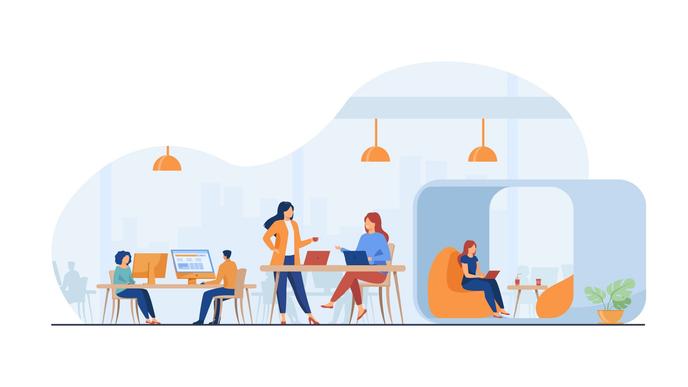
It's no wonder that in recent years, employees and employers themselves have become increasingly active in seeking to improve their work environments. One of the most popular trends is the human-centric office. This concept encompasses a whole host of other trends-from sleep pods and relaxation zones to corporate psychologist services-depending on the company's level, of course. All of this directly affects the moral and physical state of employees, which in turn determines productivity. We've identified which trends in office design currently prevail.
Gen Z Sets the New Rules
To a large extent, offices are also changing because a new generation is entering the workforce. According to World Economic Forum estimates, Gen Z already accounted for roughly 27% of the global workforce in 2025, and in ten years, they will become the largest generational group of employees.
Thus, the new generation brings new demands for employers. Of course, these include high salaries, career growth, and flexible schedules. But a cozy office space also ranks among the top priorities.
If Gen Z does come to the office, they want it to have thoughtful and modern design, flexible spaces that include private areas for focused work, relaxation spots, and large meeting rooms for brainstorming sessions and team meetings.
Moreover, this shift has become even more pronounced in the post-COVID era. The pandemic and the mass transition to remote work served as a catalyst. Employees and employers simultaneously realized two opposing truths:
-
work can be done from anywhere, but
-
live human interaction, spontaneous encounters, and corporate culture hold colossal value.
Returning to the office after lockdowns became not an obligation, but a conscious choice. And for this choice to favor the office, the space must offer a unique, added-value experience that isn't available at home. The era of hybrid work and human-centric design has begun.
Key Contemporary Trends: What Makes Up the "Office Ecosystem"
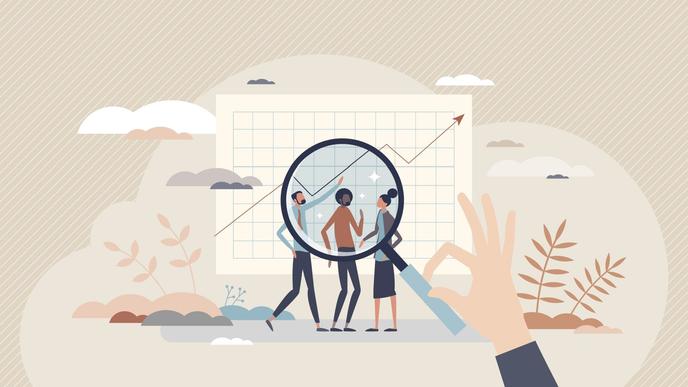
A modern, forward-thinking office is not just a premises, but a set of services and zones designed for different aspects of a person's work (and even beyond) life:
Biophilic Design and Sustainability as the New Norm
This refers to the deep integration of nature into the work environment. For example, the use of natural materials (wood, stone, linen), living green walls, panoramic glazing with park views, maximized natural lighting, and the imitation of natural forms in architecture. The inclusion of water features (fountains, "green" rivers) and nature sounds into the sound design system.
The Human Spaces Report, based on data from 7,800 workers worldwide, showed that offices with elements of biophilic design increase employee well-being by 15%, creativity by 15%, and productivity by 6%.
Activity-Based Working (ABW) - The Office on Demand
This is an abandonment of the "one employee, one workstation" principle. In other words, an employee moves between various zones throughout the day, chosen for a specific task: focus zones (soundproof pods, for example), collaboration zones (open tables, hubs with whiteboards), informal communication zones (sofas, cafe-kitchens), phone call zones (phone booths), and learning zones (libraries). Everything is booked via a mobile app.
The architectural and planning company DEGW (now part of AECOM) introduced the ABW concept back in the 1990s. Research shows that a properly implemented system can increase space utilization efficiency by up to 30% and boost employee satisfaction by giving them autonomy and control over their environment.
Wellness Infrastructure That Goes Beyond the Gym
The focus on health has become total. What does it include:
-
Sleep pods and relaxation rooms. It's proven that a short 20-minute nap improves memory, concentration, and creativity by 30-40%. Companies like Google, Nike, and PwC have been using them for a long time.
-
Mental health services. Access to a corporate psychologist or online therapy platforms (e.g., Lyra Health, Ginger) is becoming standard in healthcare packages. According to SHRM (Society for Human Resource Management), the number of companies offering such programs among large employers in developed countries grew from 20% in 2019 to nearly 50% in 2024.
-
Zones for meditation and yoga. As well as "healthy" kitchens and dining areas with nutrition developed by dietitians, not just free coffee. Emphasis is on micronutrient balance and maintaining energy.
The Office as a Hub for Social Capital and Community
Since routine work can be done from home, the office becomes a place for building relationships. Therefore, regular internal events are important-not only parties but also lectures by invited experts, masterclasses, film screenings, and charity fairs. A key feature is the ability to invite friends and family. The emergence of children's playrooms and pet-friendly zones (where you can work with your pet) in offices.
Numerous studies show that highly effective organizations have dense networks of informal connections among employees. The office-hub deliberately creates the ground for such connections to arise.
Hyper-Personalization and Smart Technology
The Internet of Things (IoT) allows each employee, via an app, to adjust the microclimate (temperature and humidity) around their workstation, customize the color temperature and intensity of LED lighting according to their biorhythms (cool light for concentration, warm for relaxation), and adjust desk height (sitting-standing). Analytics systems (occupancy sensors) help administration optimize space usage.
Research proves that individual control over environmental conditions increases satisfaction and reduces health-related complaints.
Resimercial Design - Cozy Like Home
A blend of the words "residential" and "commercial." This is a style where the office takes on the features of a home interior: cozy soft furniture, fireplaces, carpets, vintage accents, soft textile lighting, bookshelves. This is a direct response to the demands of Generation Z, for whom sterile offices "kill motivation."
Lectera’s Online Courses by topic
What the Office of Tomorrow Will Be Like
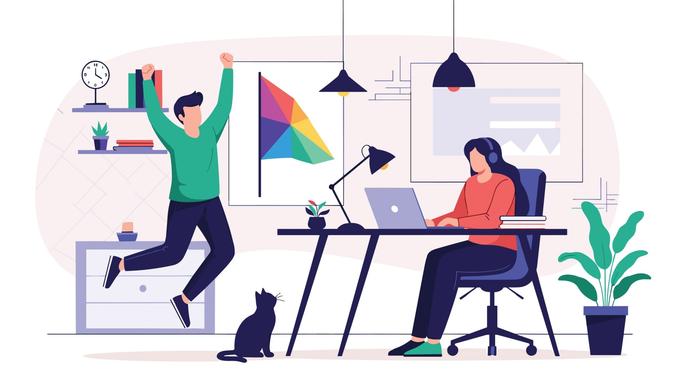
Trends don't stand still. Several emerging directions can already be identified.
-
Radical Sustainability and the "Office as a Power Plant." The trend towards sustainable development will reach a new level. Office buildings won't just save energy but produce it: facades with photovoltaic panels, rainwater harvesting and recycling systems, own biological air purification systems (phyto-walls as part of ventilation). Materials will be used in closed cycles only, and a building's carbon footprint will become a key indicator for tenants. Carbon-neutral office campuses will emerge.
-
Full Sensory Synesthesia. The office will be designed not only for visual but also for tactile, olfactory, and auditory perception. Aromatherapy (e.g., citrus scents for morning alertness, lavender for relaxation zones) will become an important nuance. Tactile surfaces with different textures (wood, stone, velvet, linen) will be used for navigation and creating emotional anchors. The soundscape will dynamically adapt to noise levels and time of day, suppressing irritating frequencies and enhancing beneficial ones (e.g., sounds of forest or water).
-
Immersive Technologies and Metaverse-Hybrid. The physical office will become a "port" to digital workspace. Next-generation telepresence using holographic displays or VR/AR glasses will allow remote colleagues to "physically" attend a meeting, sitting at the same table. Separate rooms will be designed for immersion in the corporate metaverse-digital twins of offices for collaboration on 3D models, conducting training, or events for a global team. Physical and digital spaces will be complementary.
-
Neuroergonomics and Brain-Adaptive Offices. The development of neural interfaces and biometric sensors (in non-invasive form, e.g., via smart bracelets or computer vision cameras) will allow the space to react in real-time to the state of employees. The system may notice signs of fatigue or stress in a person and suggest they move to a relaxation zone, change the lighting, or initiate calming aromatherapy. Design will be based on data about how different colors, forms, and spatial configurations affect brainwaves, creativity, and focus.
-
Micro-Locations and Office "Subscription." The hybrid work concept will spawn demand for a distributed office network. Large companies will abandon a single central office in favor of a network of micro-coworking spaces or bookable hubs in different city districts and even countries. An employee will be able to choose, via a subscription, the nearest suitable workspace for the day's tasks. This will reduce commute time and improve work-life integration for employees living in the suburbs.
The future belongs not to offices that are simply beautiful or high-tech, but to those that, based on reliable data from psychology, neuroscience, and ergonomics, create an environment where an employee feels secure, emotionally engaged, and cognitively liberated. Ultimately, investments in such spaces are not design expenses, but direct investments in human capital, innovation potential, and a company's resilience in a world where talent has freedom of choice. The office of the future is a place people want to return to.
Share this with your friends via:
Latest News

Fall 2026 promises to be an eventful season for education worldwide.

Tickets for WE Convention 2026 are now available - with 25% off for EARLY BIRDS!

The private school Alpha School, which has opened campuses from New York to California, uses AI bots to teach children academic subjects for just two hours a day. The school has no traditional teachers, no homework, and tuition reaches $65,000 per year.

UK Prime Minister Keir Starmer has announced a major public-private partnership in the field of artificial intelligence. Google, Microsoft, Amazon and NVIDIA, together with the government, are launching an AI skills training programme for 7.5 million British workers.

International educational programmes provider Study Group has announced a change of ownership. The company has been acquired by Arete Education – an investment structure in the higher education sector created by Global University Systems (GUS) and US private investment firm Brightstar Capital Partners.
