













 Which American 2000s TV Series Are You?
 The Perpetual Student Syndrome: When Self-Development Becomes a New Form of Procrastination
 Test: Who Were You in a Past Life?
 Your Mythological Totem: Take the Test and Find Out Which Ancient Creature Protects You?
 Adulthood Test: Find Out How Old You Really Are
 Empathy Check. How Well Developed Is Your Emotional Intelligence?

 English
 Русский
 Deutsch
 Español
How the Image of Wealth Has Changed — and Why Luxury Looks Different Today
Everything in the world changes sooner or later, and wealth is no exception.
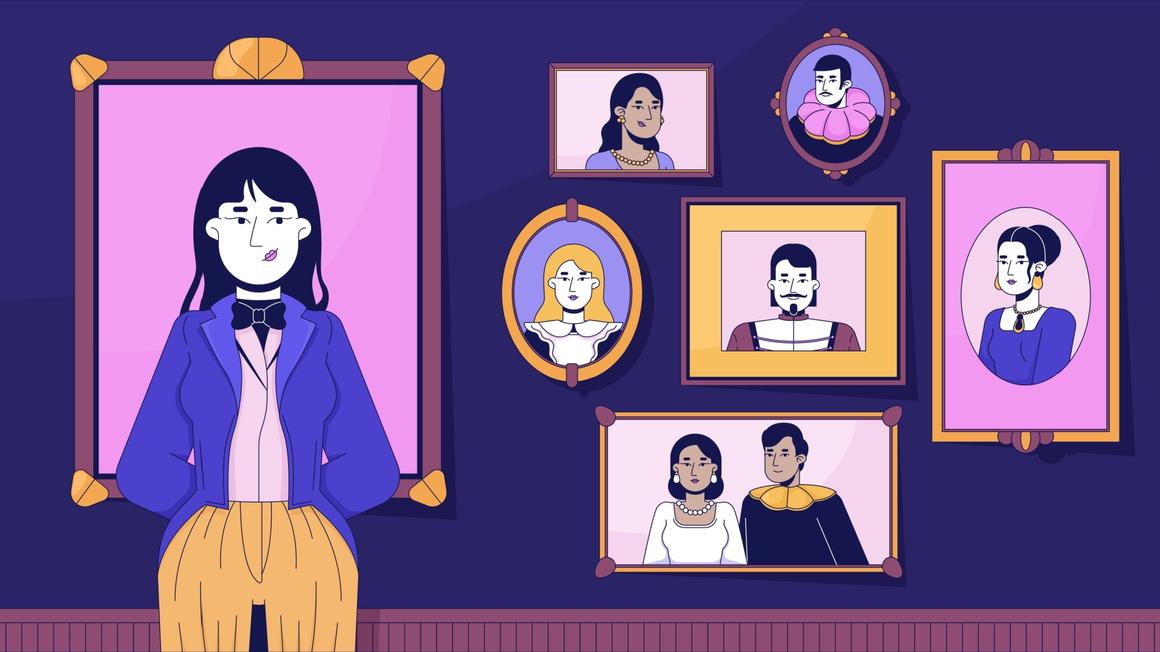
Not so long ago, it was customary to display it in a way that left no doubt in anyone's mind about who stood before them: expensive fabric, jewelry, an extravagant interior, a car the size of a boat, watches that gleamed so brightly they could blind you from the other side of the room. However, all of that has been left in the past. If you were to put Elon Musk in his favorite gray T-shirt next to Steve Jobs in his famous black turtleneck, you would hardly be able to imagine right away the staggering fortunes sitting in their bank accounts. But had they lived a hundred years earlier, their status would have been visible from a mile away. Luxury has always depended on the rules of its era: when society was more rigid, it had to be demonstrated openly; when the world became saturated with expensive things, wealth began looking for subtler ways to express itself. In that sense, the history of luxury is one of the most fascinating and surprising stories in this world. How did the attributes of wealth emerge, what did they look like, and why were they needed at all? Let's get into it.
Pearls in Vinegar, Gold in Caravans, and Fur as a Pass: What Wealth Looked Like Before the Modern Era
In antiquity and the Middle Ages, luxury did not merely please the eye - it fulfilled a very concrete social role. Society at that time was built on a strict hierarchy, and outward appearance told others who they were dealing with, whether they could do business with you, and at what distance they ought to keep from you in general. It is no coincidence that in Ancient Rome, and later in medieval Europe, there existed sumptuary laws - laws against excessive luxury that regulated who had the right to spend money on what at all: how much could be spent on feasts, what fabrics could be worn, and who was allowed fur, silk, gold, and silver embroidery. The point was not to shame the rich for their love of excess, but to preserve visible boundaries between social estates and prevent people of lower standing from copying the outward language of the nobility.
Hence the love of striking gestures around which anecdotes are still invented today. The best-known example is the story of Cleopatra, who, according to Pliny the Elder, dissolved a pearl in vinegar and drank it in order to win a bet with Mark Antony and prove that she was capable of hosting a feast of fabulous cost. What matters here is not the chemical trick itself, which people still debate, but the logic behind the act: in those days, power was confirmed not only by army, land, and title, but also by the ability to handle rarity as though it were unquestionably subordinate to you. When a person could afford to turn a precious jewel into part of a dinner ritual, that was read as a statement about the scale of their resources and their right to stand above common rules.
The Middle Ages, which are often imagined as dark and ascetic, in fact also understood perfectly well the power of luxury - they simply expressed it more cunningly. The more strictly society demanded moderation and piety in words, the more subtly it invented acceptable forms of wealth. Open excess might be condemned, but expensive fur, rich dyes, imported silk, elaborate embroidery, gold tableware, purebred horses, hunting falcons, and an armed retinue remained legal and highly eloquent signs of status. Even restrictions themselves worked selectively: certain fabrics, furs, and ornaments were forbidden to the "wrong" people precisely because they were too readable as symbols of privilege. As a result, outward strictness did not eliminate luxury; it made it more coded.
The best example is Musa I, the supreme ruler of the Mali Empire, better known as Mansa Musa. During his pilgrimage to Mecca in 1324, his caravan, with its colossal amount of gold, made such an impression in Cairo that his generous gifts and spending literally flooded the local market with the metal. There was suddenly so much gold in circulation that its value dropped - according to chroniclers, the consequences were felt for many years afterward. It is a vivid example of how someone else's luxury at that time could affect the economy of an entire region.
Even female appearance was part of this "language of luxury." Pale skin, well-groomed hands, expensive creams, oils, and facial preparations showed that the woman before you lived far from physical labor, and therefore far from the sun as well, since most work required long hours in the fields. The beauty ideal was built not only around attractiveness, but also around signs of freedom from manual labor - and that was already a very clear marker of class.
Carriages, Palaces, Cigars, and Summer "Cottages": How Luxury Became a Spectacle
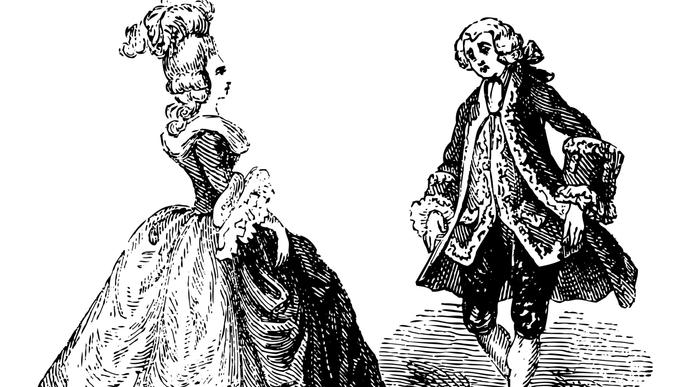
By the eighteenth, nineteenth, and early twentieth centuries, wealthy life had become even more theatrical. If status had once been read through fabric and retinue, now architecture, rituals, interiors, urban space, and the very art of living on display entered the game. Versailles is the clearest example of this new logic. Louis XIV transformed a former hunting lodge into a gigantic political stage set: he expanded the palace, ordered André Le Nôtre's formal gardens to be laid out, built the famous Hall of Mirrors where the entire court could be received, and in effect turned court life into a managed spectacle. All of this was needed not only for beauty: the king drew the nobility closer to himself, kept them under observation, and turned access to the court into a separate form of power.
From there, this logic only intensified. In Europe and America, wealthy families of the nineteenth century built mansions not because they desperately lacked square footage, but because the house had become the main argument in any conversation about social position. One only has to recall the Gilded Age of American magnates with their palaces, ballrooms, summer residences, and armies of servants. The Breakers mansion, built for Cornelius Vanderbilt II, is still described as a symbol of the family's financial and social superiority during the Gilded Age, while maintaining such houses required dozens of servants and expenses that were no less important than the façade itself. In that era, wealthy life loved not merely comfort, but excess: carriages, hats, cigars, calling cards, silver cutlery, separate rooms for every activity, resorts where the "right" people vacationed, and clothing from which one's status could be determined faster than the owner's name. To count as one of your peers, it was not enough simply to have money - it had to be displayed properly in the shop window.
By that time, luxury had in general become part of economic navigation. When banking systems, business reputations, and transparent verification mechanisms were less developed, outward markers often replaced what today function as signals of trust. A house, dinner parties, clothing, family jewelry, the quality of table service, and even the way dinner was served all worked as confirmation of solvency, connections, and stability. That is why old money was not shy about brilliance: it did not need to be liked, but to persuade.
By the way, collecting became a widespread fashion precisely in the nineteenth century. Rare jewelry objects, such as Fabergé eggs, exotic items, winter gardens, curious plants, seasonal residences, and expensive habits that required constant spending - from yachting to maintaining a large staff of servants - signaled not merely affluence, but the ability to live according to a separate, far more complicated scenario. The wealthy person of that time bought not only things, but an entire way of life with its own calendar, geography, and rituals.
Lectera’s Online Courses by topic
Why Wealth Looks Quieter Today - and What It Spends Money On Now
The turning point came when expensive things stopped being miraculous. Mass production, global fashion, credit, marketing, and social media made beautiful living visually accessible to far more people. Good clothing, designer interiors, travel, restaurants, technology, personal grooming, and even an "expensive-looking image" no longer guarantee that the person before you is truly very wealthy. Social media accelerated this especially strongly: it turned comfort, vacations, beautiful breakfasts, and impressive hotels into everyday content that can be shown, rented, styled, and packaged to look as though you live a luxurious life even without enormous capital. As a result, the display window itself became cheaper, and luxury shifted to places that are harder to fake: privacy, closed services, access, control over one's environment, and experiences that are difficult to replicate. This is precisely what explains the popularity of so-called quiet luxury and stealth wealth - a style within which the ultra-rich increasingly read one another through internal markers rather than obvious shine.
One of the most telling examples is private aviation, which embodies the ability to secure greater comfort, a flexible schedule, and the complete absence of random crowds. Alongside this grows the demand for personal service: for very wealthy people, personal assistants, secretaries, concierge services, and an entire team of people who solve daily, organizational, and logistical issues are no longer a whim, but part of the basic infrastructure of life. The same category includes assets that are not visible at first glance, but determine the quality of that life: reliable jurisdictions, family offices, investment portfolios, access to the best medicine, closed schools, private clubs, and services without queues. Money is increasingly moving away from things and toward impressions, travel, and premium service.
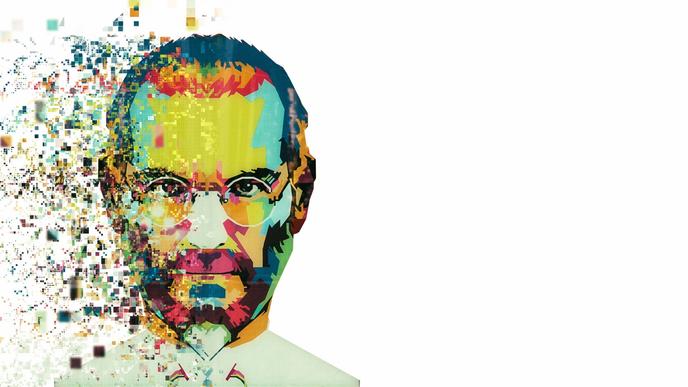
This is where the new outward appearance of wealth comes from. Steve Jobs, in the same turtlenecks, did not look poorer, but freer from the need to prove anything to anyone; that, incidentally, was the strength of his image. Elon Musk, whom we already mentioned earlier, produces a similar effect in his simple clothes. First, in a world of digital money, investments, equity stakes, funds, and technology companies, capital increasingly exists not in the form of "visible treasures," but in the form of access and influence. Second, excessive demonstrativeness today is easily read as insecurity or even poor taste. Other trends have also layered onto this - from the environmental agenda to general fatigue with conspicuous consumption, because of which many forms of former luxury, such as the display of natural furs, have turned into a social taboo.
By the way, the popularization of democracy in the world also indirectly influenced the change in the appearance of luxury: when the elite's main "audience" became not only other elites, but also the broad masses, the opinion of the majority acquired economic weight. For business, public figures, and owners of large fortunes, it became important not to irritate the very audience to whom they later sell goods, services, and ideas. That is why luxury became more cautious, quieter, and smarter: less direct display of superiority and more neutrality, convenience, and forms that society would not perceive as a challenge.
Thus, luxury has not disappeared and has not become somehow "spiritualized" - it has simply changed form along with the era. In a world of scarcity, it looked like gold, furs, feasts, and palaces; in a world of mass consumption, it increasingly moves into access, closed services, expensive logistics, and the freedom not to explain one's value through outward attributes. That is why a truly wealthy life today may look far more modest than it did a hundred or two hundred years ago, while costing much more at the same time. And perhaps that is what best shows how not only the fashion for luxury changes, but the very structure of society itself.
Share this with your friends via:
Latest News

Fall 2026 promises to be an eventful season for education worldwide.

Tickets for WE Convention 2026 are now available - with 25% off for EARLY BIRDS!

The private school Alpha School, which has opened campuses from New York to California, uses AI bots to teach children academic subjects for just two hours a day. The school has no traditional teachers, no homework, and tuition reaches $65,000 per year.

UK Prime Minister Keir Starmer has announced a major public-private partnership in the field of artificial intelligence. Google, Microsoft, Amazon and NVIDIA, together with the government, are launching an AI skills training programme for 7.5 million British workers.

International educational programmes provider Study Group has announced a change of ownership. The company has been acquired by Arete Education – an investment structure in the higher education sector created by Global University Systems (GUS) and US private investment firm Brightstar Capital Partners.
