
















 English


Inbound Marketing
What is Inbound Marketing?
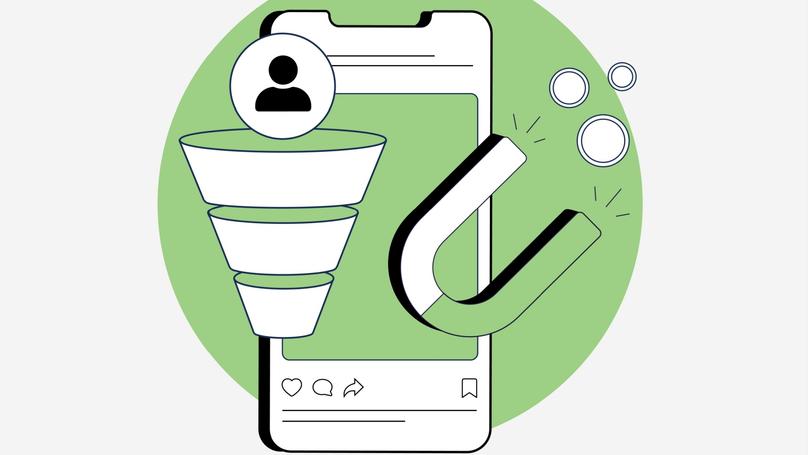
Inbound marketing is a strategy that focuses on attracting customers through helpful, relevant content rather than intrusive advertising or direct sales. The goal of inbound marketing is to create value for potential customers at every stage of their buyer's journey, from their first interaction with the brand through purchase and beyond. Instead of actively "pushing" your products and services, inbound marketing enables customers to find you themselves when they are looking for solutions to their problems or ways to meet their current needs.
The history of the inbound marketing definition began in the mid-2000s, when traditional marketing methods such as telemarketing and direct mail became less effective due to market saturation and intense competition. Consumers, in turn, became more informed and selective and, most importantly, learned to ignore intrusive advertising. In 2006, Brian Halligan and Dharmesh Shah, the founders of HubSpot, first formulated the concept of inbound marketing as an alternative to traditional outbound marketing. Their idea was to create a marketing strategy that would attract customers through usefulness and clear benefits.
The evolution of inbound marketing methodology is ongoing. As technology develops and consumer behavior changes, inbound marketing constantly adapts to new realities. Today, inbound marketing is a comprehensive approach that includes content marketing, SEO, social media, email marketing, and marketing automation. It focuses on creating a personalized experience for each customer and building long-term relationships with the audience.
How Inbound Marketing Works
Inbound marketing methodology is based on creating value for potential customers at every stage of their interaction with your business. It includes attracting the right people, engaging them with helpful content, and turning them into loyal customers who will recommend you to others and become brand advocates.
Based on this, the inbound marketing funnel consists of three main stages:
1. Attraction. At this stage, the goal is to attract your target audience's attention to your brand. This is achieved by creating relevant, useful content that answers questions and solves potential customers' problems. Key attraction tools at this stage include:
-
A blog and articles with SEO-optimized content on topics that interest your target audience.
-
Social media (replying to comments, helpful posts in various formats such as guides or checklists, and developing your brand pages).
-
Keywords and SEO, that is, ensuring the brand can be found in search results.
-
The content itself, which answers the target audience's questions and is distributed through all of the above channels.
2. Engagement. At this stage, you need to establish contact with the audience you've attracted and turn them into leads (potential customers). To do this, you must offer something of value in exchange for their contact information. Here you can use:
-
Lead magnets (free ebooks, templates, checklists in exchange for a specified email address).
-
Feedback forms.
-
Email marketing.
-
Personalized offers based on a specific user's search history and interests.
3. Delight. At this stage, it's important to convert leads into customers and build long-term relationships with them. To do this, you need to provide excellent service, solve their problems, and surprise them with pleasant bonuses. This stage is built on the use of tools such as:
-
Personalized customer support.
-
Regular, useful content that they continue to receive from you.
-
Loyalty programs offering discounts, bonuses, etc.
-
Feedback and surveys aimed at improving services and products.
Inbound vs. Outbound Marketing

The key difference between inbound and outbound marketing lies in their approach to attracting customers. Inbound marketing "pulls in" customers by creating valuable content and solving their problems, whereas outbound marketing "pushes" its products and services using advertising and direct sales. Thus, when evaluating inbound vs outbound marketing by their nature of activity, we can say that outbound marketing is characterized by its organic nature, non-intrusiveness, and long-term effects - but, unfortunately, not by instant results. Inbound marketing, on the other hand, is more aggressive.
When we examine their pros and cons, the difference becomes obvious. Outbound marketing is characterized by rapid reach across a wide audience and control over the message; at the same time, it is suitable for promoting new products and services. However, it is costly, intrusive, and inefficient, since many people today unconsciously ignore advertising due to information overload. It is also difficult to measure ROI (return on investment).
Inbound marketing, in contrast, is inherently cost-effective, attracts a targeted audience, and helps build long-term customer relationships, and its ROI is easy to measure. However, it also takes time to achieve noticeable results and requires continuous creation of high-quality content. There is also a dependency on search engine algorithms and trends.
When should you use inbound marketing, and when should you use outbound marketing? Inbound marketing is ideal for companies that want to build long-term customer relationships, attract a clearly defined target audience, and increase brand awareness. Outbound marketing can be effective for quickly reaching a broad audience and promoting new products and services. Companies can also use both approaches simultaneously to achieve maximum impact. For example, you can use outbound advertising to drive traffic to your website, where visitors can consume helpful content and subscribe to your newsletter.
Core Components
There are several core components of inbound marketing, which can also be viewed as its tools. These include:
-
Content Marketing
Creating and distributing valuable, relevant, and consistent content to attract and retain a target audience. Content marketing helps drive traffic to your website, generate leads, and build trusting relationships with customers. The main content formats include blog articles, e-books, infographics, videos, podcasts, and more.
Content marketing plays a central role in inbound marketing, serving as the foundation for attracting, engaging, and delighting customers. Content must be tailored to the target audience's needs and address their problems. It is important to create content that is useful to customers at every stage of their path to purchase and beyond, to ensure long-term relationships with the audience. After all, it is always pleasant to discover new ways to use a purchased product and to learn something new and useful from interacting with a company, instead of hearing just "Buy now!" over and over.
-
SEO (search engine optimization)
This is a set of measures aimed at improving a website's position in Google and other search engine results. SEO helps attract organic traffic to the site - that is, traffic that comes from search engines for free. The higher a website ranks in search results, the more traffic it receives. To succeed in SEO, you need to analyze keywords, build a semantic core, optimize content and site structure, build high-quality backlinks, and monitor changes in search engine algorithms.
-
Social Media Marketing
This component refers to using social networks to promote a brand, attract customers, and build relationships with the audience. Social media allows you to communicate directly with customers, collect feedback, and respond quickly to their questions and comments. It is important to choose the social networks most popular with your target audience and to create content that is interesting and useful for your followers.
-
Email Marketing and Lead Generation
This involves using email to communicate with customers, send news, offers, and helpful content. Email marketing helps maintain interest in the brand lead generation, and increase sales. Lead generation is the process of finding and qualifying potential customers who may be interested in your products and services. This allows you to build personalized relationships with customers and turn them into loyal buyers. It is important to send only relevant and useful emails, segment your audience, and use marketing automation to simplify the process.
Benefits of Inbound Marketing
Based on everything described above, the following advantages of inbound marketing become apparent:
-
Cost-effectiveness. Inbound marketing is generally more cost-effective than outbound marketing. Content marketing, SEO, and social media can drive more traffic than advertising and direct sales. In some cases, inbound marketing can even be completely free, since content may be created by your in-house editors and other specialists, and most services, such as social media or email marketing, can be connected and developed at no cost.
-
Attracting higher-quality leads. Inbound marketing attracts people who are actively looking for solutions to their problems, which means they are already interested in you, willing to engage, better qualified, and therefore more likely to become customers. Put simply, they are less trouble and require less effort.
-
Building long-term relationships. Inbound marketing focuses on creating value for customers and building trust-based relationships. This is largely due to the initial interest customers already have in you. They come to you knowing and understanding your value, so maintaining relationships with such customers is easier in the long term. This enables you to build a loyal audience that will recommend your brand to others.
Strategies and Best Practices
There are many strategies and practices in inbound marketing, but they all rest on the principles of usefulness, mutual benefit, and genuine interest. The most popular and in-demand inbound marketing strategies include:
-
Creating buyer personas
A buyer persona is a detailed description of your ideal customer. It includes information on demographics, interests, goals, pain points, and your ideal customer's buying behavior. Creating buyer personas helps you better understand your target audience's needs and create content that is most relevant to them.
To create an effective buyer persona, conduct research. Use data from Google Analytics, customer surveys, interviews with your sales team, and competitor analysis. For example, for a company that sells software for small businesses, a buyer persona might look like this: "Small business owner, 35-50 years old, struggles with financial management, is seeking a convenient and affordable solution, prefers online consultations and free trials." Use this data to create content that answers the specific questions and addresses the specific problems of this audience.
-
Developing a content strategy
A content strategy is a plan for creating, distributing, and promoting content. It should include information about your content marketing goals, target audience, content topics, content formats, distribution channels, and success metrics. Developing a content strategy helps you create content that meets your target audience's needs and achieves your goals.
Start by defining your goals: increasing traffic, generating leads, raising brand awareness? Then identify topics that interest your target audience using keyword and trend analysis. Choose content formats that match your audience and goals: blog articles, videos, infographics, and podcasts. Distribute content across channels such as social media, email newsletters, and your blog. Create a content calendar and set KPIs (key performance indicators), such as the number of views, downloads, and conversion rate. Regularly analyze the results and adjust your strategy accordingly.
-
Combining SEO and paid media
For example, advertising in Google Ads and social networks can work together to achieve a greater effect. SEO for inbound marketing helps attract organic traffic, while paid media allows you to quickly reach a wide audience and promote your content. Combining SEO and paid media can increase website traffic, generate more leads, and boost brand awareness.
You can also use paid media to promote your best SEO-optimized articles. Select articles that already receive organic traffic but need an extra push. Create compelling ads and target a specific audience using social media targeting or Google Ads. Track campaign performance and optimize it based on data to increase ROI (return on investment). Paid media can also be used to promote lead magnets.
-
Using data and analytics for continuous improvement
Regularly collected data enables measuring the effectiveness of inbound marketing and identifying areas for improvement. It is important to track key metrics such as website traffic, number of leads, conversion rate, and ROI, and use this data to optimize content, SEO, and other elements of inbound marketing.
Use Google Analytics, Google Search Console, social media tracking tools, and your CRM system to gather data. Regularly analyze indicators such as website traffic, time on site, bounce rate, number of leads, lead-to-customer conversion rate, and customer acquisition cost. For example, if your conversion rate is low, review your CTAs (calls-to-action), analyze your contact forms, and optimize page load speed. Use the insights you gain to make informed decisions and improve results.
Tools and Platforms
To implement an inbound marketing strategy effectively, you need specialized tools and platforms that automate routine tasks, enable data analysis, and help optimize campaigns. The choice of the inbound marketing tools depends on your goals, budget, and technical capabilities, but here are some we can recommend:
-
HubSpot. A platform for marketing automation, sales, and customer service that includes tools for content marketing, SEO, social media, email marketing, CRM, and more. HubSpot inbound marketing is ideal for companies that want to centralize all their marketing activities on a single platform. Thanks to its comprehensive nature and user-friendly interface, HubSpot allows you to automate most tasks and track results in real time.
-
Marketo. A marketing automation platform that specializes in complex B2B marketing campaigns. Marketo provides powerful tools for creating personalized campaigns, segmenting audiences, and tracking user behavior on your website. This platform is especially useful for companies with long sales cycles and complex products that require deep customer engagement.
-
Pardot. A marketing automation platform designed specifically for B2B companies that use Salesforce CRM. Pardot allows you to integrate marketing activities with sales data, providing a more complete view of the customer journey and increasing the effectiveness of marketing campaigns. Thanks to its close integration with Salesforce, Pardot ensures seamless data exchange between marketing and sales teams.
-
SEMrush. A platform for SEO, content marketing, competitor analysis, and market research. SEMrush offers a wide range of tools for keyword analysis, rank tracking in search results, backlink analysis, and competitor monitoring. SEMrush helps companies optimize their content for search engines and stay ahead of competitors.
-
Ahrefs. An SEO platform that provides tools for analyzing backlinks, keywords, content, and competitors. Ahrefs is especially renowned for its backlink analysis tool, which lets you evaluate the quality and quantity of links pointing to your site and your competitors' sites. Ahrefs helps companies build an effective link-building strategy and improve their search rankings.
Keep in mind that there is no one-size-fits-all solution that works for every company. Try several options and choose the one that works best for your team and your business.
Inbound Marketing Examples
Let's look at some examples of inbound marketing examples in practice in different sectors and niches.
In the B2B inbound marketing niche, the company Drift is particularly noteworthy. Drift, a provider of marketing and sales platforms, successfully uses inbound marketing to attract leads and increase brand awareness. It creates high-quality content, such as ebooks, webinars, and blog articles, that answers questions and solves problems for its target audience. According to Drift, 80% of its leads are generated through inbound marketing. In the B2C sector, a great example of inbound marketing is Casper, a mattress manufacturer. The company creates engaging, useful content, including articles on sleep, tips for improving sleep, and videos on how to choose a mattress. According to Casper, its blog generates more than 500,000 visits per month.
Campaign Share a Coke by Coca-Cola is another vivid example of successful inbound marketing. Coca-Cola replaced its logo on Coke bottles with people's names, sparking huge interest and engagement on social networks. People shared photos of their personalized Coke bottles on social media, boosting brand awareness and sales.
Spotify also actively uses inbound marketing, primarily through personalized playlists and reports. Every year, Spotify runs the "Spotify Wrapped" campaign, which sums up each user's musical year by showing their favorite artists, songs, genres, and listening time. This content goes viral on social media, as users eagerly share their musical tastes. Spotify provides users with unique, personalized value.
The Future of Inbound Marketing

The future of inbound marketing is inextricably linked to technological development and changing consumer expectations. Even today, we can see how artificial intelligence (AI) and deep personalization are becoming key drivers of success. AI is actively transforming inbound strategies, enabling marketers to automate complex processes -from content creation to data analysis and customer interactions via smart chatbots. According to Forrester, by 2021, 85% of customer interactions were expected to be handled without human involvement, which demonstrates the growing role of automation and AI in marketing. Platforms that use AI can analyze huge amounts of data to deliver the most relevant content and offers to each user at the right moment, which is the foundation for attracting and retaining an audience.
Personalization supported by AI and data is also reaching a new level. Consumers expect brands to know their preferences and deliver a unique experience. A Segment study found that 71% of consumers expect personalized interactions, and 76% are disappointed when this does not occur. The inbound marketing of the future will be based on a deep understanding of each individual customer, offering them exactly the content, product, or solution that matches their current needs and interests. This means not just addressing them by name, but also creating individual customer journeys, dynamically changing offers, and tailoring content to the user's context.
Another important trend is voice search and the use of virtual assistants. With the growing popularity of devices such as Amazon Echo and Google Home, voice-based queries are becoming increasingly common. According to Statista, by 2024, the number of voice assistant users worldwide will reach 1.8 billion people. This requires marketers to adapt their content, creating more conversational, question-oriented materials and optimizing for longer, natural-language queries. In addition, the importance of video content, interactive formats, and building strong online communities - where users can interact with each other and with the brand - is growing.
Despite these prospects and the listed trends in inbound marketing trends mentioned above, inbound marketing also faces challenges. Content saturation makes it harder to capture attention, and data privacy concerns require a responsible approach to collecting and using data. To overcome these difficulties, companies need to focus on creating content of exceptional quality that truly solves their audience's problems, while ensuring transparency and data security and complying with regulatory requirements such as GDPR. Investing in analytics, team training, and advanced technologies will not only help address these challenges but also unlock the full potential of inbound marketing for long-term growth.
Key Takeaways and Summary
Inbound marketing is an effective customer acquisition strategy that focuses on creating value for potential customers at every stage of their buying journey. Unlike outbound marketing, which "pushes" products and services, inbound marketing enables customers to find you themselves when they are searching for solutions to their problems or ways to fulfill their needs. Inbound marketing helps attract a targeted audience, build long-term customer relationships, and increase brand awareness.
In today's digital age, where consumers are overwhelmed by intrusive advertising and actively seek relevant information, inbound marketing is becoming a decisive success factor for any business. It allows companies not only to attract potential customers but also to build trusting relationships with them, turning them into loyal buyers and brand advocates. By investing in inbound marketing, companies create a solid foundation for long-term growth and prosperity in an ever-changing online world.