












 Which American 2000s TV Series Are You?
 The Perpetual Student Syndrome: When Self-Development Becomes a New Form of Procrastination
 Test: Who Were You in a Past Life?
 Your Mythological Totem: Take the Test and Find Out Which Ancient Creature Protects You?
 Adulthood Test: Find Out How Old You Really Are
 Empathy Check. How Well Developed Is Your Emotional Intelligence?

 English
 Русский
 Deutsch
 Español
What Are People Buying Right Now: 7 Micro-Niches for Small Business and How to Check Demand in 1 Evening
In 2026, entering an online business is both easier and harder at the same time.
Easier - because there are tools, platforms, logistics, and advertising that are available from any laptop. Harder - because the market is oversaturated: in almost any big category there are already dozens of strong players, and the buyer has become even more demanding and spoiled than before. And if you come in "just to sell clothes" or "just to make décor," you enter an ocean in which you risk drowning, even if your product is truly good.
That is exactly why more and more often it's not "the biggest" who win, but "the most precise." This is where micro-niches come onto the scene - narrow segments within a large market, where you sell not a "category," but a specific use case, audience, or a clear promise. A micro-niche is not necessarily "small demand." It is demand that is gathered in one place and answers the specific needs of a specific group of people. After all, the more precisely you hit the need, the lower the risks: it's easier for you to stand out, easier to create packaging, easier to explain value - and easier to find your buyer. So, we have collected for you 7 micro-niches that are confirmed by data, and that you yourself can confirm using a simple demand-check algorithm literally in one evening!
1. Yoga mats and everything that guarantees wellness at home and in the office
Why is this in demand? First, wellness has become part of everyday life: people increasingly choose "small practices, but regularly," instead of rare trips to the gym. Second, the "work-life blend" format is growing: sports and stretching are moving into the office, on business trips, and at home - because there really isn't always time for a "full workout." Therefore micro-scenarios like "five-minute stretching during a break" or "yoga after work right in the office" form separate demand for compact and convenient solutions.
According to Shopify (based on Google Trends), interest in the query "yoga mat" in the USA stayed stably strong all year, with clear seasonal peaks (especially during the period of New Year's goals and in spring). That is, this is not something viral and fleeting, but a category with a constant base of demand.
The main thing is not to sell "a mat in general." Sell for a scenario or for a specific audience, for example:
-
mats "travel/lightweight" (for the office/on the go),
-
mats with markings for beginners,
-
premium materials + care/cover/strap (a set),
-
mats for Pilates/stretching (different thickness, different positioning).
Mini-check in Trends: type in "yoga mat," and then look at related queries (especially Rising): that's where "angles" are often born - like "non slip," "extra thick," "travel yoga mat."
2. Soap and "bath & body" as a ritual
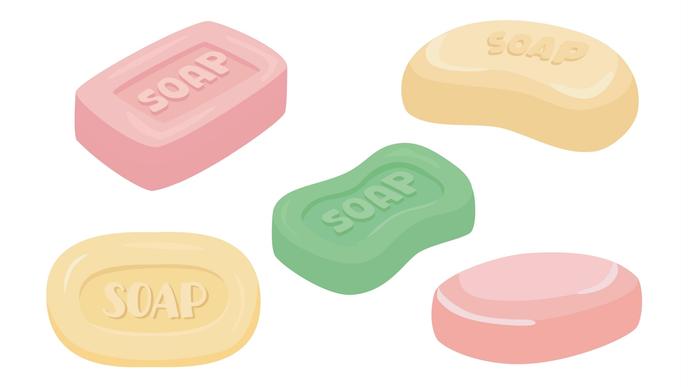
Soap is one of those products where people buy not only a "function," but also a feeling: scent, aesthetics, mood, a "small gift to myself," or comfort after a hard day. This is a category that lives well in an economy of uncertainty: when you want care and joy, but without big spending, the buyer chooses affordable rituals. Plus, in recent years interest in ingredients, eco-friendliness, and "skin-friendly" products has noticeably grown - and this makes the niche even richer in micro-angles.
Shopify records that searches for "soap" remained strong and even grew during 2025. And another important number: in 2024 Shopify merchants sold more than 23 million bars of soap (plus tens of millions of units of related products). This is a direct signal: the category is not just "searched," it is bought.
Although soap is a basic product, people also buy it for other, less practical reasons. Therefore it's better to enter through a specific offer:
-
gift sets "for the home/for the guest bathroom",
-
refill/eco-packaging,
-
"skin-friendly" (sensitive skin, fragrance-free),
-
unusual scents/limited editions (collections).
According to Grand View Research, the global bar soap market is growing and is forecast to continue growing through 2030.
3. Travel pants: clothing for trips
Travel and the hybrid work format have formed an entire class of clothing: "comfortable, but looks normal." People move around more often, combine business trips and leisure, live in the rhythm of "plane - meeting - dinner," and in such scenarios ordinary casual clothing doesn't always fit. Therefore demand shifts toward items that can handle the road: they don't wrinkle, they're comfortable, easy to combine, and look appropriate.
Shopify shows a long growth trajectory for the query "travel pants": a gradual rise, and after 2022 - a noticeable surge against the background of travel returning, and now interest is at the highest levels over the observation period. This is a good example of a "slow burn" category: it didn't take off suddenly - it matured. At the same time, "travel pants" are actually a fairly broad market in themselves. The micro-niche here begins when you add a promise:
-
"don't wrinkle" + "one pair of pants for 3 outfits",
-
"airport outfit" (comfort + look),
-
"linen wide-leg travel" (a specific trend/silhouette),
-
"for business trips" (pockets/fit/neutral colors).
How to check that it's not only "fashionable," but also bought: in Trends switch the filter to Shopping (if available): it helps you get closer to queries with purchase intent.
4. Reusable water bottles: the bottle as a lifestyle accessory
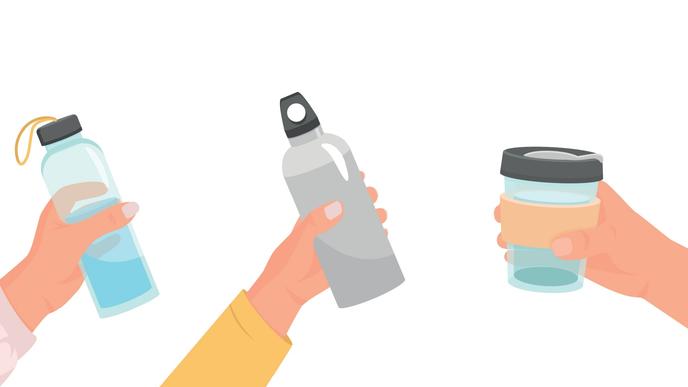
Reusable bottles давно stopped being just a utilitarian thing. This is about habits, about "I take care of myself," about an aesthetic lifestyle - and, yes, about a social signal: like thermal mugs or sports bags, a bottle today is part of an image. Plus, this is a product with a high "repeat purchase" frequency: people want a different shape, a different design, a collection, a gift, an update to match their style.
Shopify notes steady growth of interest in the query "reusable water bottle" over the last 5 years and a clear up-trend through 2025. Grand View Research also estimates the global reusable water bottle market at $9.67 billion (2024) and forecasts $12.60 billion by 2030 (CAGR ~4.6%).
Where is the micro-niche for you here:
-
"flat bottle" / "fits laptop bag" (office scenario),
-
"hot-cold" bottles (for coffee/tea and water),
-
aesthetics (color collections, engraving, monogram),
-
a set "bottle + cover + strap/stickers" (as personalization).
5. Home décor: the home as a project that never ends
Agree, a home is not just a place where you live, but a space that reflects your style and helps you regain control over life after a hard day. In 2026, people increasingly perceive the interior as a "living project": they update details by seasons, by mood, by life stage (move, renovation, child, pet). And unlike furniture, décor is a quick way to "make changes" without big investments, so demand here is steady.
Shopify records spikes of interest in the query "home decor" around seasons of renewal/holidays and notes that décor is increasingly perceived as a constant project. According to Grand View Research, the global home decor market was about $960.14 billion in 2024 and is projected to grow to $1,622.90 billion by 2030.
Here you can, for example, use the following directions for positioning your décor:
-
"seasonal refresh": summer update / autumn coziness / holiday mood,
-
minimalism vs maximalism (different audiences, different content),
-
"small space": décor for small apartments,
-
functional décor (organizers, wall décor + storage),
-
personalization (name/date/city map/home pet, an image of which is applied to an item on request).
Keep in mind that in Trends for "home decor," regional breakdowns and seasonality are especially useful so you don't buy inventory "blindly" and don't end up in "failed" months.
6. Pet supplies or "pets are family, so they should be comfortable too"
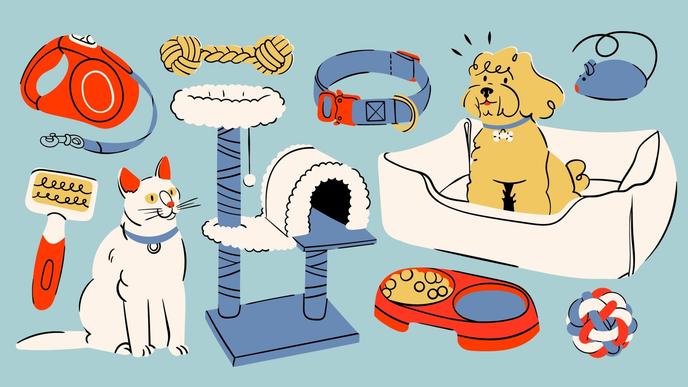
Pets are increasingly perceived as part of the family, and therefore it matters to people not only to feed their animals quality tasty food, but also to ensure their comfort, safety, emotional state, and even aesthetics. Hence the growth of premium pet goods: beds, carriers, grooming, toys that promise calm or development. Plus, gifts work great in this niche: many people buy goods for friends' pets as readily as they buy something for children.
Shopify shows consistently high interest in the query "pet supplies" and emphasizes the "pets-as-family" trend. Mordor Intelligence forecasts growth of pet supplies to $369.85 billion by 2030 with an estimate of $248.71 billion in 2025 (CAGR 8.26%).
Micro-niches that usually "hit" best in this direction:
-
wellness for pets (joints, anxiety, grooming, products for senior pets),
-
premium carriers/beds (aesthetics + comfort, for example, baskets and suitcase carriers with windows so the pet can look out while being carried),
-
subscriptions for treats/care products with delivery,
"matching" (paired accessories for owner and pet).
Don't forget before launching sales to check marketplace rules and product restrictions, for example, ingredients and "healing" claims on packaging (it's better to отказаться from the latter altogether).
7. Blushes: the "blush renaissance" and other cosmetics in different formats
The beauty sphere has always been one of the most "content-driven" categories: people don't just buy, they watch, compare, repeat, discuss. Blush is an especially good product for a micro-niche because, unlike skincare, the effect of use is visible immediately, and application techniques and trends on the internet are constantly changing - and you can adapt to them. For example, "sunset blush," "draping," "no-makeup makeup," and other waves in social media. This creates demand for new formats, shades, collections, and mini-sets - and makes the niche dynamic, but at the same time stable (people bought blush before the trend and will buy after). Also, blush and other cosmetics are easy to promote through collaborations and advertising with beauty bloggers.
Shopify records steady interest in the query "blush" and notes a "blush renaissance" (with reference to Business of Fashion). Also, Vogue UK at the end of 2025, summing up, wrote that in 2025 there was no bigger makeup moment than blush, and breaks down how the trend developed.
Micro-niches inside blush:
-
format (liquid / stick / cream-to-powder),
-
"no-makeup makeup" vs bright "statement cheeks",
-
shades for undertones/seasons,
-
mini-formats, sets, "duo" for technique (two shades).
How to check demand in 1 evening: a step-by-step algorithm
Below is a check of any micro-niche that you want to choose (including one that is not in the list) in just 60-120 minutes. This does not require purchasing goods, a website, or a budget. For now you only need to understand whether there is momentum, discover a micro-direction, and check signs of real buying.You can also take the Lectera course "From Idea to Business. Create a Lucrative Firm From Scratch", where, together with experienced experts, you'll be able to choose the right idea, study your target audience, create a practical business plan, and take the first step toward the new venture of your life!
Step 1. Formulate a hypothesis so that it can be tested (5-10 minutes)
A bad hypothesis: "I want to sell home decor." A good hypothesis: "I want to sell personalized wall décor for people who are moving/renovating/updating their interior for the season."
To formulate your hypothesis, specify:
-
who the buyer is,
-
what they buy,
-
why (scenario/pain),
-
why from you (what your difference is).
Remember that the more precise the hypothesis, the faster you will find a micro-niche and be able to assemble a clear offer.
Step 2. Google Trends: check momentum and seasonality (20-30 minutes)
What to do:
Open Google Trends and enter the base query (for example, "reusable water bottle").
Set the period to 12 months (minimum), and then look at 5 years so you don't confuse seasonality with growth. Shopify directly warns: a short period often distorts the picture - in one month you can see a "peak" that in reality is just seasonal.
Evaluate:
-
is interest growing or does it stay "flat,"
-
are there seasonal peaks, rises and falls,
-
where (regions/countries) interest is expressed more strongly.
How to interpret the chart correctly. Trends shows an index 0-100: this is relative popularity in the selected period and region, not the absolute number of queries. It's important for you to see direction, stability, and seasons so you don't enter a niche that lives two months a year - if you are not planning to work seasonally.
Step 3. Look for micro-niches via Related queries (15-25 minutes)
In Trends scroll down and open Related queries → Rising. This is the fastest way to see how people уточняют the need: what formats, properties, and scenarios they search for. Essentially, Rising queries are market hints about how exactly to "split" a big niche into sellable micro-angles.
Example logic (simplified):
-
"soap" → "natural soap," "refill," "sensitive skin"
-
"pet supplies" → "orthopedic dog bed," "anxiety," "carrier"
-
"blush" → "liquid blush," "blush stick," "best blush for…"
Shopify in its methodology advises starting broad and narrowing via related queries, because that's how you find demand "inside" the category, where competition is lower and the offer is easier to formulate. And one more lifehack: write down 10-15 rising queries into a list - later you will use them to check on marketplaces and in social media.
Lectera’s Online Courses by topic
Step 4. Turn on the Shopping filter (if available) and look for "buyer" phrasing (15-20 minutes)
Where possible, switch Web Search → Shopping. This helps you get closer to queries with purchase intent (brands, specific formats, "best," "for," "near me," "buy"). The point is simple: people may search "blush" just to look at pictures, but "best liquid blush" is more often already closer to a purchase.
What to consider a good sign:
-
queries become more specific (format/material/scenario),
-
brands appear (this means the market is formed),
-
interest holds not just for one month.
If you still see "peaks and dips," decide in advance: are you ready for a seasonal business? Sometimes seasonality is normal, but then you need a plan for "what we sell out of season" or how you earn in the peak.
Step 5. A quick reality-check on marketplaces (30-60 minutes)
Here your task is to confirm: this is actually bought, not just searched. The most frequent newbie failure is seeing a красивый trend in social media, but not understanding that people like, not buy. A marketplace checks this more harshly.
Start with Etsy Trends ("Trending now") and see which categories/aesthetics are rising right now. This is especially useful for home décor, gifts, accessories, clothing.
Your goal at this stage is not to copy trends, but to understand: which themes and visual languages are "coming in" now, and how your product can fit into demand.
Enter your sub-niche (for example, "travel pants for women," "yoga mat," "personalized wall decor," "reusable water bottle"). Look not at the first card, but at signs of real demand:
-
number of reviews on the listing/shop (this is an indirect indicator of sales),
-
repeatability of similar products (if "the same thing" sells for many - demand definitely exists),
-
price range (is there room for your positioning: budget/mid/premium).
Another useful technique: open 5-7 top listings and see how they formulate the promise. Often the micro-niche is already clear from the title: "non-slip travel yoga mat," "airport travel pants," "personalized minimal wall print."
Step 6. Final assessment: "Can I stand out in 1 sentence?" (15-20 minutes)
After the data there are usually 2-3 strong angles left. Next you choose the one where you can formulate the difference as simply as possible - and where you can realistically implement that difference (supplier, design, packaging, service).
Check yourself with questions:
-
What do competitors have that is "like everyone else"?
-
What can I do differently: design, set, personalization, packaging, scenario?
-
Why will a person choose me without reading 20 cards?
If you cannot formulate the difference in one sentence, the niche is still too broad. Go back to related queries and narrow down. And an important point: the difference should be not only "beautiful," but also understandable to the buyer in 2 seconds.
It is important to understand that a niche's popularity does not yet mean that sales will automatically be yours - this is not a magic button, but only a filter that helps you not waste time and money on ideas "into the void." And remember the limitations of the data: Google Trends shows relative interest in queries on a 0-100 scale, i.e., momentum and seasonality, not the real number of searches. Use trends as a navigator: to understand where it's worth looking at all and when demand strengthens, and then test the hypothesis in practice - through a specific offer and tests.
Share this with your friends via:
Latest News

Fall 2026 promises to be an eventful season for education worldwide.

Tickets for WE Convention 2026 are now available - with 25% off for EARLY BIRDS!

The private school Alpha School, which has opened campuses from New York to California, uses AI bots to teach children academic subjects for just two hours a day. The school has no traditional teachers, no homework, and tuition reaches $65,000 per year.

UK Prime Minister Keir Starmer has announced a major public-private partnership in the field of artificial intelligence. Google, Microsoft, Amazon and NVIDIA, together with the government, are launching an AI skills training programme for 7.5 million British workers.

International educational programmes provider Study Group has announced a change of ownership. The company has been acquired by Arete Education – an investment structure in the higher education sector created by Global University Systems (GUS) and US private investment firm Brightstar Capital Partners.
