








 Which American 2000s TV Series Are You?
 The Perpetual Student Syndrome: When Self-Development Becomes a New Form of Procrastination
 Test: Who Were You in a Past Life?
 Your Mythological Totem: Take the Test and Find Out Which Ancient Creature Protects You?
 Adulthood Test: Find Out How Old You Really Are
 Empathy Check. How Well Developed Is Your Emotional Intelligence?

 English
 Русский
 Deutsch
 Español
Cancel Culture: What It Is and How It Can Threaten Businesses, Brands, and Professionals
Cancel culture давно ceased to be a topic only about celebrities, inappropriate tweets, and scandals within small social media communities.
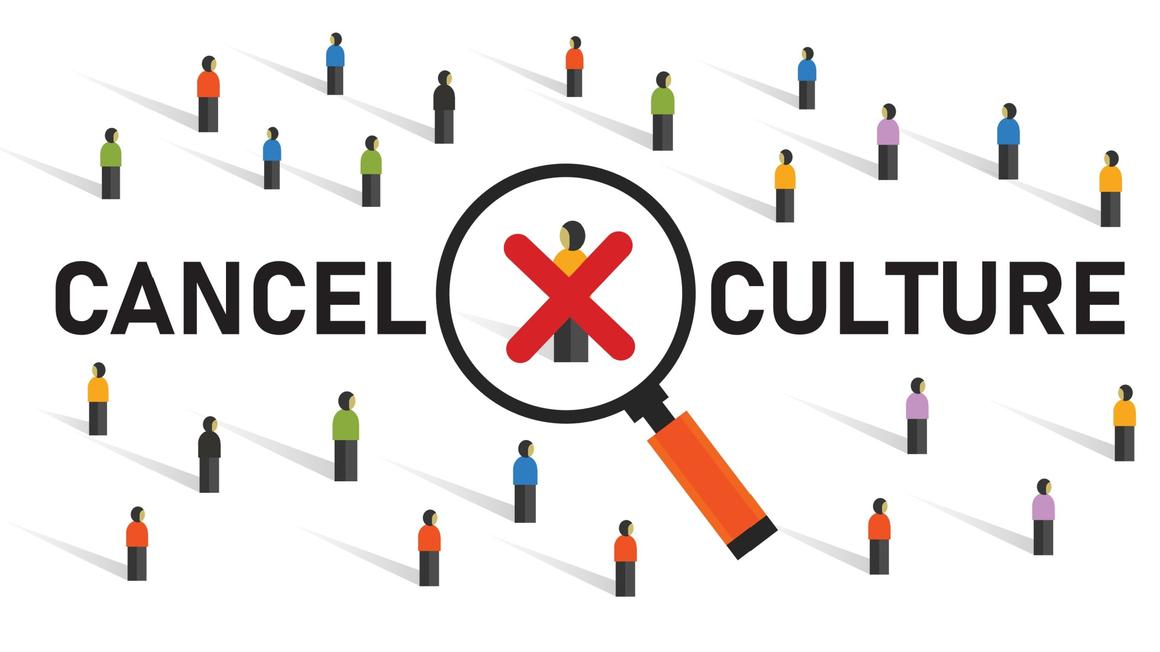
For business, it is a very real risk: one failed creative campaign, one poorly read audience, one extra phrase from the CEO in an interview - and it is all over for the company. Screenshots, a wave of outrage, a boycott, pressure on partners, rushed apologies, ads taken down, falling sales, and a long reputational tail. Any outrage today, any marketing blunder, and any conflict with a target audience means above all inevitable - and often enormous - financial losses, and long-term ones at that. So there is a reason why "cancellation" in 2026 is the nightmare of most executives. But what should be done to make sure it never becomes reality?
How "Cancellation" Begins and When Crisis Management Needs to Be Brought In
Cancel culture is defined not only by the intensity of the reaction and the devastating consequences, but also by the extreme speed with which it develops. And yet it does not happen overnight, and it almost always unfolds according to the same chain of events.
First comes the trigger: a controversial ad, an unfortunate interview, a rude comment, a video of an incident, a careless joke, a questionable visual. Then come the first comments - at first from ordinary users, then from people who know how to quickly package a conflict into a clear emotional narrative: bloggers, journalists, niche pages, activists, former employees, local opinion leaders. The next stage is viral interpretation: the story stops being "one weird video" and turns into a symbol of something larger - racism, hypocrisy, disrespect, cynicism, disconnection from reality. The company then starts being examined from all sides under a magnifying glass, and at that point other questionable statements and awkward moments that previously went unnoticed often resurface. After the discussion phase, the pressure begins: the audience starts demanding a response, calling for a boycott, tagging partners, advertisers, platforms, and people associated with the brand. And if the company stays silent at that point, responds arrogantly, or pretends that "things are not so clear-cut," the crisis rapidly deepens and gathers a whole bouquet of consequences.
That is exactly why it is critically important for a company to bring in crisis management in time. It becomes necessary when you are observing three signals at once. First: the negativity stops being isolated and becomes repetitive in meaning - people are outraged by the same thing in the same way. Second: not only the brand's followers, but also outside accounts with their own audiences and their own weight get involved in the discussion - in simpler terms, opinion leaders. Third: the criticism starts spilling beyond the original publication - you are being tagged on other platforms, people are writing to your partners, demanding explanations, and carrying the conflict into the media. At that point, a company urgently needs to understand what exactly the public sees as the offense, where the public is in fact right, what can be acknowledged immediately, and who inside the brand was actually responsible for the controversial message or campaign - in other words, who bears responsibility and can first and foremost explain what happened and how. The more you delay, the more expensive your mistake will become. Remember that.
The damage from "cancellation" can hit in several directions at once: sales, partnerships, internal climate, employer brand, investor trust, and the loyalty of the core audience. For an individual professional, the stakes are high as well: you can lose your job, advertising contracts, a client, your public reputation, or the chance at a new project if your name has already become toxic within your circle. Unfortunately, there are countless examples where cancel culture has led to catastrophic consequences both for employees and for the brand.
"Cancellation" Over a Creative Campaign: H&M and Balenciaga
One of the most common reasons for a severe backlash is advertising that the audience reads as offensive or dangerously blind to context. The most famous example is H&M in 2018. At that time, the brand published an advertising image in which a Black child was wearing a hoodie with the phrase Coolest monkey in the jungle. The campaign was almost immediately called racist. H&M apologized and removed the image, but the story did not end there: musician The Weeknd publicly ended his collaboration with the brand, and just a few days later protesters in South Africa vandalized several H&M stores, considering the apology insufficient.
The essence of that conflict lay not only in one unfortunate phrase. The scandal reached those proportions simply because the brand failed to feel the historical and racial context of the image, which for part of the audience was not merely "unfortunate," but deeply humiliating. And this is exactly what matters for the topic of cancel culture: the public rarely gets angry at the object itself. The issue always lies in the subtext that was accidentally allowed in, in the idea that the audience sees behind it - in this case, carelessness, insensitivity, and the sense that inside a large company no one even asked the most obvious question: "Could this ad actually be hurtful to someone at all?"
A similar but even harsher story happened to Balenciaga in 2022. The brand released campaigns in which children posed with teddy bears in accessories resembling BDSM aesthetics, and in another shoot, documents with text from a court ruling on a child pornography case appeared in the frame. This provoked an explosive reaction: the public saw in the campaign not artistic provocation, but a dangerous degradation of morality. Balenciaga removed the ads, and creative director Demna and CEO Cédric Charbit publicly apologized. But the scandal turned out to be so toxic that by February 2023 Reuters reported that Kering was creating a separate group-wide role for brand safety oversight. In other words, the blow was so serious that the parent company decided to change not only Balenciaga's communications, but the entire system of risk control. It is a very revealing case: cancel culture worked here not as "the internet got offended," but as a mechanism that forced a luxury holding group to rethink its internal decision-making infrastructure.
"Cancellation" Over a Values Conflict: Bud Light
With Bud Light, everything was different. There was no offensive visual, no ambiguous ad, and no scandalous image of children. The trigger was a collaboration with transgender influencer Dylan Mulvaney: in April 2023, she posted a promotional video with a personalized Bud Light can. After that, a conservative boycott against the brand quickly unfolded and spread far beyond social media. In June 2023, Reuters reported that Bud Light had lost its status as the best-selling beer in the United States: in the four weeks ending June 3, Bud Light sales fell 24.6% year over year, while Modelo Especial moved ahead.
Why is this case so important? Because it demonstrates that "cancellation" can be triggered not only by an obvious offense, but by a values conflict with part of the audience. For some, it was an ordinary influencer partnership. For others, it was a political gesture, to which they decided to respond with their wallets. And from that point on, Bud Light's problem lay not only in the collaboration itself, but also in the brand's uncertain reaction, as it tried not to alienate everyone at once and ended up angering even more people.
"Cancellation" Over a Concrete Act: United Airlines
The United Airlines story in 2017 remains one of the clearest textbooks in reputational failure. On April 9, passenger Dr. David Dao was forcibly removed from a United flight to make room for a crew member. The video showing him being dragged down the aisle immediately went viral. The incident itself was already visually horrifying enough, but what finished off the company was the reaction of its leadership. At first, CEO Oscar Munoz in a letter to employees essentially supported the staff and described the passenger as "disruptive and belligerent." Only later did a more meaningful public apology follow. Reuters at the time wrote separately about the growing pressure on the airline, while a Morning Consult poll showed that 40% of Americans were willing to spend more time and money just to avoid flying United.
Here, "cancellation" happened because of an obvious mismatch between the brand and reality. The public saw not merely poor service, but an entire combo: unfair airline policies, lack of empathy, and failed crisis communication. In that sense, the final nail in the coffin for the company was precisely its cold, self-protective response to the claims and criticism.
Lectera’s Online Courses by topic
Two More Cases Where the Brand Did Not Understand What It Had Done Wrong: Pepsi and Dolce & Gabbana
A good example of how a brand can run into cancellation literally within hours is Pepsi's Kendall Jenner ad in 2017. In the video, the model leaves a photoshoot, joins a street protest, and in the climax hands a can of Pepsi to a police officer, after which the tension seems to dissolve. The problem was that the ad came out against the backdrop of real protests in the United States and was read as an attempt to turn a serious political and civic conflict into a pretty advertising gesture. Critics, activists, and social media users accused Pepsi of trivializing the protest movement and selling soda on the imagery of public tension. The company pulled the ad quite quickly and admitted that it had "missed the mark," but what is particularly telling here is the speed of the scandal: the internet immediately sensed the falseness and gave the brand no time to "carefully think through its position."
An even more painful and expensive example for a brand is Dolce & Gabbana in China in 2018. At that time, the company launched videos in which a Chinese model awkwardly tried to eat Italian food with chopsticks. In China, the campaign was perceived as condescending, humiliating, and racist. The scandal escalated sharply after screenshots of offensive messages allegedly written by Stefano Gabbana were leaked online. As a result, the brand was forced to cancel a major show in Shanghai, and the very next day Reuters reported that Chinese online platforms had begun removing Dolce & Gabbana products from sale. Later, the founders recorded a video asking for forgiveness, but the story did not end there: in 2019 Reuters reported that the fashion house was expecting declining sales in China and still could not shake off the consequences of the crisis. This is exactly the kind of case where one campaign destroyed relations with a critically important market not for a week, but for years.
The internet truly forgets nothing. But if you look at all these stories calmly, the main conclusion is the following: the audience always senses the gap between promises and actions very sharply. If a brand positions itself as "trendy, modern, and ultra-loyal," but treats the context of its own advertising so carelessly, it will not be forgiven. If a company talks about values, but in a crisis or in convenient moments does not live up to them, that will not be forgiven either. And the faster the promised image diverges from real behavior, the harder the blowback will be. Cancel culture rarely appears out of nowhere, but it is almost always amplified when a brand ignores the obvious for too long and realizes and admits its mistake far too late.
Share this with your friends via:
Latest News

Fall 2026 promises to be an eventful season for education worldwide.

Tickets for WE Convention 2026 are now available - with 25% off for EARLY BIRDS!

The private school Alpha School, which has opened campuses from New York to California, uses AI bots to teach children academic subjects for just two hours a day. The school has no traditional teachers, no homework, and tuition reaches $65,000 per year.

UK Prime Minister Keir Starmer has announced a major public-private partnership in the field of artificial intelligence. Google, Microsoft, Amazon and NVIDIA, together with the government, are launching an AI skills training programme for 7.5 million British workers.

International educational programmes provider Study Group has announced a change of ownership. The company has been acquired by Arete Education – an investment structure in the higher education sector created by Global University Systems (GUS) and US private investment firm Brightstar Capital Partners.
