













 Which American 2000s TV Series Are You?
 The Perpetual Student Syndrome: When Self-Development Becomes a New Form of Procrastination
 Test: Who Were You in a Past Life?
 Your Mythological Totem: Take the Test and Find Out Which Ancient Creature Protects You?
 Adulthood Test: Find Out How Old You Really Are
 Empathy Check. How Well Developed Is Your Emotional Intelligence?

 English
 Русский
 Deutsch
 Español
Upgrading One of the Most Popular Course Design Models: How to Integrate Artificial Intelligence into ADDIE
We are increasingly delegating to AI not only routine and repetitive tasks but also allowing it to learn from more creative exercises.

For instance, the use of neural networks in developing educational materials and entire courses has been rapidly expanding for a couple of years now. Of course, there are still many risks. Among them are a lack of methodological depth and limitations on creativity. But there are also pluses-simplifying personalization and contextualization of learning. In any case, ignoring the capabilities of artificial intelligence today is, to say the least, unwise. In this article, we will explore how researchers and instructional designers have adapted the popular ADDIE model to integrate AI into learning design.
How ADDIE Was Used Before the AI Era
This model is considered a classic in instructional design because of its universality; that is, it is suitable for the vast majority of very different educational programs and courses. ADDIE was created back in the 1980s in the USA. To generalize and not go into details, this system describes five stages that must be completed to create a course. These five stages are the acronym for the model's name:
-
A - Analyze. This stage involves researching all the needs of the learners and the market itself-a deep study of the target audience, its "pain points" and characteristics, desires, and expectations from learning.
-
D - Design, that is, the actual design. Simply put, this is the creation of the very structure of the future course, competency maps, and motivational strategies for students. At this same stage, a generalized Learning or Student Journey Map is built-a diagram reflecting the educational route precisely from the students' point of view (considering, of course, the initial knowledge level, needs, potential difficulties, and the desired outcome).
-
D - Development, that is, filling the program with the course's substance. This stage involves creating and distributing assignments, lectures, seminars, lab work, and other tasks.
-
I - Implementation, or rollout. This is the actual learning process itself: conducting the first in-person sessions or publishing the course on a website, and so on.
-
E - Evaluation, assessment. At the final stage, it is important to assess whether the intended results were achieved. This is evaluated using specific metrics that depend on the specifics and direction of the learning. For example, if the course is more theoretical, the result might be passing an exam; if it is practical, it could be completing a specific task, implementing a project, and so on.
When ADDIE first appeared, its advantages were obvious-clarity and systematicity, as the program is built not on guesses but on the concrete results of preliminary research. But now, the shortcomings are more apparent-long development time and a low level of flexibility, since feedback from learners also takes time, making it not so simple or quick to implement changes.
In its classical form, this model does not account for collaboration between humans and AI. But scientists from Morocco, Khadija Hilali and Meriem Shergui, proposed embedding neural networks directly into ADDIE.
ADDIE 2.0
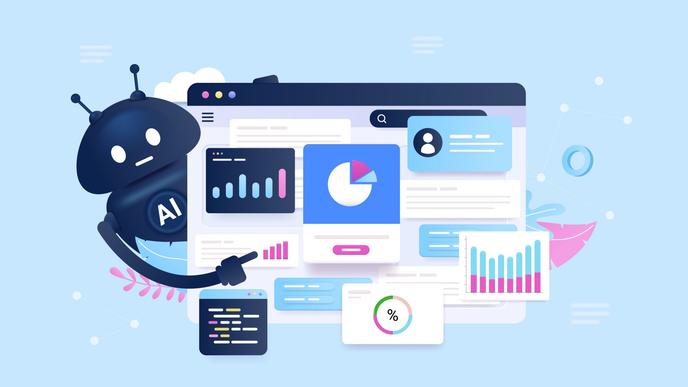
The goal of researchers Khadija Hilali and Meriem Shergui was to combine the key components of ADDIE with the capabilities of AI to meet the current needs of both learning professionals and the learners themselves.
While working on updating the model, the researchers conducted a survey to determine the expectations and demands of 90 colleagues-trainers, teachers, and instructional designers-regarding the integration of AI into their work.
As a result, they developed ADGIE. Now, instead of the Development and Implementation stages, stages of Generation and Individualization have appeared. But in reality, AI tools are used at every stage of the updated model, although human control remains crucial.
Stage-by-Stage Breakdown
Stage 1 - Still Analysis
The tasks at this stage remain the same-to identify the key demands of the market and the future learners themselves. What can be delegated to AI in this process:
-
Generating questions for target audience analysis (to determine knowledge level, learning expectations, needs, interests, apprehensions).
-
Analyzing the responses.
-
Creating a composite profile of different audience segments.
The instructional designer, however, must verify the AI's work and ensure that all characteristics align with the stated needs, goals, and learning objectives identified during the survey.
Stage 2 - Design
Here, the course structure, the sequence of modules and lessons, is also built. This is also called the course "skeleton." At this stage, the AI structures the content collected by the instructional designer (relevant educational materials), creates that very SJM or student journey map, and proposes a course prototype.
Stage 3 - Generation
In the classic ADDIE, the third stage was "Development"; its essence has essentially remained the same. This is the creation of the actual educational materials that students will work with. The AI's tasks here are-after the instructional designer approves the course structure-to generate its content. These could be, for example, draft versions of illustrations and diagrams, prototypes of assignments, exercises, and tests. It is crucial for the instructional designer to carefully check the materials for alignment, relevance, and quality, and if necessary, rework them independently.
Stage 4 - Individualization
The new version of the model introduces a focus on adapting the educational experience with the help of AI, its personalization. It is important that during the learning process, neural networks in real-time analyze data on learners' progress, mastery of materials, and overall behavior. Then, the AI should adapt the content and the learning path itself. For instance, if a verbal explanation of a topic from a video lecture proves difficult for a learner, the neural network generates a text summary for them. The AI can also suggest additional materials based on the student's interest and achievements.
Lectera’s Online Courses by topic
How the Role of the Instructional Designer Changes with the Integration of AI: From Content Creator to Learning Architect
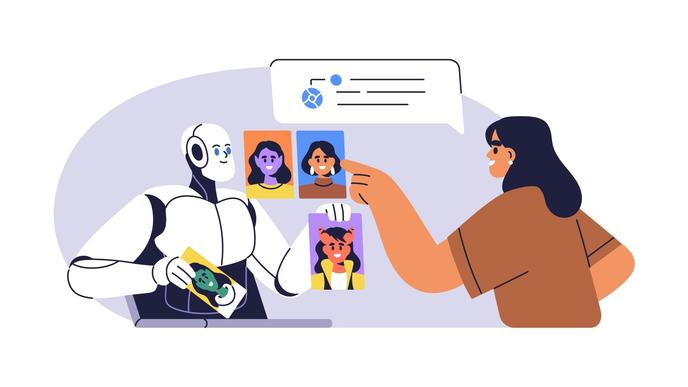
It might seem that with the advent of neural networks capable of generating a lesson plan, lecture, or interactive test in minutes, the profession of instructional designer will soon be under threat. However, the reality captured by theoretical research and practice has turned out to be exactly the opposite: AI does not abolish this role but radically transforms it, making it more strategic, creative, and responsible. The instructional designer today ceases to be merely a course compiler and becomes an architect of educational ecosystems and a curator of the digital pedagogical process. This happens due to three fundamental shifts.
-
From Individual Creator to Quality Curator and Content Strategist
Previously, a significant portion of the designer's time was taken up by routine: writing texts, selecting illustrations, composing exercises. Now, neural networks take on this rough, technical work. For example, using the prompt "create five assignments on applying the Pythagorean theorem in real-life situations for 8th-grade students," ChatGPT or a similar tool will instantly produce several options. But here is where the designer's new, more complex task begins.
Their focus shifts from production to expertise: they must critically evaluate the generated material, check it for factual errors ("hallucinations" of AI), alignment with learning objectives, age characteristics, and even cultural context. They become a filter and an amplifier. For instance, AI might offer a standard explanation of a complex topic, while the designer, drawing on pedagogical knowledge, refines it by adding a metaphor, analogy, or additional visual elements that enhance understanding. Their key skill now is not simply the ability to make something, but the ability to understand what exactly needs to be done, correctly frame that task for the AI, and then-select and improve the result.
-
From Curriculum Executor to Designer of Personalized Trajectories
A classic course was often a linear path that all students followed. AI breaks this model, opening the possibility for adaptive learning that adjusts to each individual's progress, pace, and interests. And here, the designer's role becomes akin to that of a screenwriter for interactive cinema.
They design not one rigid route but a network of possible paths. They define key decision points: "If a student makes a mistake in this task, the system will offer them this additional module for skill practice. If they excelled-it will unlock access to advanced material." The designer builds the adaptation logic into the system, develops branching algorithms, and prepares content for different scenarios. At the same time, they remain responsible for ensuring that personalization is substantive and does not turn into mere complication or simplification of tasks. Their goal, with the help of AI, is to create the feeling that each student has a personal mentor guiding them along the optimal route to the goal.
-
From Technical Specialist to Ethical Guarantor and Data Analyst
This is perhaps the most important and new aspect of the profession. Neural networks are trained on data created by people, which means they can unconsciously reproduce human biases: gender, cultural, racial stereotypes. The designer must be able to recognize and neutralize such risks. For example, when checking AI-generated tasks for social studies, one must ensure that the examples feature people of different professions and social roles, avoiding clichés.
Furthermore, AI in education works with a vast array of personal data on student performance, behavior, and engagement. The instructional designer becomes a guardian of privacy, designing systems so that data is collected and used ethically, transparently, and only for educational purposes.
Finally, they transform into an analyst. Previously, feedback from a course was point-based (grades, surveys). Now, AI provides a continuous stream of data: where students pause a video, on which questions they most often err, which materials they re-read. The designer must be able to interpret this data to constantly make targeted improvements to the course, making it more effective and human-centered.
Thus, the integration of AI does not devalue the instructional designer but, on the contrary, elevates them to a new level. They are freed from routine and gain a most powerful tool. Their new role is that of a strategist and ethical compass. Artificial intelligence takes on speed and scale, while the human retains meaning, goals, and responsibility. In this productive symbiosis, the education of the future is born-more flexible, personalized, and, paradoxically, more human.
Share this with your friends via:
Latest News

Fall 2026 promises to be an eventful season for education worldwide.

Tickets for WE Convention 2026 are now available - with 25% off for EARLY BIRDS!

The private school Alpha School, which has opened campuses from New York to California, uses AI bots to teach children academic subjects for just two hours a day. The school has no traditional teachers, no homework, and tuition reaches $65,000 per year.

UK Prime Minister Keir Starmer has announced a major public-private partnership in the field of artificial intelligence. Google, Microsoft, Amazon and NVIDIA, together with the government, are launching an AI skills training programme for 7.5 million British workers.

International educational programmes provider Study Group has announced a change of ownership. The company has been acquired by Arete Education – an investment structure in the higher education sector created by Global University Systems (GUS) and US private investment firm Brightstar Capital Partners.
