














 English


Landing Page
What Is a Landing Page?
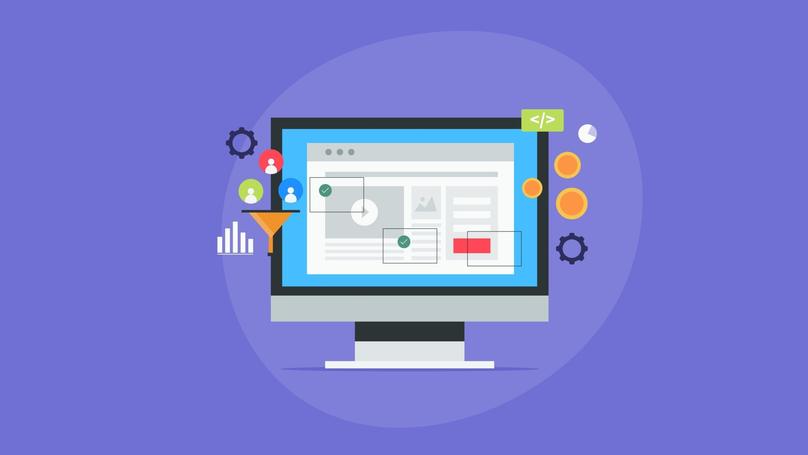
A landing page is a single-page website designed to promote products and attract new customers. It encourages visitors to take specific actions, such as making a purchase, registering on the site, subscribing, entering a competition, or engaging in similar activities.
To clarify, landing pages are designed for a single, specific purpose within an online marketing campaign. They are called landing pages because users arrive there first after clicking on an ad, link in a post, or email.
For a landing page to effectively call users to act, it must include:
-
A detailed analysis of the site's structure and navigation to avoid chaos and confusion.
-
A unique customer offer or deal that sets it apart from its competitors.
-
A page design that is modern and visually appealing, while paying attention to the design.
-
Keep the wording concise; for example, headlines should be clear, direct, and eye-catching.
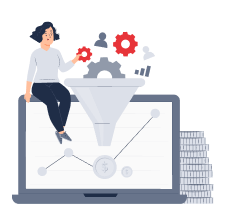
Within a sales funnel, a landing page becomes relevant once a potential customer has already expressed interest and clicked through to access more detailed information. Therefore, a landing page is one of the essential tools for guiding potential consumers from the interest stage to the action stage, and then to buying (according to the AIDA consumer behavior model - Attention, Interest, Desire, Action).
Landing Page vs. Homepage: Key Differences
They are entirely different types of web pages, designed to serve various objectives. A landing page, for instance, is created for a single, specific goal (not necessarily to increase sales directly but possibly to collect contact details from potential customers). A homepage, however, is part of a multipage website. It functions as an overview page that guides visitors through the entire site, containing general information about the company, its products, and services.
The landing page offers minimal information and navigation to keep users focused on its main goal, featuring only one call to action (CTA). In contrast, a homepage can include multiple CTAs and display a variety of informational content to tell the company's story more comprehensively and in greater detail.
Landing page traffic mainly originates from contextual advertising and social media. In contrast, the homepage attracts visitors from various sources, such as search engines and other website pages.
Another key difference is that landing pages typically have a higher conversion rate than homepages because they concentrate on a particular action and reduce distractions for the user. On a multipage website and homepage, visitors might spend a lot of time exploring the content, leaving the site, and then returning later, demonstrating long-term interest. Conversely, a landing page creates instant interest by presenting content in a way that clearly highlights the main points right away.
Advantages of Landing Pages
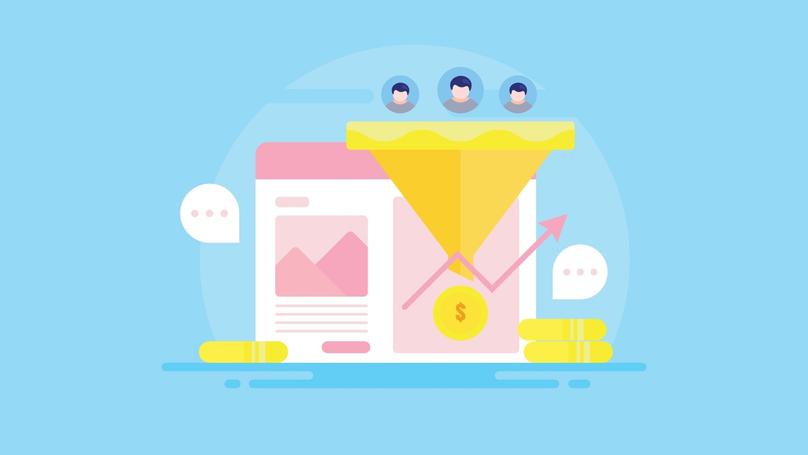
Primarily, they serve as a powerful tool for expanding your customer base while enhancing brand awareness, sales, SEO, and conversion rates. Additional benefits of landing pages include:
-
Rapid lead generation. A well-designed landing page with straightforward navigation and comprehensive information can engage users and turn them into leads.
-
Collecting contact and other customer details. Landing pages can gather, for instance, demographic data about potential customers through special forms and chatbots, allowing a deeper understanding of their needs and enabling more targeted marketing campaigns.
-
Natural promotion. The landing page can be customized with specific search phrases, terms, and keywords to improve organic reach and elevate search rankings.
-
Sales boost. Depending on the goal, the landing page can highlight a new product and its features, as well as examples of use.
-
Quick decision-making. On the landing page, users are presented with exclusive offers without distraction, increasing the likelihood of making a positive choice and completing the target action.
Disadvantages of Landing Pages
Like any marketing tool, a landing page has its limitations. For instance:
-
Narrow focus. Landing pages are tailored for a specific product, service, event, or discount program. Each new product requires its own dedicated page.
-
Limited information. Landing pages are not designed for extensive, diverse content. This makes it difficult to promote multifunctional technology products on such sites. Users may not scroll through the entire page and could miss the action button.
-
Difficulty in adapting to different types of customers. While a single product can serve a wide range of consumers, tailoring a single-page website for everyone is nearly impossible. This requires creating multiple landing page versions, which costs more time and money.
-
Lack of trust. Many users are skeptical of single-page websites, especially if the design seems formulaic or the company's legal details are missing. This issue is especially important in the financial, healthcare, and education sectors.
Types of Landing Pages
Depending on the presentation format, landing pages may be:
-
Shortlist
This is a compact page that fits on the user's screen without scrolling. It acts as a straightforward landing page suitable for event invitations, competitions, giveaways, and contact information collection.
-
Longread
This type of page contains considerably more information, making it ideal for selling products. It can include a short video demonstrating the product in use, along with a worded description. This is especially relevant for B2B sales, where buyers take longer to decide.
-
Multi-landing page
This type of page can display different versions of the initial screen tailored to various audiences. For example, the design, color scheme, and accompanying content can all be customized. This allows adaptation for different customer types, which is particularly effective for B2B and for promoting products that address multiple issues and are marketed across diverse regions or even countries.
Landing page types can also be categorized according to their purpose and, consequently, their content.
-
lead generation landing page
Involves collecting customer contact details, such as name, phone number, and email address.
-
Click-through landing page (or intermediate landing page)
Its primary aim is to warm up the customer before they make a purchase. It's commonly used in e-commerce or SaaS. This landing page guides the user to the checkout page. For example, Shopify offers a 14-day free trial. To begin, the user is directed to a landing page that highlights the benefits of the offer, followed by a registration button.
-
Product landing page
In this case, a landing page is created to promote a specific product or service. DTC (direct-to-consumer) brands often use landing pages. For instance, Xiaomi makes a landing page for each new product, with detailed descriptions and a clear CTA.
-
Event landing page
A dedicated landing page is commonly used when selling tickets or registering participants for events such as webinars, conferences, meetups, or even simple parties with partners. For example, Web Summit, one of the largest annual IT conferences, has a separate landing page that includes the schedule, photos of speakers, the program, and a registration form.
How to Create an Engaging Landing Page
Certainly, a landing page should be customized for each business. However, a standard series of steps can make a landing page an effective tool for increasing conversions.
Step 1. Set your goal
To create an effective CTA, you must clearly specify what you want your customers to do. This depends on various factors such as your main objective, your business specifics, and the type of landing page. For instance, the goal might be signing up for an email newsletter, registering on your site, making a purchase, scheduling a consultation, or installing an app. The key is to focus on one goal per page.
Step 2. Identify the target audience for a specific landing page
A successful landing page communicates with customers in their own language. Showing that you understand your audience's problem areas, desires, and needs. Clarify which particular interests and needs your product addresses. Who is your target audience (gender, age, income level, social background)? What might prevent potential customers from buying? What will persuade them to buy? For example, Calendly appeals to managers, entrepreneurs, and freelancers with the message: "Save time, automate meetings." To develop these messages, you can use customer and competitor reviews, as well as various forums and communities of interest, to gather keywords and phrases used by your target audience.
Step 3. Outline the structure of the landing page
The landing page guides users to take action, so it should be as clear, simple, and straightforward as possible.
Key elements that will assist the user in navigating the page are:
- A memorable headline is the first thing users see when clicking on a link to a landing page. It should be concise, informative, relevant, and catchy. For example, Duolingo used a straightforward headline: "Learn foreign languages for free. With us!" Additionally, it must be instantly readable, without causing confusion or multiple interpretations.
- A well-written text should expand on the headline and address the most common and urgent questions customers have about the product or service. To achieve this, examine customer inquiries and gather feedback to understand what these questions might be, such as features, use real-life cases, pricing, and rates. If your landing page invites you to an event, it should include details like the location, time, speakers, guests, and other relevant information, such as dress code. However, to avoid overcrowding the text with too much information, it's better to prioritize the user.
- Features and benefits - providing a detailed product description encourages potential customers to act. Compare your product with competitors, emphasize your unique features, and display them prominently on your landing page.
- Use appealing images and visual materials like infographics or animations to effectively communicate your idea, attract users' attention, and emphasize the product in the best possible way.
- Testimonials - to showcase user experience with your product, it's essential to display results from real users. Besides positive and consistent feedback, such as "Great product, I recommend it," consider including a few reviews where users suggest changes or improvements. This approach can increase visitors' trust in your landing page and brand.
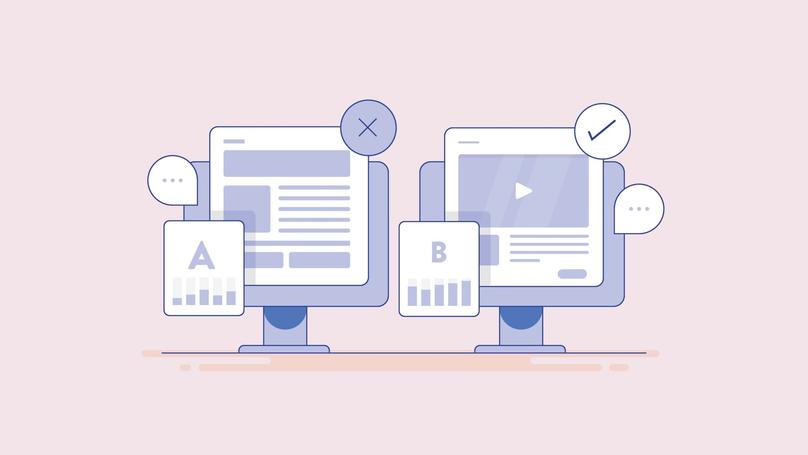
- Your call to action should be as clear as possible for your audience and address their genuine needs. Consider adding a time limit on an offer, a discount percentage, or other bonuses. Focus on highlighting the benefits users will gain. For instance, a CTA could be: "Sign up for a free lesson in one click." You can also test various calls to action through A/B testing.
- The application form is a crucial element, usually located at the end. It contains a line (or several lines) for entering your details and a button with an action. Remember that fewer fields for input make it easier for the landing page visitor to complete the form (long forms take up too much time and space on the website), and therefore, the conversion rate improves. The button should be bright and eye-catching, include a call to action, and ideally use a verb such as subscribe, download, buy, get, etc.
- Live chat - this feature can be added as a widget on your landing page. It allows users to learn more about the company, get assistance, and have their questions answered.
- A dedicated thank-you page will confirm that users have completed all necessary steps and also serve as an opportunity to promote other company products, such as related offers.
Step 4. Create your landing page design
The page layout should reflect the product itself, remaining simple, clear, and attractive. In this case, it is better to favor minimalism rather than overload it with visual elements. The text must be legible, meaning it should be of an appropriate size, in a clear font, and in a color that contrasts with the background. Avoid both textual and visual clutter, as a landing page is just one page, and it should be clean, uncluttered, yet engaging. This involves having a contrasting headline, a consistent color palette, multiple illustrations (depending on the format), enough white space between information blocks, and a single, primary CTA.
Step 5. Launch the landing page
You can either hire developers to build a website or do it yourself with specialized builders like Leadpages, Unbounce, Instapage, Webflow, Squarespace, and Wix. These platforms provide various tools for designing appealing and effective landing pages, such as visual editors, templates, A/B testing, and analytics.
Step 6. Set up analytics
Don't publish your landing page without thorough planning. Set up Google Analytics and monitor interactions, such as using Hotjar. Website builders also provide analysis tools. For example, Mailchimp marketers conduct A/B tests with different headlines and compare conversion rates-7% versus 12%. It's advisable to test one element at a time, starting with the headline, then the button, then the colors, etc.
Step 7. Enhance the landing page
After analyzing the results, make the necessary adjustments, conduct fresh tests, and enhance conversion rates. It is also crucial to regularly pinpoint where users lose interest on the landing page, which can be done by using scroll maps, which is an effective web analytics tool that shows how far users scroll down.
How to Attract Traffic to a Landing Page

You can utilize both paid and free methods to attract visitors to your landing page. Paid options include:
-
Contextual advertising (e.g., Google Ads).
-
Targeted advertising on social networks.
-
Advertising through bloggers and themed platforms.
Free methods may include, for example:
-
SEO optimization.
-
Content marketing (creating articles with links to landing pages).
It's important to diversify your traffic sources, which means you shouldn't depend on just one but rather use different methods to attract users.
Examples of High-Converting Landing Pages
For example, Netflix, the American streaming platform, features a minimalist landing page that provides users with essential information: an offer, a price, and a call to action (CTA).
Calm, a mobile app that enhances mental health and well-being, has also created a clean, intuitive, and engaging landing page.
The landing page for the CallRail marketing analytics platform also displays an appealing design, an engaging headline, two CTA buttons (for one offer), and clear supporting text.
LinkedIn is known for its engaging and eye-catching landing pages, similar to those of wedding planning services such as Zola and DoorDash, an American company specializing in online food ordering and delivery, Sephora, Airbnb, and many others.
Conclusion
Therefore, landing pages effectively grab the attention of potential users and help expand your customer base. They are a versatile and reliable tool that is most useful when you have a single, focused goal, a simple offer, and a clearly defined, narrow target audience. It is important to recognize that, despite all its advantages, a landing page cannot replace a fully functional website or brand platform. However, to maximize the benefits of your landing pages, it is essential to consider not only their structure and design but also to regularly test hypotheses, monitor user behavior, and refine content based on data. Therefore, creating landing pages is not a one-off task but an ongoing process of enhancement. Consequently, it requires a strategic approach.