



 Which American 2000s TV Series Are You?
 The Perpetual Student Syndrome: When Self-Development Becomes a New Form of Procrastination
 Test: Who Were You in a Past Life?
 Your Mythological Totem: Take the Test and Find Out Which Ancient Creature Protects You?
 Adulthood Test: Find Out How Old You Really Are
 Empathy Check. How Well Developed Is Your Emotional Intelligence?

 English
 Русский
 Deutsch
 Español
How to Regain Your Focus and Concentration Without a Digital Detox in Bali
How often do you catch yourself thinking that you decided to take a short break from work a couple of hours ago, but you are still scrolling through your social media feed? You are probably also familiar with that feeling when you walk into your boss's office but have completely forgotten what you wanted to say.
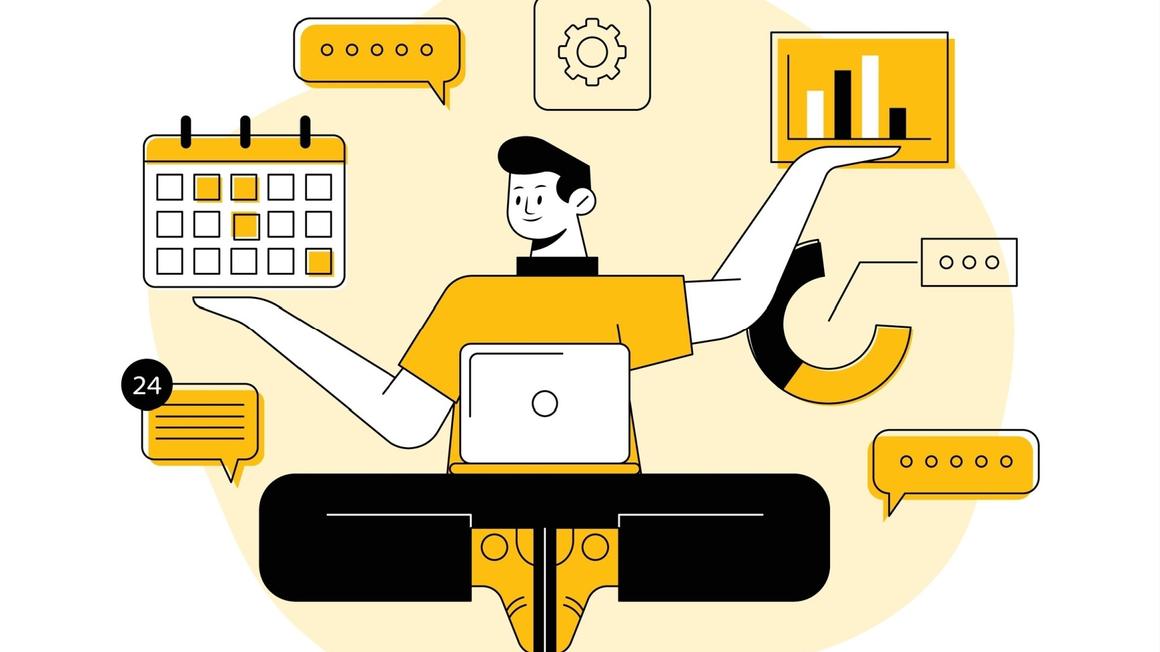
Have you ever found yourself zoning out of a conversation, feeling as if there is fog in your head, unable to remember the name of a new colleague you just met? As a rule, the first thought that comes to mind in such cases is: "I need to do a digital detox. Go far away, be out of touch with the outside world for at least a few days."
But in the modern world, completely giving up gadgets is a luxury that few can afford. Our work, staying in touch with loved ones - all of this is firmly embedded in screens. But the good news is that you can regain your focus and improve your concentration without radical measures, without even turning off notifications on your phone. Let's find out why the brain is so easily distracted, where concentration goes, and how to get it back without resorting to extremes.
Modern man has lost the ability to concentrate
In fact, people spend about 47% of their waking time thinking about something unrelated to the current task. That is, we spend almost half our lives in a state of "wandering mind." This is a feature of how the brain works that has become especially noticeable in the era of hyperstimulation.
In fact, prolonged focus of attention on a single object is not at all a natural state for modern humans. Moreover, attempts to maintain attention on one task for hours can lead to anxiety, depression, and burnout. The optimal state, according to current research, is a balance between deep concentration and periods of so-called "kinetic" (fleeting) attention, when the brain sort of switches gears, replenishing its resources.
A paradox arises: the more we try to "force" ourselves not to get distracted, the faster we become exhausted. The solution is not to ban distractions, but to learn how to manage this rhythm. Research shows that modern humans get distracted on average every 40 seconds. And after something interrupts us, it takes up to 23 minutes to return to the original state of full concentration.
Another enemy of concentration is multitasking. Many people pride themselves on being able to do several things at once. But research confirms that this skill is not so good in the long term: multitasking reduces a person's ability to filter out unnecessary information and creates a constant "unnecessary connectedness" to everything that is happening.
If attention is scattered, information does not transfer from short-term memory to long-term memory. Therefore, after a day spent in "a hundred tasks at once" mode, it is so difficult in the evening to remember what even happened.
Neuroscientists note that multitasking impairs memory and weakens the function of the prefrontal cortex, depleting the resources that usually help form strong memories.
Thus, the main causes of attention problems are not gadgets as such, but anxiety, stress, and lack of sleep resulting from overwork. Smartphones and social networks are merely catalysts of this condition. They create an environment in which stress and anxiety manifest more vividly. Moreover, likes and notifications - all of these are dopamine hooks that social media developers use quite deliberately, and the brain thereby reinforces the habit of getting distracted by the phone. But the root of the problem lies deeper. It is chronic stress that reduces the volume of gray matter in the prefrontal cortex - the region responsible for memory and concentration. That is, if you are constantly nervous, your brain physically changes. And not for the better.
Classic ways to improve attention
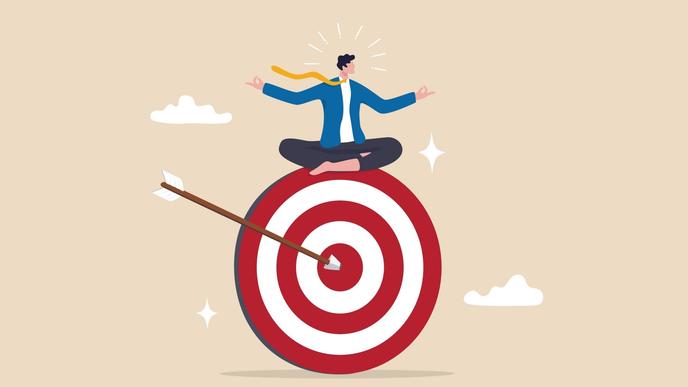
The effectiveness of these methods has been confirmed by numerous studies, experiments, and real-life practice:
- The Pomodoro Technique: rhythm instead of a marathon
The average duration of productive work without loss of quality is 25-45 minutes. The Pomodoro Technique uses this knowledge: 25 minutes of work, 5 minutes of rest. Numerous studies prove that short breaks help the brain maintain concentration for longer. Moreover, even a 3-5 minute break is enough to improve concentration.
It is important during the break to actually rest. Get up, stretch, do a light warm-up, make some tea, look out the window - but do not scroll through your feed (that is not rest, but merely an additional burden).
- Mindfully manage your environment
Research shows that every time attention switches between tasks, time is needed to "warm up." Therefore, the first rule is: do not provoke yourself into unnecessary switching.
Put your phone out of your line of sight while working, close unnecessary tabs in your browser. But do not turn this into a ritual of "ideal sterility" - perfectionism in preparing for work also takes time.
- Mindfulness practices
Meditation and concentration are essentially the same skill: the ability to notice that your attention has wandered and gently bring it back. As an exercise to develop this skill, focus on your breathing. As soon as you notice that your thoughts have drifted far away, that you have become distracted, bring your attention back. And so on, again and again. You can start with 5 minutes a day. Regularity is more important than duration.
- Exercise and sleep are an undeniable foundation
Aerobic exercise for 20-30 minutes (walking, running, cycling) improves brain function, helps with concentration, and protects nerve cells. And quality sleep is the time when the brain "reboots" and cleanses itself of metabolic waste. Without it, any concentration techniques will work at half strength.
- The "single task" technique
It seems quite obvious, but in reality, almost no one uses it, preferring to get distracted by other tasks, jumping from one thing to another, ultimately finishing none of them properly. Consciously choose one task and perform it without switching until significant progress has been made or a planned break arrives.
Shifting the center of attention from task to task reduces productivity and increases total work time. It is better to do one thing well than to do three things poorly.
Unconventional approaches: for the most discerning
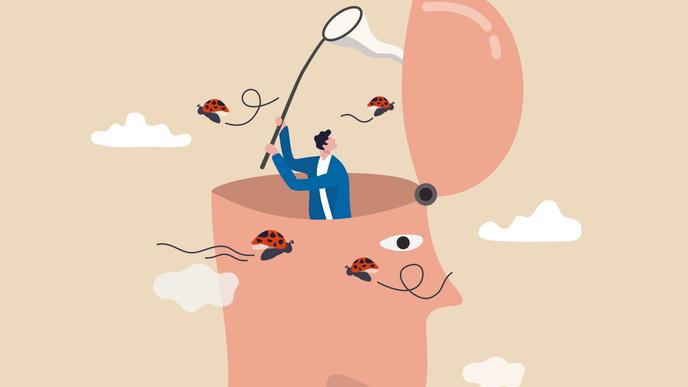
Lifehack #1. The "5-4-3-2-1" Technique
This is a way to quickly bring your focus back to the here and now. Find around you:
-
5 objects you can see;
-
4 objects you can touch;
-
3 sounds you can hear;
-
2 smells you can perceive;
-
1 taste you can sense.
The exercise switches the brain from "internal dialogue" mode to "reality perception" mode and, in literally a minute, brings it back to the "here and now."
Lifehack #2. Don't be afraid to take breaks often
Paradoxically, the best way not to lose concentration is to take short pauses every 40 minutes. The human brain is not capable of maintaining constant concentration on one task for several hours. If you try to ignore fatigue, the quality of work will drop, and tension will increase. Just plan these distractions in advance. Short pauses restore clarity and prevent burnout.
Lifehack #3. Add some "noise"
This is one of those lifehacks that seems the complete opposite of common sense: if the task is too simple, routine, and voluminous, and it makes you feel sleepy, add external interference - for example, music.
The brain, loaded with "noise" as a buffer, paradoxically focuses better on the main task. Provided that the task does not require maximum cognitive load. For complex analytical work, on the contrary, silence is needed.
Lifehack #4. Tailor your personal schedule to your nature
Some find it easier to concentrate in the morning, others late in the evening. Some work productively in long blocks, others need frequent breaks.
Do not fight your chronotype. Observe yourself for a week and identify your "peak hours" of productivity. Schedule your most difficult tasks for this time.
Lifehack #5. Say your task out loud
If you notice that your thoughts are "drifting" and your hands are reaching for your phone - stop and say out loud what you are doing and why. "I am now writing a report for Project X because it needs to be submitted by 3:00 PM, and the launch of the advertising campaign depends on it." It sounds strange, but saying it out loud switches the brain into a mode of conscious action and helps maintain focus.
Lectera’s Online Courses by topic
Can you do without a digital detox?
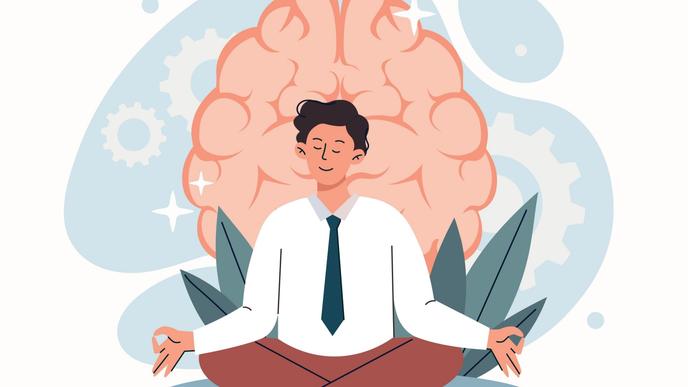
Of course you can. After all, a digital detox is, as a rule, a one-time action. It might help for a couple of days, but it does not solve the problem with your overall routine.
Instead:
-
Accept as a fact: the brain is designed to get distracted periodically, and this is not a problem but your feature;
-
Work in intervals: 25-45 minutes of focus, then a short break;
-
Train your attention like a muscle: 5-10 minutes daily of mindfulness practice or concentration on a single object;
-
Monitor your routine: sleep, physical activity, and stress management are the foundation, without which any techniques will not have maximum effect;
-
Do not demand the impossible from yourself: 8 hours of absolute concentration is a myth, so at least 4 hours of quality focus per day is already an excellent result.
And most importantly: do not expect instant changes. The brain cannot simply be switched into super-concentration mode. Stop demanding perfection from yourself and start working with the nature of your attention, not against it.
Share this with your friends via:
Latest News

Fall 2026 promises to be an eventful season for education worldwide.

Tickets for WE Convention 2026 are now available - with 25% off for EARLY BIRDS!

The private school Alpha School, which has opened campuses from New York to California, uses AI bots to teach children academic subjects for just two hours a day. The school has no traditional teachers, no homework, and tuition reaches $65,000 per year.

UK Prime Minister Keir Starmer has announced a major public-private partnership in the field of artificial intelligence. Google, Microsoft, Amazon and NVIDIA, together with the government, are launching an AI skills training programme for 7.5 million British workers.

International educational programmes provider Study Group has announced a change of ownership. The company has been acquired by Arete Education – an investment structure in the higher education sector created by Global University Systems (GUS) and US private investment firm Brightstar Capital Partners.
