






 When Algorithms Choose for Us: How Recommendations Shape Our Tastes
 In the Danger Zone: What to Do If AI Is Taking Your Job
 High Tech High: Project-Based Learning with Public Presentations for a New Generation
 Which American 2000s TV Series Are You?
 Test: Who Were You in a Past Life?
 Your Mythological Totem: Take the Test and Find Out Which Ancient Creature Protects You?
 English
 Русский
 Deutsch
 Español
When Algorithms Choose for Us: How Recommendations Shape Our Tastes
You open a music streaming app, and it suggests an artist you've never heard of.

The song turns out to be pretty good, so you listen to the whole thing. Then another track in a similar style starts playing. After a few weeks of recommendations like these, you find yourself with a new favorite genre, even though you'd never been interested in it before. A nice discovery, right? But here's a question: who actually adapted to whom? Did the algorithm adjust to your tastes, or did your tastes adjust to the algorithm?
Something similar happens with movies, books, and even everyday purchases. Personalized recommendations save time and often do a surprisingly good job of predicting what we want. At the same time, however, they influence which works, products, and ideas we encounter in the first place. And that means they may also play a part in shaping our preferences.
How Does an Algorithm Know What We Like?
Not so long ago, discovering new music might have meant turning on the radio, taking a friend's recommendation, or stumbling upon an interesting album in a store. Today, recommendation systems do much of that work for us. And they don't even need to ask us directly about our tastes: watching our behavior is enough.
For example, Netflix takes into account our viewing history, movie and TV show ratings, how long we watch, our preferred languages, and even the time of day we typically use the service. The behavior of other viewers with similar preferences matters, too. Based on this information, the system decides which titles to recommend to a particular user and in what order to display them on the homepage.
TikTok works in a similar way: the platform analyzes which videos we watch until the end, which ones we skip, what we share, and which accounts we follow. Every action becomes a signal that helps predict what might catch our attention next.
But there's a catch: an algorithm can see what we do, but it can't see why we do it. Let's say you watch several videos about exotic animals because you're researching something for work. The system may well decide that you've developed a new hobby and start suggesting similar content. Or perhaps you sat through a terrible movie just to find out how ridiculous the ending would be. To a recommendation system, watching something all the way through may still look like a sign of interest.
Essentially, algorithms try to predict the likelihood of a particular action: what we'll click on, watch until the end, listen to, or buy. But taking an action doesn't necessarily mean we actually liked what we saw. Nevertheless, these are the signals the system uses to decide what to show us tomorrow.
Can We Learn to Love Something Just Because It Was Recommended?
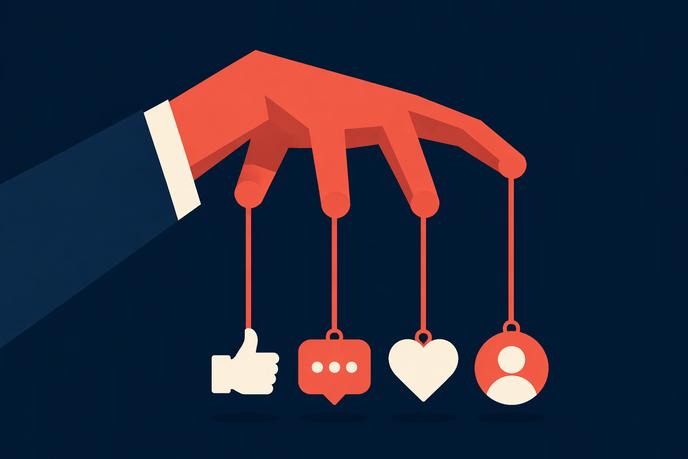
We tend to think that recommendations help us discover things we would have liked anyway. But what if the opposite is also true? After all, research suggests that a recommendation itself can influence how we feel about something afterward.
In 2022, AI Magazine published a paper examining a phenomenon known as preference pollution - the way recommendation systems can influence users' ratings. The authors summarized the results of experiments in which participants were shown a predicted rating for a piece of content before being asked to rate it themselves. The findings showed that the initial rating influenced their final opinion: when the predicted score was changed by one star on a five-star scale, users' own ratings shifted by approximately 0.35 stars in the same direction, on average. Similar effects were observed when people rated movies, TV shows, music, and even jokes.
Of course, this doesn't mean an algorithm can make someone fall in love with absolutely any song or movie. But the experiments do suggest that our impressions can depend on expectations formed before we've even experienced something for ourselves.
Familiarity may also play a role. Think about how your feelings toward unfamiliar music sometimes change. At first, a song sounds strange. Then you start recognizing it from the very first notes. And before long, you catch yourself humming the chorus. Algorithms repeatedly expose us to similar sounds, and something that once seemed unfamiliar may gradually become appealing. Of course, endless repetition can have the opposite effect, too - even your favorite music can eventually get on your nerves.
This creates an interesting paradox: the more accurately a system predicts our current preferences, the more often it recommends something familiar. Yet new tastes sometimes emerge from completely unexpected discoveries - the kind that no listening history could ever predict.
Do Recommendations Broaden Our Horizons or Limit Them?
Imagine two music lovers. The first actively explores new genres, listens to entire albums, and constantly discovers unfamiliar artists. The second prefers ready-made playlists compiled by a streaming service based on their previous listening habits. Whose musical tastes will become more diverse over time?
Spotify researchers tried to answer this question back in 2020. They examined users' listening preferences and found that listening to algorithmically generated playlists was associated with less diversity in the music people consumed. However, the researchers themselves were reluctant to blame recommendation systems. It's possible that people with narrower tastes are more likely to use ready-made playlists in the first place, while those who enjoy experimenting prefer to discover music on their own.
Another Spotify study produced even more intriguing results. In an experiment, one group of users received podcast recommendations based on their musical preferences, while another was offered popular shows selected with their demographic characteristics in mind. Personalized recommendations increased the number of listens, but the variety of content consumed by individual users decreased. Across the audience as a whole, however, diversity actually increased.
The contradiction is only apparent. If each user is mainly offered content that matches their interests, people may become increasingly immersed in their own favorite subjects. Some listen to history podcasts, others prefer science, and still others are drawn to art. As a result, each person sticks to a relatively narrow range of topics, while the audience as a whole spreads its attention across many different shows.
What's more, recommendations often help us discover things we would never have thought to search for ourselves. Perhaps you don't know the name of a particular musical genre or have never heard of a certain film director, but the system can recognize similarities to something you already enjoy. In this way, personalization opens the door to new interests, even if those discoveries often remain within the boundaries of our existing preferences.
Lectera’s Online Courses by topic
How Our Tastes Become Trends - and Vice Versa
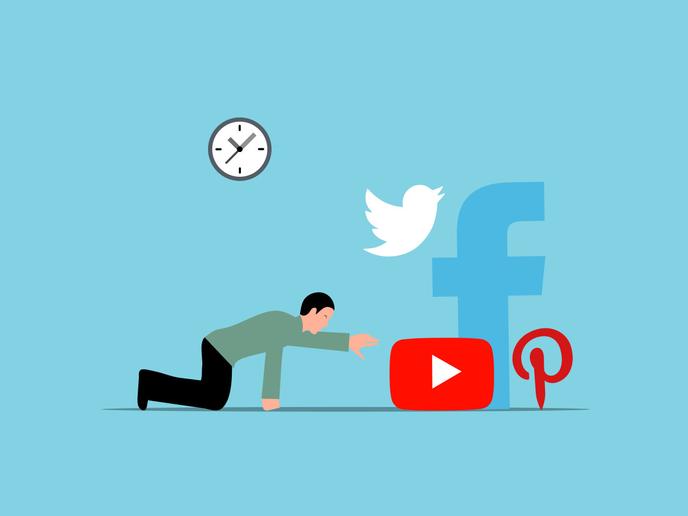
The influence of recommendations extends far beyond personal playlists and watch histories. After all, if algorithms determine what attracts the most audience attention, content creators themselves begin responding to those patterns.
For example, a video creator notices that clips of a particular length attract more views and gradually abandons other formats. A musician sees their song gain popularity thanks to a short snippet shared on social media and starts wondering whether to take such opportunities into account when writing future tracks.
Researcher Laura Herman has examined how TikTok's algorithms influence users' creative decisions. In a 2023 study, she showed that the desire to make content more visible affects creators' choices of sounds, video length, style, and subject matter. Some creators even deliberately limit their creative experiments, favoring formats they believe the platform is more likely to promote.
The same pattern can be seen in business. In a study published in the Strategic Management Journal in 2026, researchers analyzed changes on a digital platform in the food sector. After the introduction of popularity-based recommendations, sellers began concentrating on a smaller range of products. A shift to personalized recommendations, on the other hand, encouraged them to expand their offerings. In other words, the way an algorithm works can even influence which products companies decide to develop and offer their customers.
At the same time, recommendation systems create opportunities for smaller creators, independent musicians, and niche brands that once struggled to compete with major players for attention. Thanks to personalization, a piece of content can find precisely the audience most likely to appreciate it, even if it never makes it into the mainstream charts. So it's hard to describe the influence of algorithms on culture as entirely positive or entirely negative.
And yet, which comes first: do trends shape our tastes, or do our tastes shape trends? Perhaps there is no longer a straightforward answer. We choose from what we're shown, algorithms learn from our choices, and creators and companies notice growing demand and begin offering more of the same. This creates a kind of cycle in which preferences give rise to trends, and trends come back to us as new recommendations. And who knows whether we would ever have become interested in the latest popular genre, movie, or product if an algorithm hadn't decided to show it to us one day?
Share this with your friends via:
Latest News

Fall 2026 promises to be an eventful season for education worldwide.

Tickets for WE Convention 2026 are now available - with 25% off for EARLY BIRDS!

The private school Alpha School, which has opened campuses from New York to California, uses AI bots to teach children academic subjects for just two hours a day. The school has no traditional teachers, no homework, and tuition reaches $65,000 per year.

UK Prime Minister Keir Starmer has announced a major public-private partnership in the field of artificial intelligence. Google, Microsoft, Amazon and NVIDIA, together with the government, are launching an AI skills training programme for 7.5 million British workers.

International educational programmes provider Study Group has announced a change of ownership. The company has been acquired by Arete Education – an investment structure in the higher education sector created by Global University Systems (GUS) and US private investment firm Brightstar Capital Partners.
