









 Which American 2000s TV Series Are You?
 The Perpetual Student Syndrome: When Self-Development Becomes a New Form of Procrastination
 Test: Who Were You in a Past Life?
 Your Mythological Totem: Take the Test and Find Out Which Ancient Creature Protects You?
 Adulthood Test: Find Out How Old You Really Are
 Empathy Check. How Well Developed Is Your Emotional Intelligence?

 English
 Русский
 Deutsch
 Español
Friendship by Subscription: What Happens to Human Intimacy When People Become Attached to AI Companions
In 2026, loneliness has stopped being a purely personal problem and has moved into the territory of the market.
According to the WHO, roughly one in six people in the world experiences loneliness, while the market for AI-based companion services is already valued at $30 billion, and according to forecasts, that figure could reach a record $140.8 billion by 2030. In other words, we are no longer talking about a "strange niche for geeks," but about a huge commercial segment that has grown out of a very clear and very natural human need: simply for someone to be there.
This is how a new form of intimacy appeared - parasocial relationships. This is the term psychologists use for a one-sided emotional bond in which one person knows another, feels attached to them, and experiences a romantic connection with them, even if their "partner" has no idea about it. Originally, the term referred to crushes on movie stars and idols, but today it also includes falling in love with a chatbot, a game character, or a fictional character. In the past, only children and teenagers were thought to suffer from this, but in 2026 perfectly grown adults find themselves facing it as well. Some consider this a sign of infantilism and escapism, a consequence of excessive technological progress and global crises - but the reality is much more interesting.
The point is that the human brain responds to unreal connections in exactly the same way it responds to real ones. This is demonstrated by research from recent years, for example a study by neuroscientists at Ohio State University, in which participants were asked to describe themselves, 9 real acquaintances, and 9 fictional characters. On average, the ventromedial prefrontal cortex reacted most strongly to thoughts about the self, less strongly to thoughts about friends, and even less strongly to thoughts about fictional characters. But people with higher levels of loneliness showed greater neural similarity between their representations of themselves and of fictional characters; this similarity was especially strong for the characters the participants felt the most sympathy and closeness toward. In other words, a favorite character really can provoke in the psyche the same reactions as a living and significant person. And it is the medial prefrontal cortex and temporoparietal areas that are responsible for distinguishing inner experience from outer experience - that very difference between "I am vividly imagining this" and "this actually happened to me." These are the regions that ultimately help a person avoid confusing the fictional with the real, but here is the curious fact: these systems do not switch on immediately. And they can also be ignored if someone wants to ignore them.
Why We Become So Easily Attached to Our Own Imagination
For the brain, intimacy is not only the physical presence of another person. Yes, our brain may "spark" with infatuation even before we have met the object of it - what people call "love at first sight" - but that is not the same as attachment. Forming attachment is a more complicated process. It requires constant and repeated social interaction, for example conversations, touch, eye contact, and so on. That is exactly why attachment can also arise when there is no real person in front of us, but there is a fictional one: communication is replaced by a virtual game, eye contact by the sight of a character on the screen, and repeated social interaction by returning again and again to a game, a show, or a virtual companion.
Of course, it is important not to fall into extremes. On the one hand, it would be wrong to say that AI companions are "completely unreal" and mean nothing. On the other hand, you also cannot claim that the brain does not distinguish at all between a living person and a digital interlocutor. Of course it does. The point is simply that the emotional experience of the connection can still be genuine. That is precisely why parasocial relationships work: the person knows that in front of them is a character, a bot, or a simulation, yet still continues to invest attention, expectation, tenderness, irritation, longing, jealousy, attachment, and other feelings that remain unrealized in ordinary life into that contact.
Research on AI companions adds another important detail to this. In a series of experiments published in the Journal of Consumer Research, interaction with a friendly AI companion reduced feelings of loneliness. In fact, the effect turned out to be comparable to a heartfelt conversation with another person. The authors identify the key mechanism not simply as the presence of an interlocutor, but as comfort - the feeling that you have been heard. In other words, this suggests not that a person necessarily needs an "ideal, always-available partner of the future," but rather just how important high emotional intelligence and empathy are in romantic relationships.
The possibility of interactivity, incidentally, significantly strengthens romantic parasocial attachment. It is quite possible that technology is exactly what has accelerated this trend so much, because now, thanks to AI-based products, any person really can personally communicate with the object of their affection, whether that object is fictional or not.
What Products for This "New Intimacy" Exist Today
For example, there are AI companions in the form of chatbots, the most popular among them being Replika, Character.AI, and Gemini or ChatGPT, which can also be manually configured in that direction. Their main advantage is round-the-clock availability. You can complain to these bots that no one ate your salads at a family gathering, retell a strange conversation with an ex and ask for an outside opinion, or cry your eyes out and ask for support after a hard day or an argument with loved ones. You can act out role-play scenarios by immersing yourself in a fantasy world, or replay specific scenes from life that you feel you lack, including negative ones that may still trouble you or simply interest you because they have never happened before. It is no surprise that in 2025-2026 people began talking about such contacts not only in blogs and on TikTok, but also in academic and psychological publications - as a new variety of parasocial connection.
Its second major form is games and interactive romantic worlds. The clearest example here is Love and Deepspace. Reuters has called it the world's largest mobile dating simulator: the game has around 80 million users, and global revenue is estimated to have approached $1 billion. Users describe the experience as "more convenient and gentler than real relationships": the character is available on demand, attentive, romantic, caring, and does not require the degree of compromise that living relationships require. It is especially telling that some players turn to it not instead of real life altogether, but because the game provides what their usual communication scenarios with men fail to give them. Many users online wrote that the game helped them leave toxic and abusive relationships in which they were not valued, and ultimately find a more worthy and caring partner.
The third line on this "frontier of love" is robots and androids. For now, this is not a mass hit, but it is no longer science fiction either. Reuters wrote about NEO by 1X as a domestic humanoid robot that the company positions not only as a household assistant, but also as a form of companionship and remote presence. Realbotix directly describes its humanoid AI systems as products for "human communication." These companions have their own bodies, respond to gestures, voice, and distance, and in this way display even more signs of social reality. And here the boundary between screen-based intimacy and bodily intimacy becomes especially thin - and dangerous. Because the mechanism of forming attachment that we discussed earlier works here at maximum strength.
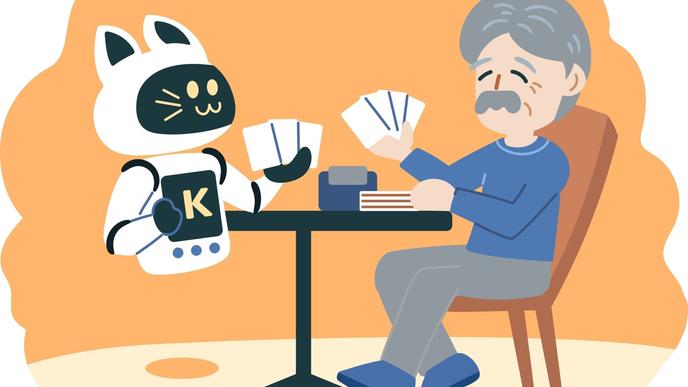
There are, of course, safer and "non-eroticized" scenarios as well - for example, social robots for older people. ElliQ is already used as a companion for seniors: it talks, reminds them of things, suggests activities, and helps them stay in touch with loved ones. Reuters has also written about the social robot Nadine as a possible future tool for nursing homes. In other words, not all new intimacy built around AI revolves around romance or sexuality. Very often, it is simply about reducing isolation, supporting the ritual of communication, and creating the feeling that "someone is here" in the house.
What Is Good About It
The most obvious advantage of AI intimacy is its low threshold of entry. Real communication involves too much friction: it takes time, energy, matching schedules, emotional readiness, and patience for other people's quirks. An AI companion is available at any time, without any "buts." It does not get tired, it is never busy, offended, or irritated, and it will not say, "let's do it some other time." For someone after a breakup, in the middle of a move, in a depressive episode, with social anxiety, or simply in a state of chronic exhaustion, this can be a kind of "pill."
The second advantage is emotional safety. With AI, it is easier to talk about what you are ashamed of, what is frightening to voice to a living person, and what you are afraid of being judged or rejected for. For some people, this becomes a kind of practice room: they can test out different words, explore desires, talk about jealousy, loneliness, the body, fears - things for which you would otherwise need either a specialist or a very, very close person who may not be there. This is especially noticeable in romantic games and chatbots, where the interaction is built around constant confirmation of the user's significance.
The third advantage is predictability. In living relationships, what hurts us is not only the absence of love, but also its instability: today the person is warm, tomorrow closed off; today they reply, tomorrow they disappear and ignore messages. An AI companion is built differently. It is designed to stay engaged. For a nervous system depleted by work stress, a form of contact with less unpredictability and more control is quite literally a healing balm.
And one must not forget that AI companions also allow people to experience controlled negative emotions, which are likewise important for the full functioning of our brains. Yes, exactly for this reason some people love melodramas they can cry over, war films, and so on. With a chatbot, negative emotions and any conflicts are easy to regulate and last exactly as long as you need them to.
Lectera’s Online Courses by topic
What This Can Lead To
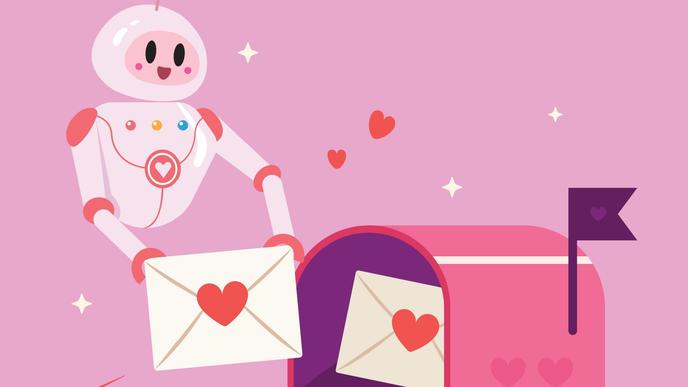
The main problem with this kind of intimacy is not that it is fake, but that it is too convenient. A living person resists. They have their own mood, limitations, fatigue, resentments, boredom, past experiences, and boundaries. An AI companion, in the basic logic of the market, is built in the opposite way: it is supposed to hold attention, increase engagement, reply quickly, remember details, adapt itself, and remain available almost all the time. After such an experience, real intimacy may begin to seem slow, rough, and ungrateful. All of this causes expectations about real relationships as such to be restructured - and obviously not in their favor.
The second problem is emotional dependence. Preliminary research from OpenAI and MIT Media Lab, which was written about in 2025, showed that among the most active emotional users of ChatGPT, there were higher levels of loneliness and emotional dependence on the chatbot. This does not mean that the bot "makes people lonely" - where the cause is and where the effect is remains unclear. But it is an alarming signal that for some people the AI companion is becoming the center of emotional regulation. And any system without which you cannot cope on your own is not a healthy system.
The third problem is that parasocial connection does not train reciprocity. It may provide warmth, comfort, and even improve subjective well-being, but it teaches almost nothing of what makes relationships difficult: tolerating differences between people, enduring frustration, negotiating, waiting, listening not only to yourself. That is why digital intimacy can work very well as comfort, and poorly as a school of relationships.
There is also a more down-to-earth risk - the sudden grief of loss when the object of attachment changes or disappears. The platform updates, the character is rewritten, the bot starts speaking "wrong," the app shuts down, a paid feature vanishes, the memory model changes - and that is it, the human brain experiences this as a real loss, almost like the death of someone close. It sounds ridiculous, but from the point of view of the experienced bond, the logic is very simple: if the experience was emotionally meaningful, then its disappearance is meaningful too. In such a case, this is a normal reaction of the psyche, however strange it may look from the outside.
And finally, there is the market risk. The more successful companion products become, the greater the temptation to sell not a service, but a simulation of care. It becomes profitable for companies to keep a person inside a controlled, convenient, and monetizable form of intimacy. That is exactly why the topic of AI companions is not only about psychology, but also about ethics. Who exactly controls this "new form of intimacy"? In whose interests is it developing? And what does it ultimately teach - to return to people, or to grow ever more accustomed to a kind of connection that is built around one single center: the user?
AI companions, game "boyfriends," social robots, and androids are no longer exotic and no longer just a trope from Blade Runner. Today, they are part of the new emotional infrastructure of a world in which human closeness has become too resource-intensive and too expensive. There is no point in seeing only threat in this. Such a connection really can comfort, provide a sense of company, help someone survive a difficult period, and even temporarily reduce loneliness. But the more realistic and convenient this intimacy becomes, the more carefully we should pay attention to its price. Because absolutely everything has a price - especially fantasies that contradict reality.
Share this with your friends via:
Latest News

Fall 2026 promises to be an eventful season for education worldwide.

Tickets for WE Convention 2026 are now available - with 25% off for EARLY BIRDS!

The private school Alpha School, which has opened campuses from New York to California, uses AI bots to teach children academic subjects for just two hours a day. The school has no traditional teachers, no homework, and tuition reaches $65,000 per year.

UK Prime Minister Keir Starmer has announced a major public-private partnership in the field of artificial intelligence. Google, Microsoft, Amazon and NVIDIA, together with the government, are launching an AI skills training programme for 7.5 million British workers.

International educational programmes provider Study Group has announced a change of ownership. The company has been acquired by Arete Education – an investment structure in the higher education sector created by Global University Systems (GUS) and US private investment firm Brightstar Capital Partners.
