








 Which American 2000s TV Series Are You?
 The Perpetual Student Syndrome: When Self-Development Becomes a New Form of Procrastination
 Test: Who Were You in a Past Life?
 Your Mythological Totem: Take the Test and Find Out Which Ancient Creature Protects You?
 Adulthood Test: Find Out How Old You Really Are
 Empathy Check. How Well Developed Is Your Emotional Intelligence?

 English
 Русский
 Deutsch
 Español
"My AI Tutor Knows Me Better Than I Know Myself": An Interview with a Student from the Year 2076
Back in the 2020s, we naively believed that online courses, studying history while wearing VR headsets, and schools and universities in the metaverse were already the future of education, the pinnacle of progress. But we were wrong.
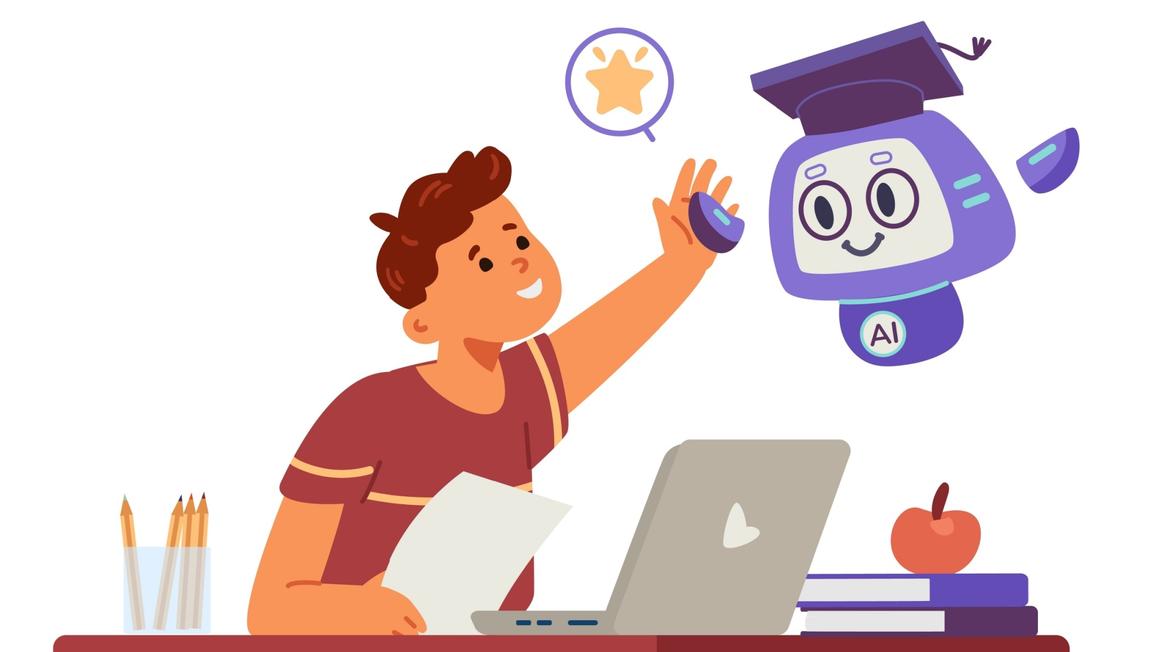
By 2076, total digitalization and artificial intelligence have not simply changed classical education; they have radically transformed it from the ground up, rebuilding every process from scratch. Grades, traditional diplomas, specializations, and even teachers have disappeared. They have been replaced by AI tutors and neuro-interfaces.
What other differences define education in 2076? Read about them in this interview with a student named Aydan (online, his neuronick is AIDAN-7734). How old he is and where he lives doesn't really matter, because in this new world, the concept of lifelong learning prevails. Thus, everyone is considered a student - not just young people - and learning takes place in metaverses, neural networks, and augmented reality.
Aydan, hello! Tell us, where do you study, and what does a typical school day look like?
- Recently, just out of curiosity, I was looking into what education was like several decades ago, and I was horrified. Right now, physical schools and universities don't exist at all; those buildings are already archaic. Accordingly, there are no so-called lecture halls, no desks, no teachers at the blackboard, and no classic class schedules either.
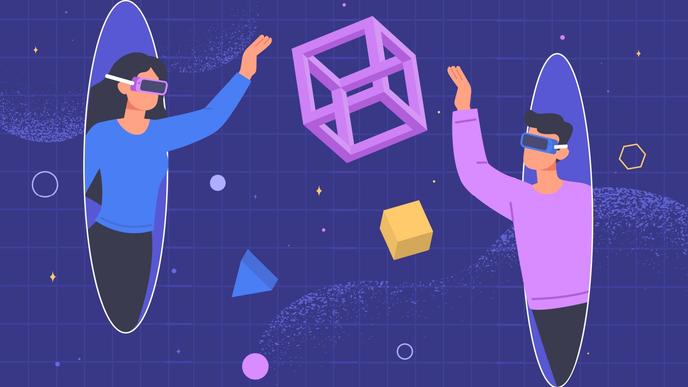
I study from home with no problem, attending classes in virtual reality, in the metaverse of Singapore University. My contact lenses also have a built-in neuro-interface that includes micro-displays projecting information directly onto my retina. In addition, the interface of my AI tutor has been overlaid onto my lenses (yes, I can't imagine how people used to manage without AI assistants in education). My tutor is Sophia (version 14.7). She looks like a transparent hologram to the right of my field of vision. She reminds me of my homework, helps me learn new material, gives hints and reminders if I forget certain details, tests my knowledge, and sometimes explains things herself.
And what do you study in the metaverse?
- Right now, for example, I'm working on a collaborative case with other students. More than 100 learners from all over the planet have to build a virtual city for humans and AI agents - robots - where we can coexist comfortably.
I control my avatar - it's an exact copy of my body, except that I changed my virtual self's hair color because I wanted to see if a darker shade would suit me.
What other student attributes do you have?
- My "student ID" is a neuro-token stored in a cloud wallet. It allows me not only to study at one university but also to visit the metaverses of others - for example, Oxford for a lecture on quantum linguistics, then an hour later the Tokyo Center for Tactile Engineering to assemble a virtual prosthetic hand, and in the evening, a jam session on generative music at Berkeley VR.
How did you apply to university? Have exams, transcript competition, and entrance tests survived?
- When I finished school - and nowadays that happens faster; I was 15 - together with the best neural network for university admissions, I scanned my educational profile and achievements, analyzed my favorite subjects, my skills and knowledge, and the AI selected four best universities for me.
No standardized tests, no essays, no interviews. Instead, for the previous three years, my AI tutor Sophia and other AI systems had been continuously collecting data on how I solved problems, how I worked in a team, how I reacted to uncertainty and challenges. By the age of 15, I had developed a "digital development profile" - about 3,000 metrics, from mental arithmetic speed to empathy in conflict situations. Universities simply request access to this profile. And if it matches their "ideal student imprint" (which is also recalculated every year by AI), you are automatically enrolled.
Is there any way to "game" your profile, to cheat the system - like back in the day when people copied on exams?
- Such a problem does exist, and it's called the "neuro-divide." Those who have more expensive and advanced direct-input neuro-interfaces (invasive technology where electrodes are implanted directly into the brain or nervous system for reading and writing signals - a chip right in the cortex) learn tens of times faster and more efficiently, and their profiles naturally look brilliant. This is a new form of social inequality, and it's more frightening than income disparity.
But there is also an upside. Education has now become much more democratic - it no longer matters which city or country you are in. Every inhabitant of Earth receives a global educational grant - 5,000 credits per year for any educational modules.
University admission and learning have become a continuous process. You can enroll in another program at any time. For example, if at age 30 I decide to change my profession, Sophia will select new modules for me, and I will automatically become a student of another "university" in the metaverse.
What digital skills do you need to possess, and what technologies must you have to study effectively in 2076? Which devices are essential?
- The minimum set consists of three things. Without them, you are not a student.
First of all, 6th-generation contact lenses (or AR glasses for conservatives). They overlay the AI tutor's interface onto the real world. I see holograms, data, and prompts right before my eyes. They cost about 200 credits - affordable for everyone thanks to the grant.
The second thing is an invasive implant (basic version). It's a chip the size of a grain of rice that is implanted under the cerebral cortex. Through it, I get "fast downloads" - for example, I learned all the articles of Space Law in 10 seconds. It also transmits my neural signals to the AI tutor so that it knows when I am tired or don't understand a topic. You can study without an implant, but the speed will be ten times slower. Fortunately, the government subsidizes the basic version for everyone.
A neuro-headset for deep immersion. This is also essential for serious learning. You need it to "dive into" university metaverses - for example, to assemble a virtual heart in an operating room or to negotiate with an avatar of a president. A good headset costs 3,000 credits. I have one; I saved up for two years.
What about ordinary things - notebooks, pens, textbooks?
- Textbooks disappeared back in the 2040s. All information is in the cloud. My Sophia instantly generates personalized content for my tasks. Pens and paper have returned as a hobby - some people have "digital paper" that transmits handwritten text to the cloud. But that's for aesthetics, not for studying.
The main device I forgot to mention is a cloud wallet with tokens. All my certificates, micro-degrees, and achievements are stored on the blockchain. That is my "portfolio." You cannot lose it - it is tied to biometrics.
And what does a "diploma" look like in 2076?
- It no longer exists in the classical sense. Instead, I have a "live competency profile" that updates literally every 20 minutes.
Sophia has access to my blockchain registry. Every time I successfully solve a simulation or complete a micro-course, an entry is added to the registry: "Aydan has mastered quantum cryptography at level 8.2 out of 10. Confirmed by AI Protocol No. 7743." An employer (or rather, an algorithm that searches for workers for projects) simply scans my profile in real time.
No one asks anymore, "Where did you study?" They ask, "What can you do right now?"
But doesn't that mean that a "degree from a prestigious university" has depreciated?
- Yes and no. Prestige now means something completely different. What matters is not which university you are "enrolled in," but whose AI tutor guides you and in whose metaverses you solved cases. For example, if my profile contains a record that I completed the "Asimov Ethics Hackathon" at MIT Virtual, that is valued more highly than any diploma. Because it's a verified skill, not just an exam grade.
And yes, I can "assemble" my own diploma. For example, take 40% of modules from Singapore, 30% from Tokyo, and 30% from open courses. The artificial intelligence will then declare: "This person is equivalent to a master's graduate specializing in 'Ethics of AGI.'" No one cares that I don't have a single "home" university - what they used to call alma mater, I think.
Alright, so what exactly do you study? What subjects? And how do these so-called "lectures" work?
- The word "subject" is outdated. We don't divide knowledge into physics, history, and literature. We divide it into competencies and problems.
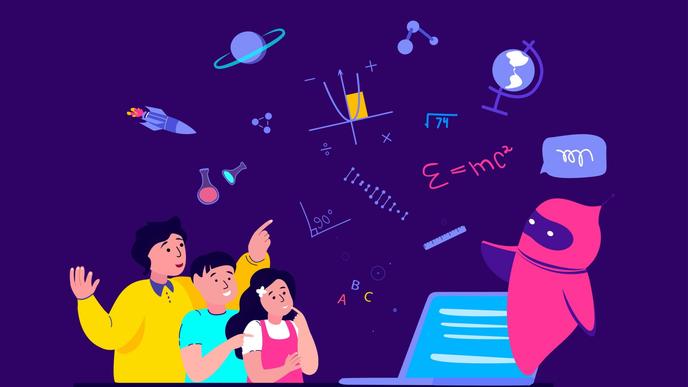
Here is an example of my schedule for this week. I don't have classes; I have "immersive cases." On Monday at 10:00 - "Supply Chain Collapse on Mars." This is a simulation in the metaverse of SpaceX University. I am a logistics manager who has to move cargo from orbit to the base within 3 hours (virtual), taking into account a sandstorm, a broken rover, and an ethical conflict: whose cargo to deliver first - medicine or fuel? Here I study everything at once: physics (atmospheric conditions), economics (cost of delay), ethics (priorities), psychology (team negotiations). And on Tuesday at 14:00 - "Create a Language for AI." This is a course from Anthropic Virtual. I don't learn linguistics from a textbook. In VR, I construct a proto-language that will allow AGI and humans to communicate without misunderstanding. The lesson goes like this: I sit at a table with three other students (their avatars are from Brazil, Japan, and Kenya) and with the avatar of a linguistics professor (a real person, by the way). We argue, draw on a virtual whiteboard, and an AI assistant records our ideas.
On Wednesday, I usually have a "day of silence." Once a week, we turn off all neuro-interfaces and learn… to be human. This is a mandatory course taught by real-life psychologists. We discuss emotions, relationships, and meaning. Because in a world where AI knows everything, the only thing that remains unique to humans is their ability to feel and to create the non-algorithmic.
And how are you assessed? Do they give grades?
- Instead of grades, there is a vector profile. Sophia analyzes my actions in simulations and produces a report on 50 parameters: critical thinking, creativity, learning speed, ethical sensitivity, teamwork, and so on. Each parameter is not a number but a trajectory: "Aydan, your empathy has grown by 7% this month, but your systemic thinking has dropped by 2% because you rely too much on AI."
An assessment is not a punishment or a reward. It is a diagnosis, like from a doctor. You look at it and think, "Okay, what should I work on next week?"
But what about live teachers? Have human educators really disappeared?
- They haven't disappeared, but their role has changed. Human tutors are now mentors of the highest level. They appear once every two weeks when my profile shows a "plateau" - I stop growing. Then Sophia automatically signs me up for a "live confrontation." There are very few of them, and they cost a fortune. But my grant covers four such sessions per month.
Lectera’s Online Courses by topic
It sounds like you are constantly studying. Do you have any vacations? What do you do in your free time?
- The concept of "vacations" is dead, because the division between "work" and "study" is dead. Now it's a single flow. My neural network switches modes by itself. For example, right now I'm playing a strategy game called "Babylon-3" in the metaverse - that's a hobby. But the game is designed so that every move I make is an economic simulation. In three hours, Sophia will inform me that I have intuitively mastered the theory of complex systems. I don't notice the transition. Learning happens through play.
And as for a real "reset" - once every three months, I undergo a neuro-cleanup. You lie down in a portable capsule (available at every pharmacy), and the device "erases" short-term patterns that hinder creativity. After that, for three days, I can't even remember the multiplication table, because I don't "remember" it - it resides in the external cloud. But I draw incredible paintings and invent new genres of music. Then Sophia reloads the database. That's how we fight the "memory clutter" effect.
What else has changed in attitudes toward education over 50 years? Why do people learn at all?
- In the past, people studied to get a job. Now… there is almost no work as such. Everything that can be automated has been automated. We learn because curiosity is the only thing that remains purely human.
Education has ceased to be a race for a diploma. It has become a way of life. People at age 80 start studying astrophysics simply because they find it interesting. And the neuro-interface allows them to do so.
After all these technologies, AI, and metaverses, we have understood the main thing: the goal of education is not to make you smarter. The goal is to make you happier. And no artificial intelligence has taught us that yet.
Share this with your friends via:
Latest News

Fall 2026 promises to be an eventful season for education worldwide.

Tickets for WE Convention 2026 are now available - with 25% off for EARLY BIRDS!

The private school Alpha School, which has opened campuses from New York to California, uses AI bots to teach children academic subjects for just two hours a day. The school has no traditional teachers, no homework, and tuition reaches $65,000 per year.

UK Prime Minister Keir Starmer has announced a major public-private partnership in the field of artificial intelligence. Google, Microsoft, Amazon and NVIDIA, together with the government, are launching an AI skills training programme for 7.5 million British workers.

International educational programmes provider Study Group has announced a change of ownership. The company has been acquired by Arete Education – an investment structure in the higher education sector created by Global University Systems (GUS) and US private investment firm Brightstar Capital Partners.
