









 Which American 2000s TV Series Are You?
 The Perpetual Student Syndrome: When Self-Development Becomes a New Form of Procrastination
 Test: Who Were You in a Past Life?
 Your Mythological Totem: Take the Test and Find Out Which Ancient Creature Protects You?
 Adulthood Test: Find Out How Old You Really Are
 Empathy Check. How Well Developed Is Your Emotional Intelligence?

 English
 Русский
 Deutsch
 Español
How to Get Through a Period of Uncertainty When Life Feels Like It’s Falling Apart
We live in an age of turbulence, and that is a fact. One only has to remember the events of the last five years: the pandemic, economic crises, wars, political conflicts, sharp changes in the labor market due to the explosive development of artificial intelligence and more, the loss of a sense of safety, and the absence of any real understanding of what comes next.

Even if there are no catastrophes in your personal life right now, reading the news is often enough to sink into despair. And if work is going badly, relationships are falling apart, or your health is crumbling under the weight of age and chronic conditions… The feeling that life is collapsing and that a black streak has begun is familiar to everyone in one way or another. But do not be afraid!
Most often, what hits a person hardest is not so much the events themselves as the absence of a reliable inner support system. In simple terms, there is no stability, no skill, and no resources for coping with problems, especially alone. The inability to tolerate uncertainty even has its own term in psychology: intolerance of uncertainty. In contrast, there is also tolerance of uncertainty, and it needs to be strengthened by every possible means. That is exactly what we are going to talk about in this article, along with how to regain control over your life in different situations.
Why It Feels Like Everything Is Over - and What Uncertainty Does to Us
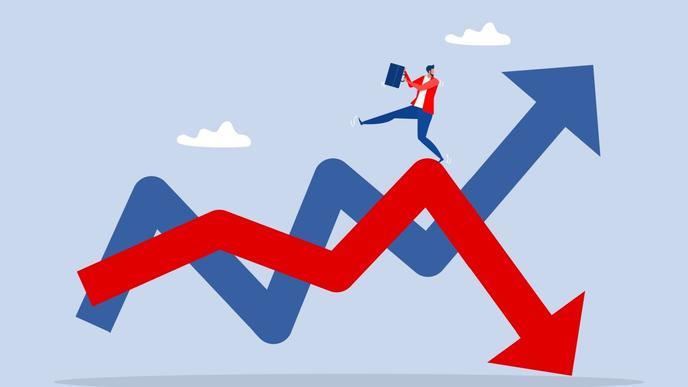
Uncertainty is hard to bear at the level of the nervous system. The brain needs predictability: that makes it easier to assess risks, distribute energy, and make decisions. When there is no clarity, the body shifts into a state of constant threat. Our neurons and the way they work are to blame for this. You do know that every habit we have, every well-practiced skill, is a clearly formed chain of neurons, right? That is why our brain loves performing routine tasks so much, because they can be done thoughtlessly, on autopilot - brushing your teeth, washing dishes, solving the same type of problem for the hundred-thousandth time... But when the brain encounters something it has never done before - a factor of uncertainty - the old neural connections no longer work, and new ones have to be created. And our brain really does not like straining itself unnecessarily. So it responds to situations like that with stress and attempts to roll everything back to familiar old patterns.
The longer any uncertainty lasts, in one area or, all the more so, in several at once - for example, you do not know whether you will be fired, whether a loved one will recover, whether the apocalypse will happen or not - the stronger the effect and the stress become. As a result, concentration drops, memory worsens, it becomes harder to hold a sequence of actions in your mind, and harder to regulate your own state. A person notices that they are thinking less clearly, postponing even simple tasks, getting irritated over trifles, or, on the contrary, freezing up and slipping into a kind of "anabiosis." This is a common reaction of an overloaded nervous system, which is aimed at saving internal resources instead of accumulating them for finding a solution.
At this stage, cognitive distortions often begin to kick in. These are also called mental traps. For example, dichotomous thinking, where "either everything will be fine or everything will be terrible"; focusing on negative experience despite the presence of positive evidence ("it didn't work once, so it will never work"); trying to predict another person's actions and thoughts ("I would act like this, so that means they…"); and the most basic of all, procrastination. And this is how that very sense of inevitability appears, the feeling that "life is going downhill." But here is the catch: in turbulence, never - absolutely never - are all areas of life affected at once. It is always one or several. To overcome this feeling of inevitability, the first thing you need to do is identify those areas.
What may be hiding behind the feeling of doom:
- One genuinely serious problem. Losing a job, a major conflict, an illness, a large debt, or a breakup can easily paint everything else in dark colors. Even if other areas are still holding up, a person may already feel as though they have failed on all fronts.
- Several small "malfunctions." An overdue payment, general exhaustion, tension in the family after an argument, an unsuccessful conversation with your boss, an anxiety-inducing email - each of these on its own is bearable, but together they create the feeling of an avalanche.
- Severe depletion. When a person has been living without rest for a long time, any difficulty feels sharper. Something that used to be resolved in a day now feels impossible simply because the inner resource is already at zero.
- Fear of the future being lived in advance. Sometimes nothing final has happened yet, but the person has already mentally lost their job, ended up alone, failed to deal with their debts, and ruined their future.
- Loss of control. Even a moderately difficult situation is harder to endure if it is unclear where to begin. When there is no structure, any problem seems bigger than it really is.
- Different areas getting mixed into one lump. Work, money, health, relationships, self-esteem, and exhaustion can merge into one general sense of "everything is bad." In that mass, it becomes difficult to see which problems are primary and which only appeared afterward.
- Shame and harshness toward yourself. Instead of the thought "I'm going through a difficult period," another one appears: "I can't handle this," "I ruined everything," "normal people live differently." In that case, the main cause lies not in external factors, but in the "inner critic."
- The general anxious atmosphere of the times. When the world itself is unstable, it becomes harder for a person to recover even from ordinary life difficulties. A personal crisis may be a consequence of the outer crisis and of the overall increase in anxiety in society.
To understand what exactly is happening to you, you need to pause for a moment and ask yourself a few questions:
-
Which part of my life is truly in danger, and what is only frightening me "in theory" for now?
-
Which area has declined the most: work, money, health, relationships, daily life, or still my inner state?
-
What has objectively become worse, and what only feels worse because of certain events or exhaustion?
-
What requires action within the next 24 hours?
-
What is unpleasant, but not yet critical, and therefore can be postponed?
-
What fact about my situation do I not want to admit?
-
If someone close to me felt the way I do right now, what would I advise them?
-
Would I advise them to restore their strength first?
-
Which of my problems is the cause, and which is the consequence?
-
What will get worse if I keep ignoring this for another week?
-
What one step would make me feel relief today already?
Emergency Self-Help: What to Do in the First 24-72 Hours When It Hits You Hard

When someone is truly overwhelmed, what they need first is not a grand life strategy, but simply a little stability. In the first one to three days, the things that work best are simple, clear actions that reduce overload and help you avoid burying yourself even deeper in the sand. Absolutely make sure to:
- Remove the source of extra noise. Stop reading the news every ten minutes, checking your email constantly, or opening a chat after which you always feel worse.
- Check your physical state. Sleep, food, water, a shower, fresh air, clean clothes. In acute stress, all of this seems trivial to us, but it is not. A person who has not eaten all day and slept four hours is not capable of seeing the situation soberly and objectively.
- Write down everything that is scaring you. On paper or in your notes. For example: "I only have enough money for two more weeks," "I'm afraid of talking to my boss," "I'm not opening messages from the bank," "I don't understand what's happening in my relationship." When fears stop spinning only in your head, they become more concrete.
- Sort everything by urgency. Mark what has to be dealt with today, what needs attention this week, and what can be left untouched for now. Worry about problems according to that list - today we worry about this, tomorrow about something else, all right? But not all at once.
- Focus on one most likely or most frightening risk. Everything bad cannot happen to you at once, do you understand? Most likely, the real threat is coming from one thing, and dealing with that alone may already make the situation feel less catastrophic. Find that "one thing" and take the corresponding action to reduce the pressure of that risk. For example, pay the rent, reply to an email, book a doctor's appointment, talk to your manager, renew an expired document, and so on.
- Tell at least one person that you are having a hard time. No long explanations needed. A simple phrase is enough: "I'm having a really hard time right now, talk to me for a bit. Tell me about your day, and I'll tell you about mine, okay?"
- Reduce tasks to short formats. Not "get myself together and fix my life," but "wash my hair," "reply to one message," "walk to the store," "open the expense spreadsheet." When strength is low, movement begins with a small action.
- The main thing is to restore a sense of stability. In the next 72 hours, one goal is enough: do not make your condition worse, and do not create new problems for yourself.
It is just as important to understand which actions can harm you at this moment rather than improve the situation. The following definitely belongs on the list of "Do not do this under any circumstances in panic and stress!":
- Do not make decisions that radically change your life. Such decisions include, for example, blocking someone, quitting your job, moving, or making an impulsive purchase of something expensive, even if desired. A few hours later or the next day, the situation will look different, but the consequences of the hasty step will remain.
- Do not try to solve everything at once. Yes, you want to deal with everything as quickly as possible. Yes, you cannot just calm down - that is not how it works. But no, problems, especially serious ones, are not solved with the snap of your fingers, and moreover, nobody requires that from you. The end of the world is happening only in your head.
- Do not give in to self-criticism and do not intensify self-discipline. Phrases like "pull yourself together" and "you ruined everything" do not help you act - they only intensify anxiety and shame. It is like trying to comfort a crying child who fell and split their forehead open by saying, "What are you, a crybaby? You should have watched where you were going, stop crying!" In short, that is unlikely to help, not to mention that it is simply too cruel.
- Do not isolate yourself. The desire to disappear is understandable, but in a difficult state, silence and solitude often intensify dark thoughts.
- Do not replay worst-case scenarios in circles. Constantly mentally rehearsing catastrophe takes away the energy you need for real steps. The ability to distract yourself matters very much here, and fine motor activity works best for switching states: drawing, doing a puzzle, sculpting something… or just washing dishes.
- Do not conduct a "postmortem." If you truly want to achieve something, to be heard and understood, you need to gather proper arguments and be in a state where you can clearly lay them out, communicate them, and use them. In a half-hysterical state, or when you feel completely squeezed dry, you are unlikely to convince anyone.
- Do not relieve tension through impulsive behavior. Scandals, sudden spending, running away, and demonstrative decisions bring a short burst of relief, but add a new layer of problems.
Lectera’s Online Courses by topic
How to Regain a Sense of Control Over Your Life

1. Divide life into three horizons: today, this week, this month
For today, one clear question is enough: What am I doing so things do not get worse? For the week: What do I need to hold together? For the month: What one direction is the main priority for me right now - job searching, restoring sleep, having a conversation in my relationship, putting my finances in order? For example, not "I urgently need to completely rebuild my life," but "today I update my résumé, this week I send out five applications, this month I cut unnecessary expenses." The shorter the horizon, the greater the chance of feeling solid ground under your feet.
2. Separate your sphere of influence from what does not depend on you
For many people, anxiety is fueled by attempts to control things that cannot actually be controlled: the economy, the weather, other people's decisions, the past that has already happened, the general instability of the world. That inner struggle quickly exhausts you. It helps to write down separately what you actually can influence. Call your landlord, ask for a delay, cancel an extra burden, book a doctor's appointment, update your portfolio, talk to your partner, skip buying coffee today as an unnecessary expense, and so on.
3. Narrow the questions you ask yourself
Broad questions like "What will happen next?" or "How do I fix everything?" rarely help in a crisis, because they simply cannot be answered. Much more useful are short and specific formulations. For example: "What conversation am I postponing?", "What do I need to close out by Friday?", "Where am I losing the most energy right now?", "What action would make the next three days easier?" Questions like these are much more likely to produce actions rather than yet another loop of anxious thoughts.
4. Bring back one routine you love
The nervous system needs predictability. We only truly rest in predictability. That is precisely why, for example, when we are completely drained, we do not want to go abroad on vacation - we just want to lie on the couch and watch TV series. That is because the brain recovers through simple, repeatable, pattern-based actions. Establish and protect from turbulence at least a few repeating points: breakfast in the morning, a walk in the evening, a shower before sleep, a Sunday budget check, half an hour without your phone. Going to bed and waking up at the same time, by the way, also serves as an inner support, not to mention the biological benefits.
5. Prepare a backup scenario
When a person is afraid of the future, a workable plan for the bad version of events helps them enormously. Not a detailed strategy for years ahead, but a few practical steps in case the situation gets worse. This reduces the sense of helplessness. For example: "If I get laid off, in the first week I update my résumé, write to three acquaintances, cancel two unnecessary expenses, and go to the employment office or a career consultant." Or: "If the relationship conversation goes badly, I do not try to sort everything out in one evening, I spend the night at a friend's or relative's place, and return to the conversation the next day." The main thing is not to overdo it. Excessive planning is already a way of defending yourself against what has not happened yet and trying to take the future under control. You only need a plan for those aspects that are truly under threat, and only in general outline, not in exhaustive detail.
6. Look at your condition as a task, not as a sentence
You need a formulation in which the next step can already be heard. For example, not "I don't have enough money, I can't carry on like this anymore," but "Where can I get additional money over the next month: find side work, raise my rates, sell something unnecessary, recover an old debt, offer my services to acquaintances?" Not "I'm stuck in my job and it only gets worse from here," but "I need to understand what exactly I need to change: the company, the position, the work format, or the entire field, and where to begin that transition." Not "I no longer recognize myself and feel like I'm living beside my own life," but "What exactly does my life consist of right now, and what in it is draining my energy faster than it gives anything back?" Not "Everything in my relationship is falling apart," but "Are we in a crisis we can talk through, or have we actually been distant for a long time and are simply afraid to admit it?"
A period of uncertainty can rarely be stopped quickly, especially considering the fact that it does not always depend only on us. And yet it can still be survived with minimal losses if you do not try to urgently put your entire life in order, but first return yourself to clarity, supports, and a plan. But if after this article you still do not feel any lighter, if none of our suggestions have helped, and no matter how hard you work on making a plan it brings no result, remember that you can always ask for help. You do not have to deal with this alone. Sometimes support is not just a necessity, and certainly not a weakness, but a chance to discover new horizons and change your life for the better.
Share this with your friends via:
Latest News

Fall 2026 promises to be an eventful season for education worldwide.

Tickets for WE Convention 2026 are now available - with 25% off for EARLY BIRDS!

The private school Alpha School, which has opened campuses from New York to California, uses AI bots to teach children academic subjects for just two hours a day. The school has no traditional teachers, no homework, and tuition reaches $65,000 per year.

UK Prime Minister Keir Starmer has announced a major public-private partnership in the field of artificial intelligence. Google, Microsoft, Amazon and NVIDIA, together with the government, are launching an AI skills training programme for 7.5 million British workers.

International educational programmes provider Study Group has announced a change of ownership. The company has been acquired by Arete Education – an investment structure in the higher education sector created by Global University Systems (GUS) and US private investment firm Brightstar Capital Partners.
