








 Which American 2000s TV Series Are You?
 The Perpetual Student Syndrome: When Self-Development Becomes a New Form of Procrastination
 Test: Who Were You in a Past Life?
 Your Mythological Totem: Take the Test and Find Out Which Ancient Creature Protects You?
 Adulthood Test: Find Out How Old You Really Are
 Empathy Check. How Well Developed Is Your Emotional Intelligence?

 English
 Русский
 Deutsch
 Español
"My Product Is Not for Everyone": How to Find and Understand Your Customer
People are willing to pay for a concrete solution to their problems. If a product, even the highest quality one, does not address a real customer need, that product will not be in demand, no matter how beautifully you package it.
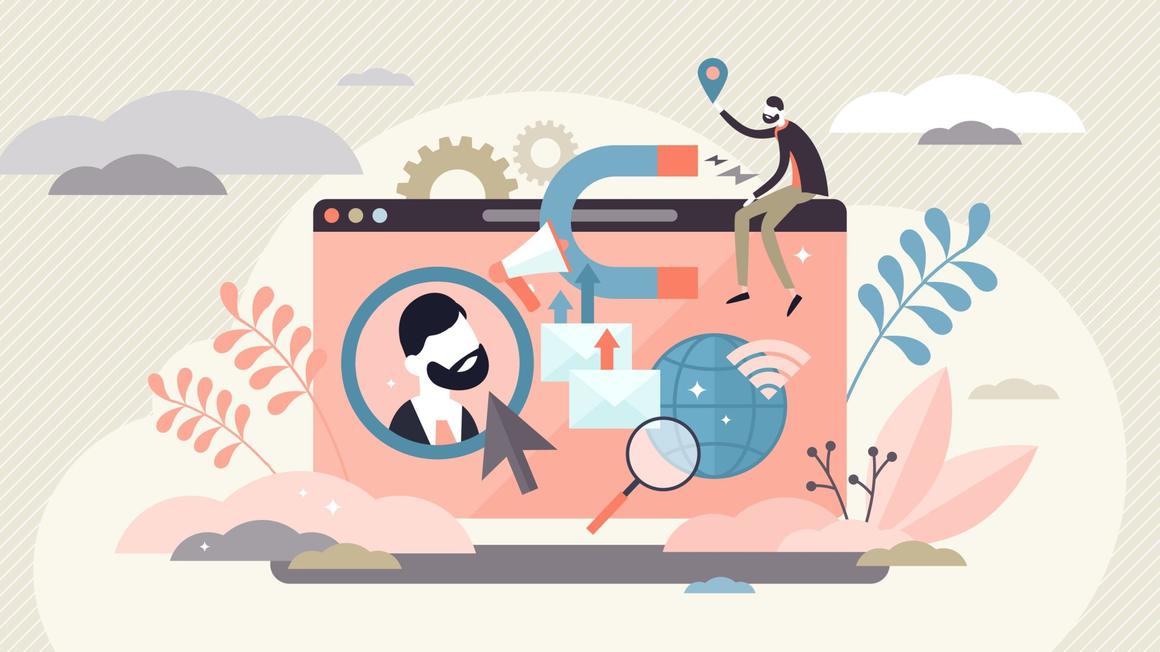
Of course, this is a very simplified explanation. There can be many reasons why a particular project fails - bad timing for the launch, unexpected changes in legislation or new rules for entrepreneurs, seasonal fluctuations in demand. But most often, each of these reasons also implies a key one: an incorrect definition of the target audience.
If a business tries to appeal to everyone, it ends up appealing to no one. Especially now, in an era when consumers expect personalization, trying to be everything to everyone is not a strategy; it is slow self-destruction. Let's figure out how to understand who your potential customer is, and how to attract and retain them.
First - the TA, then - the product
Startups often come up with an idea for a product or service that doesn't yet exist, and only then do they start wondering whether the project will even be in demand and why no one thought of it before, since the idea is so brilliant.
In reality, more than half of entrepreneurs' initial hypotheses about who their customer is and what their pain point is turn out to be wrong. And this is not a failure, but a starting point. Therefore, you should always begin by identifying unmet needs.
When you start from a description of your target audience at the planning stage, you shorten the distance between the idea and reality by asking about real, unsolved problems. A person who only potentially "might be interested" is not a customer.
Once you have a description of your TA, you stop making decisions based on intuition. Product development becomes simpler: you don't add 15 features when only two are needed. Pricing also becomes simpler: you understand whether your customer is ready to pay 5,000 or 500. Moreover, knowing your TA reduces your budget, for example, on marketing and promotion. Advertising shown to "everyone" wastes money. Advertising tailored to a specific segment pays off faster. The difference in customer acquisition cost can be 3-5 times.
Founders often get frustrated: "Why do our competitors have 10,000 customers, but we only have 200?" The answer often lies precisely in the TA. Perhaps you have chosen a segment that is too narrow - in that case, 200 is fine. Or, conversely, too broad - and you are competing with giants. Understanding your audience provides realistic benchmarks.
What Types of Audiences Exist
Before looking for customers, it is important to understand that the TA comes in different forms. You cannot say, "Our audience is entrepreneurs or retirees." That is too broad. Classical marketing identifies several types of TA. They are not mutually exclusive, but each provides a different perspective.
Primary target audience. These are the people who make the final purchasing decision and most often pay with their own money. If you are selling a subscription to a B2B analytics service, the primary TA is not the "marketing department," but a specific person - for example, the department head who approves the budget. It is important not to confuse the user with the buyer.
Secondary target audience. They influence the decision but do not pay directly. In corporate sales, these could be rank-and-file employees who will be working with your product. If it is inconvenient for them, they will tell the manager, and the deal will fall through. In B2C, these are friends, partners, bloggers whose opinions are taken into account when choosing. Ignoring them is a mistake.
Broad TA (or market audience). Everyone who could potentially be interested in the product in theory. For example, "people who care about their health." This is a very vague group that cannot be relied upon when developing a product. But it is useful for assessing the overall market size.
Narrow TA (targeted audience). The specific segment you are focusing on right now. For example, not "people who care about their health," but "women aged 28-40 who go to the gym at least three times a week and spend at least 15,000 per month on sports." It is for this group that you are making the product.
Competitor's audience. People who are currently buying from your direct competitors. This does not mean they are "someone else's." On the contrary: if you understand why they chose the competitor (convenience, price, habit), you can offer them a better alternative. Research shows that switching a user from a competitor is often cheaper than attracting a person who has never used products in your category.
How to Understand the Customer's Problem: Methods That Actually Work

You don't necessarily need to hire a team of researchers and spend six months on focus groups for this. You can understand your target audience faster and cheaper if you know a few tricks.
Method 1. Hypothesis + AI for brainstorming
The key mistake is turning to ChatGPT or other neural networks with a request to recreate a customer portrait by simply feeding them a product description. AI is great at generating ideas, but it does not possess knowledge of the real market. It knows what is generally written about similar markets on the internet. AI can only be used as a supporting tool.
At the same time, while you are coming up with your product at the idea stage, start studying competitors' offerings, compare price and quality, and then formulate a hypothesis: "My product solves problem X, and is 10% cheaper than a similar competitor product." After that, you can go to the AI: first describe the idea of your product or service, then the key problem you are solving, and then ask the neural network to generate 3-5 possible audience segments and explain why each of them might be interested.
AI can give you ideas you hadn't thought of, uncovering new hypotheses that can then be tested on the potential market.
Method 2. Customer Discovery through live conversations
In 2026, it is easier than ever to hide behind numbers and analytics. But no dashboard will show you doubt in a customer's voice when they say, "It seems like this might work for me, but I'm not sure." No table will capture a pause before an answer that means the person is not telling the whole story.
Here is a protocol used in startup schools at major universities:
Do not ask your potential audience this: "Would you like feature X?" That is hypothetical future behavior.
Ask this instead: "Tell me about the last time you encountered problem Y. What did you do then? What did you try? What didn't work?"
The difference is enormous. In the first case, you get a polite answer: "Yes, that would probably be convenient." In the second, you get a story full of details, frustrations, and non-obvious insights.
Method 3. Jobs to Be Done: Forget demographics, think about progress
Classic segmentation by age, gender, and income is already an outdated way to understand an audience. Yes, this data is easy to collect. But it says almost nothing about a person's motivation. The Jobs to Be Done framework offers a different approach. JTBD identifies three layers:
-
Functional (what needs to be done - "translate a document from Chinese")
-
Emotional (how I want to feel - "so that I don't worry about missing something")
-
Social (how others see me - "so that colleagues think I am competent")
If you understand all three layers, you can build a product that hits not just a need, but an entire system of motivation.
The classic method: customer portrait
To stop thinking of the audience as a faceless mass or in overly general terms, marketers create what is called a customer portrait. The process resembles creating a character in a computer game: at the beginning, you have a "blank slate," and gradually they acquire a name, appearance, job, habits, fears, and dreams.
The more detailed the portrait, the easier it will be for you to tailor your communication - as if you are talking to an old acquaintance rather than an abstract stranger.
Of course, the basic set of characteristics you need to describe includes the usual:
-
Gender
-
Age
-
Geographic location (city, region, type of housing)
-
Education
-
Profession and field of activity
-
Income level
-
Hobbies and interests
-
What exactly the person wants to get from your product
-
What they are afraid of (what risks or pains they associate with it)
For clarity, you can find a photo of a suitable person from open sources and even give them a name.
Suppose you sell vitamins and supplements and promote them through a social media group. You have conducted an initial analysis and found that the core of your audience is women aged 25-30. Let's deepen the portrait:
-
Lives in a large city
-
Works in an office, has a tight schedule, often works late
-
Has little time for sports and walks, although they would like more
-
Tries to eat right, but does not have time to cook full meals
-
Main fear: lack of sleep and sedentary work will affect their appearance and figure
-
Deep-seated need: to stay in shape, have energy for family and hobbies
With such a portrait, you already understand what content will resonate with this audience: simple 15-minute recipes, tips for staying toned without a gym, short workouts at your desk. In the product description, you should emphasize that vitamins are the fastest and most economical way to support health, because time is your customer's main deficit.
Where to find information
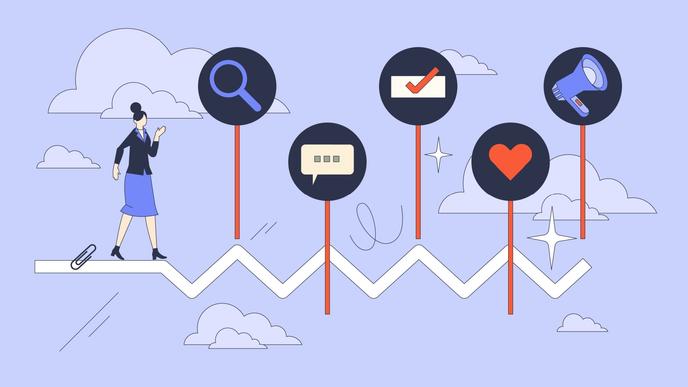
There are several ways to collect data about customers. The most reliable, though not the fastest, is to ask them directly.
Surveys and questionnaires. You can order research from a specialized agency or conduct it yourself. For example, offer site visitors a short questionnaire in exchange for a discount, bonus, or useful material. It is important not to overload the survey. Ask only for information that will actually influence your decisions.
Here are questions worth including in the questionnaire (and they will differ for B2C and B2B):
-
Tell us a little about yourself (demographics - for B2C; industry, position, role in decision-making - for B2B)
-
For what purposes do you use our product?
-
How has your life or work changed after you started using it?
-
What do you like most about it?
-
What alternatives did you consider before purchasing? Why did you choose us?
-
What difficulties did you encounter during the purchase or use process?
-
What else would you like to buy from us?
Social media analysis. In open profiles, you can learn a lot about subscribers: which public pages they follow, which posts they like, which discussions they participate in.
How to segment your audience: the 5W method
Few products are suitable for only one strictly limited type of customer. Most often, you have several categories of buyers, and each has their own problem that the product solves.
A telling example is a fitness club. One client comes to build muscle and attract the opposite sex. Another comes to relieve back pain and improve their health. A third comes simply because "that's what's done in their circle." These are three completely different motivations, and you need to communicate with them differently.
Therefore, the audience is divided into segments, and a separate offering is created for each segment. Multiple advertising campaigns with different messages almost always work more effectively than a single "universal" one.
The most famous and simple tool for segmentation is the 5W method, developed by Mark Sherrington. It suggests answering five questions:
-
What? What exactly are you selling? What is your product?
-
Who? Who is the buyer? (This is where the customer portrait we created above comes in handy.)
-
Why? What problem or need of the customer does your product solve?
-
When? In what situation does the person make the purchasing decision?
-
Where? Where does the purchase take place - website, app, offline store?
Sometimes a sixth question is added: "Why don't customers buy?" Then the method becomes 6W.
How to attract the ideal customer
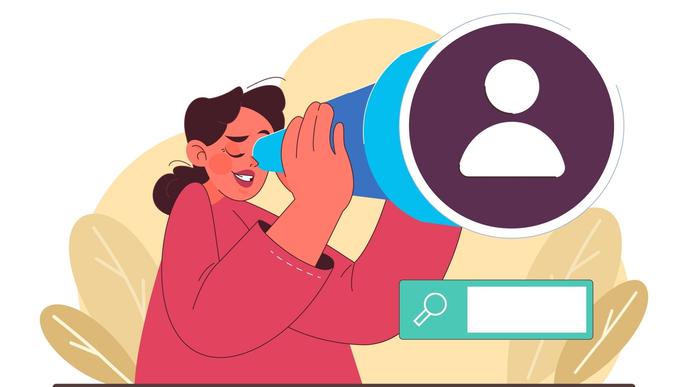
Once the portrait is ready and the segments are defined, the question arises: where do you physically find these people? An internet marketer has several main options.
Social networks. The most direct way is to look at your direct competitors. Their subscribers are almost a ready-made target audience (at least at the start). In addition, thematic communities in your niche will work.
Action algorithm:
-
Find groups where representatives of your TA might be
-
Filter subscribers by demographic criteria (city, age, gender, etc.)
-
Start working: add them as friends, invite them to your community, send them personal messages, or target them with targeted advertising. There are special services to automate this search.
Email newsletters. With the right approach, newsletters become a powerful acquisition channel. They can contain useful content, announcements of promotions, product news, and event invitations.
The key rule: the newsletter must be voluntary. Buying ready-made databases is almost always a bad idea: conversion is low, and reputational risks are high. It is better to collect addresses through special forms on your website, blog, or social networks, ask partners to announce your newsletter, or collect contacts at offline points.
Search engines. This is not exactly "finding" an audience in the classical sense. Rather, it is a way to help the audience find you on their own. If you optimize your website's content for search queries, the person who needs your product will come to you themselves.
To find out which phrases potential customers are searching for, use keyword statistics, for example, Google Keyword Planner.
Lectera’s Online Courses by topic
What to do with the information next: how not to abandon segments after creating them
The most common mistake is to describe the target audience once, create a portrait, and forget about it for six months or even a year. The problem is that people change even in a couple of months. Their habits, priorities, and available technologies change. And if yesterday your customer used one messenger, there is no guarantee they won't switch to another tomorrow.
What to do:
- Make segmentation live. This means that the criteria for selecting segments are regularly recalculated based on fresh data. Not on a "once a quarter" schedule, but constantly.
- Integrate segments into your CRM. If segments exist only in a presentation, they are useless. They need to be in your customer management system so that every manager can see which segment a specific customer belongs to and what the right approach is for them.
- Document insights so others can find them. Research shows that the problem for many teams is not a lack of data, but the inability to find it when needed. Someone conducted interviews three months ago, wrote down the conclusions in a personal document, and that knowledge left with them. A common searchable insight archive is a simple tool that saves weeks of work.
- Update hypotheses and test new ones. Do not cling to old beliefs in the face of new data.
Knowing your customer is a constant, often tedious, but the only honest way to stay in dialogue with real people. No AI can replace a conversation where you hear a voice, doubts, and pauses. No table can show you an emotion. But at the same time - without analytics and a systematic approach, you are just collecting nice stories, not testable hypotheses. So don't forget to maintain the balance.
Share this with your friends via:
Latest News

Fall 2026 promises to be an eventful season for education worldwide.

Tickets for WE Convention 2026 are now available - with 25% off for EARLY BIRDS!

The private school Alpha School, which has opened campuses from New York to California, uses AI bots to teach children academic subjects for just two hours a day. The school has no traditional teachers, no homework, and tuition reaches $65,000 per year.

UK Prime Minister Keir Starmer has announced a major public-private partnership in the field of artificial intelligence. Google, Microsoft, Amazon and NVIDIA, together with the government, are launching an AI skills training programme for 7.5 million British workers.

International educational programmes provider Study Group has announced a change of ownership. The company has been acquired by Arete Education – an investment structure in the higher education sector created by Global University Systems (GUS) and US private investment firm Brightstar Capital Partners.
