








 Which American 2000s TV Series Are You?
 The Perpetual Student Syndrome: When Self-Development Becomes a New Form of Procrastination
 Test: Who Were You in a Past Life?
 Your Mythological Totem: Take the Test and Find Out Which Ancient Creature Protects You?
 Adulthood Test: Find Out How Old You Really Are
 Empathy Check. How Well Developed Is Your Emotional Intelligence?

 English
 Русский
 Deutsch
 Español
VR Quests and Online Quizzes Instead of Good Old Karaoke: How Corporate Parties Have Changed and What Your Employees Will Love Now
If you are a manager, you already have formal authority: your title, the reporting structure, the signature authority. But that is not enough.
More and more young employees are paying attention not so much to salary and office location, but to the personality of their boss. Informal authority is a more subtle matter. It is not handed out along with a corner office and the title of CEO. It is earned through actions, attitude, and how you spend time with your team outside of work tasks.
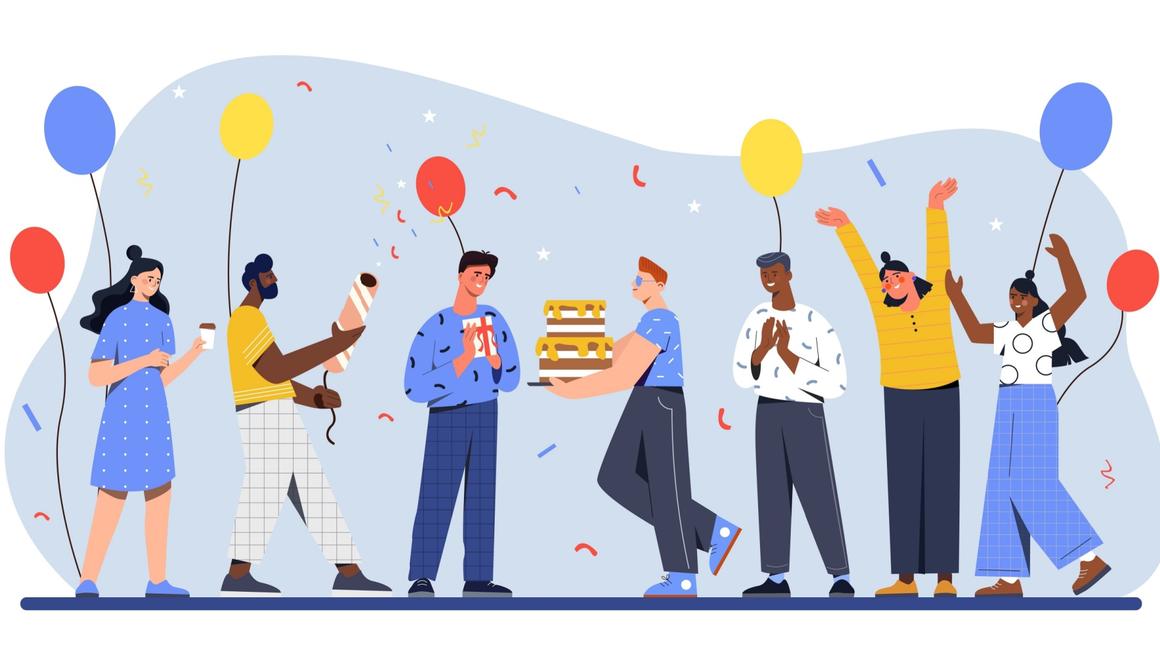
One of the most effective tools is corporate events and team building. But here is an important nuance: in today's world, everything changes at the speed of light, including the trends in corporate events. Let's find out which formats actually work today and what has changed in recent years.
The Bad News: Old Formats No Longer Work

The era of "check-the-box" team building is gone for good. Employees have become more demanding of their time and how they spend it. We want to understand: why are we here, and why did we choose a corporate event over simply relaxing at home watching our favorite series? If an event feels like a chore, it is perceived as an extra burden, not as a bonus at all.
The global team building services market was valued at 5.78 billion in 2025. And by 2035, it is forecast to grow to 41.27 billion. The growth rate is almost 22% per year. Here are the trends driving this.
Trend #1. From Competition to Joint Creativity
In the past, team building was often built on competition: Team A vs. Team B - who is faster, higher, stronger. Today, this approach is losing ground.
The demand has shifted toward collaboration. People want to work together toward a common goal, not compete with each other. This is especially important in companies where different departments rarely interact in their daily work, as well as where many employees work remotely and rarely see their colleagues.
Imagine this: instead of dividing the team into "reds" and "blues," you give everyone a single task that is impossible to complete alone. For example, build something large-scale, create a shared art object, or solve a complex logistics problem. There are no losers here - only a shared result, achieved because different departments possess different knowledge and skills, and by combining them, you get the final product (just like at work).
A format where everyone wins creates far more positive emotions and real connections between people than a tournament bracket with the inevitable defeat of half the participants.
Trend #2. Narrative and Immersion
Immersive formats are currently on trend - where you don't just solve problems and complete challenges, but live through a story, fully immersing yourself in a fictional world.
There are many options:
-
A detective investigation where every employee is either a suspect or a detective.
-
"Survival in a post-apocalyptic world" with role distribution and limited resources.
-
A theatrical performance where participants influence the plot in real time.
When people go through intense experiences together - fear, the joy of discovery, pride in a joint solution - they remember those moments for years, even if it wasn't real.
Trend #3. Business Mixed with Pleasure
Skill-oriented team building is gaining popularity. These are events that simultaneously bring the team together and provide new knowledge or skills.
Examples:
-
A cooking battle with elements of strategic planning (resource allocation, timing, budget).
-
A robotics workshop where the team must assemble a device.
-
A hackathon to solve a real business problem of the company (the ideal scenario - the winning idea is later implemented).
-
Courses in public speaking or stress management.
The company demonstrates care for employee development. And employees gain skills that will be useful in their work - a win-win.
Trend #4. Digital and Hybrid: VR, AR, and In-App Quizzes
Remote and hybrid work models are here to stay. And team building is adapting to them. Digital quests conducted through a mobile app are no longer exotic; they are the norm. Participants receive tasks on their smartphones, complete them in teams (even while sitting in different cities), and track their progress in real time.
Demand for hybrid formats has grown by 68%, while the use of digital tools for facilitation has increased by 39% among corporate clients.
What exactly are they using?
-
VR quests - complete immersion in virtual reality for remote teams.
-
AR adventures - augmented reality overlays tasks onto the real physical space.
-
Online quizzes - intellectual games without a live host, run on specialized platforms.
-
Platform gamification - where completing tasks during an online corporate event earns points that can later be exchanged for branded merchandise or gadgets.
An important point: the technical side must be top-notch. Nothing kills the mood like a frozen stream or an app that won't load and glitches every minute.
Trend #5. Wellbeing: Health Care as a Team Format
Team building focused on psychological and physical well-being is one of the biggest trends.
What could this be?
-
A corporate multi-sport event (not about "winning at all costs," but about activity and enjoyment).
-
A yoga retreat or group meditation sessions.
-
"Leela" - a psychological game for self-discovery in a group (its goal is to help players find answers to personal questions, overcome internal blocks, and understand their life scenarios).
-
Workshops on stress management or healthy eating.
Trend #6. Social Responsibility as a Gathering Point
People want meaning. Not just to "spend time with colleagues," but to do something important. Socially significant team building (so-called CSR team building) solves several problems at once:
-
The team unites around a common noble goal.
-
The company demonstrates its values in action.
-
A tangible result remains - planted trees, collected items for animal shelters, renovated playgrounds.
This could include:
-
Participation in environmental initiatives (forest planting, trash cleanup).
-
Charity fairs where employees make things with their own hands and the proceeds go to foundations.
-
Helping animal shelters or nursing homes.
The emotional response from such events is maximum. And they are remembered for a long time. Plus, it is an excellent PR opportunity, if you are not afraid to show such initiatives publicly.
Trend #7. Reflection
Another important change: simply "running an activity" is no longer enough. You need to discuss what happened, why it mattered, and what lessons we learned from it.
In 2026, clients are increasingly demanding facilitated reflection at the end of an event. Not just to go home, but to sit in a circle (online or offline) and answer questions:
-
What did we learn about each other today?
-
How can we apply this to our work?
-
What was difficult, and what was easy?
This turns entertainment into a tool for team development. Ideas and insights born during reflection can be immediately written down and put into practice. And the very fact that the company creates space for such conversations increases psychological safety within the team.
Lectera’s Online Courses by topic
How to Get the Scale Right: Bring Everyone Together or Work with Departments
When it comes to a corporate event, another one of the first questions that arises for a manager or HR department is: "Who should we invite?" Gather all company employees - from intern to CEO? Or better to hold several separate meetings for each department?
Of course, there is no universal answer. Both options can be correct. It all depends on what goal you set for yourself, how large your company is, and how far apart the teams are.
Imagine a situation: in your company, the sales department hardly communicates with production, and the developers see the marketers only at meetings once a month. People work in parallel, but not together. They know each other only by their avatars in the corporate messenger and names in email newsletters.
In such a case, a company-wide event is not just a good idea - it is almost a necessity. When the whole company gathers, something important happens: people begin to see in each other not just a "manager from department X," but real people with hobbies, a sense of humor, and their own stories. This reduces tension, removes misunderstandings, and makes internal communication more human.
The more barriers there are between people in their regular work, the more important it is to create a space where those barriers temporarily disappear.
In addition, company-wide events are good when you want to:
-
Introduce new employees to the company (especially if many people have joined in the last six months).
-
Announce important strategic changes and do so not in a dry corporate email, but in a lively atmosphere.
-
Simply give people the feeling that they are part of something larger than their department.
But there are also limitations. If several hundred people work in the company, you still won't be able to fully engage with everyone. People will split into their usual groups. And that is normal. The main thing is that a shared context and a shared memory of the event will emerge.
Now, a different picture: a medium or large company. Each department is already a close-knit team with its own internal rules, rituals, and even jokes. But there is tension within that team. Or perhaps you simply want to give people the opportunity to relax in a small circle where everyone knows each other well.
Here, separate outings for departments or small teams work better. In a small group, it is easier to create an atmosphere of trust. People open up faster, speak more frankly about problems, and engage more actively in discussions. If you are holding, say, a strategic session with elements of team building, in a circle of ten people you will get far more insights than in a room of a hundred.
Separate events for departments are especially good when:
-
Different departments are at different stages of development and need different formats (one is ready for a complex quest, another for quiet reflection).
-
You have regional distribution and gathering everyone physically is difficult or expensive.
-
You want to deepen connections within a team that already knows each other well but wants to reach a new level of mutual understanding.
An important nuance: if you choose this path, try to ensure that departments do not feel left out. No one should think, "Their corporate event was better." Equal attention to different teams is also an investment in the overall culture.
If you are unsure where to start, try asking the employees themselves. Not in a formal survey with a deadline, but rather informally - through an internal chat or a short anonymous poll. Find out whether people want large company-wide gatherings or prefer quiet days with "familiar" colleagues from their own department.
Sometimes the answer is unexpected. For example, in companies with strong internal competition, people often ask for company-wide events - to see real people in their competitors and slightly reduce the level of tension. In very friendly small teams, on the other hand, they may value intimate formats without extra people.
Remember: there are no right or wrong solutions here, as long as you act sincerely and with care for your people. Sometimes you will have to try, make mistakes, and try again. That is normal. Much worse is not trying at all, leaving the team in a state of uncertainty and "yet another mandatory event on the calendar."
Observe, ask, adjust your course. And then any format - whether company-wide or in a small circle - will bring exactly what it was all about: genuine, warm, and honest relationships between people.
Corporate events and team building in our time are an investment in company culture, in trust, and in that very informal connection between manager and team. But this investment requires strategy, not just a budget.
A good team building event today is:
-
Meaningful - everyone understands "why" they need it.
-
Engaging.
-
Professionally organized.
-
Offering real benefits (skills, health, social contribution).
-
And, importantly - with the opportunity to discuss, reflect, and apply what was learned at work.
Share this with your friends via:
Latest News

Fall 2026 promises to be an eventful season for education worldwide.

Tickets for WE Convention 2026 are now available - with 25% off for EARLY BIRDS!

The private school Alpha School, which has opened campuses from New York to California, uses AI bots to teach children academic subjects for just two hours a day. The school has no traditional teachers, no homework, and tuition reaches $65,000 per year.

UK Prime Minister Keir Starmer has announced a major public-private partnership in the field of artificial intelligence. Google, Microsoft, Amazon and NVIDIA, together with the government, are launching an AI skills training programme for 7.5 million British workers.

International educational programmes provider Study Group has announced a change of ownership. The company has been acquired by Arete Education – an investment structure in the higher education sector created by Global University Systems (GUS) and US private investment firm Brightstar Capital Partners.
