







 Which American 2000s TV Series Are You?
 The Perpetual Student Syndrome: When Self-Development Becomes a New Form of Procrastination
 Test: Who Were You in a Past Life?
 Your Mythological Totem: Take the Test and Find Out Which Ancient Creature Protects You?
 Adulthood Test: Find Out How Old You Really Are
 Empathy Check. How Well Developed Is Your Emotional Intelligence?
 English
 Русский
 Deutsch
 Español
Back to the Office: How Companies Are Rethinking Workspaces After Remote Work
Remember 2020? Back then, it seemed that the very format of working in offices had disappeared forever and irrevocably, because everyone quickly adapted to remote work, companies saved on rent and cut other operating costs.
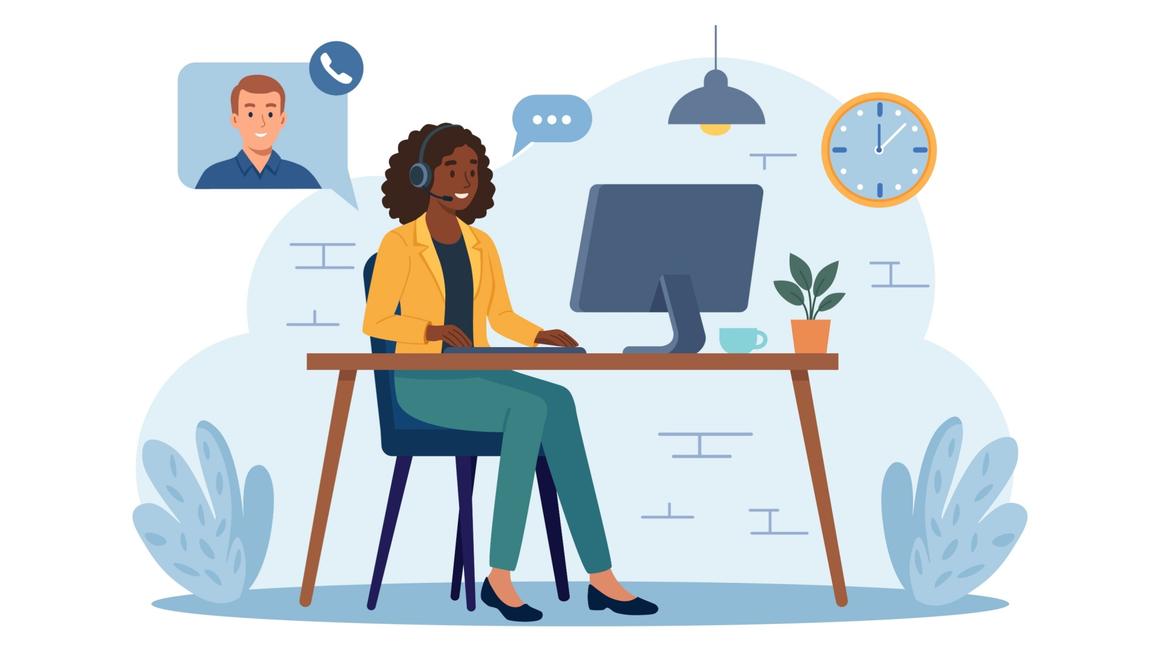
But a few years passed - and the picture changed. Increasingly confidently, companies began bringing employees back and rebuilding in-person communication. Let's find out why this is happening and - most importantly - what modern offices have become.
Remote Work Is Not a Panacea
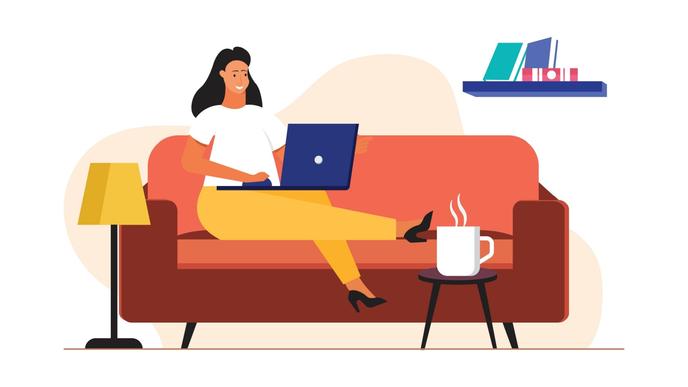
Companies that just a couple of years ago clutched at remote work as a lifesaver are now abandoning this work format.
One of the key problems is declining engagement and manageability. It is harder for managers to control the process when an employee is thousands of kilometers away. That is, a manager needs at least visual control over the process.
But there is a deeper reason. Many companies have seen firsthand a decline in customer service quality - not all employees are able to work from home with the same intensity.
Of course, there are also experts who believe that distrust of remote work is a "crisis of managerial qualification." In other words, if a manager does not know how to set measurable tasks and track results without seeing the employee at their desk, then the problem is not with remote work, but with management.
Nevertheless, even considering all these arguments, the numbers speak for themselves. Companies are bringing people back to offices. For example, Microsoft, one of the technology flagships, announced in September 2025: starting in February 2026, most employees living within 50 miles of the campus must work from the office three days a week. And for artificial intelligence divisions - four days a week.
Here is how Amy Coleman, Executive Vice President and Chief Human Resources Officer at Microsoft, explained the decision: "We've studied how our teams work, and the data is clear: when people work together in person more often, they thrive - they become more energetic, gain more empowerment, and show stronger results." And this is not an isolated case. The trend of returning to offices is global.
The Office as a Magnet: Why a "Workstation" Is No Longer Enough
A modern office, if it wants to be effective, must offer what is impossible to get at home. Everyone has a cozy sofa and a cup of coffee. But space for live communication, informal interaction, and joint creativity - that is what truly attracts people.
A Steelcase study showed: 69% of middle managers complain about the lack of privacy in the workplace. Nearly 50% of employees are forced to make video calls right at their desks, which leads to constant interruptions, fatigue, and loss of concentration. The office of the future must solve these problems.
Trends in Modern Office Design
1. Spaces You Can "Customize"
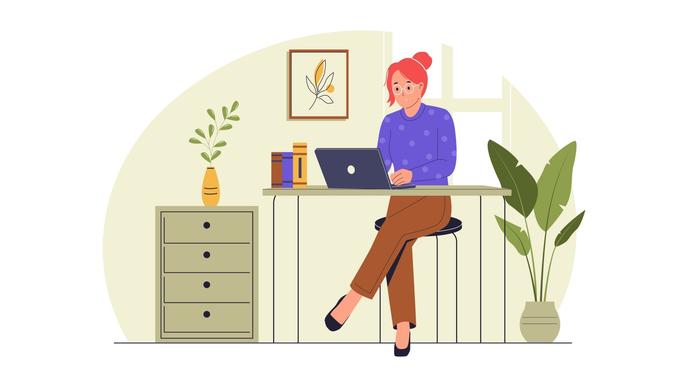
The era of universal workplaces with identical desks and chairs is fading. The time of customization is coming. Designers from LRS Architects note: the hybrid format and growing awareness of neurodiversity have made it obvious that "one-size-fits-all" offices no longer meet employee needs. Now it is important to support both focus and collaboration - for different types of thinkers.
What does this mean in practice? Companies are creating zones with different levels of noise and activity. There are "quiet" spaces for deep work - with dimmed lighting, sound insulation, and minimal distractions. There are "loud" zones for brainstorming and informal communication - with soft sofas, marker boards, and perhaps even music.
Microsoft went even further in its renovated campus in Redmond. Each building is divided into three main zones: an individual work zone, a team space zone, and a common amenities zone. Desks are placed around the perimeter for access to natural light - this is not only beautiful but also beneficial for well-being.
2. Biophilia: More Than Just Plants
Biophilic design is an approach that genuinely reduces stress levels and increases productivity. In Singapore, where this trend has been particularly noticeable lately, offices are turning into true oases. Living walls (vertical gardens), natural wood, stone textures, huge windows letting in maximum sunlight.
3. From Private Offices to "Neighborhoods" and Flexibility
Classic private offices are becoming a thing of the past. They have been replaced by "neighborhoods" - zones assigned to specific teams. And it is up to the team to decide whether to assign an individual spot to each person or use so-called hot-desking.
Furniture has also become mobile. Desks on wheels, movable partitions - all of this allows the configuration of space to be changed in minutes, adapting to current tasks.
4. Privacy and Acoustic Comfort
Paradox: we have moved away from individual offices, but the need for solitude has not gone away. Moreover, in the era of hybrid meetings and open spaces, it has become even more acute. The solution: privacy pods and phone booths.
In Microsoft's new buildings, there are special "phone booths" for confidential calls, "wellness rooms" for relaxation, and even puzzle rooms for mental breaks. This is not luxury - it is a necessity for maintaining focus and reducing cognitive overload.
Special attention is paid to acoustics. Sound-absorbing panels, strategic furniture placement, noise-reducing partitions - all of this works so that a person can choose the noise level around them.
5. Meeting Rooms for a Hybrid World
This is perhaps one of the most notable innovations. Previously, a meeting room was a space where people gathered, and a remote employee would "dial in by phone." Now it is different.
Modern meeting rooms are designed with the understanding that key participants may be both in the room and thousands of kilometers away. The goal is to make the experience equally high-quality.
Microsoft uses the Teams Room system for this: a computer, cameras, microphones, and a touch control panel. Wide displays, curved tables, cameras showing each participant's face, microphones that distinguish voices. Even scale is displayed realistically.
Ilya Bukshteyn, Corporate Vice President at Microsoft, puts it this way: "We need rooms where the remote experience and the in-room experience will be much more equal, and the in-room experience should be worthy of coming to the office for."
6. Wellbeing as a Priority
The modern office cares not only about productivity but also about health - physical and mental.
What appears in the best offices?
- Lounge zones with sports activities. Microsoft's campus has sports fields for softball, cricket, and soccer - this is not just "kicking a ball around," but a way to switch gears and establish informal connections with colleagues.
- Massage rooms and wellness rooms. Spaces where you can recover, take a pause, simply lie down in silence.
- Corporate multi-sport events and yoga retreats - not one-off actions, but regular practice.
The office is becoming not just a place to work, but a place where you can not only work but also relax, play sports, and socialize.
7. Sustainability as Part of the Design
A trend that is moving from fashionable to mandatory. Environmental friendliness is no longer an "additional option."
Microsoft's new buildings in Redmond, for example, aim for zero-carbon certification. They are powered by renewable energy, heated and cooled by a geothermal system. The central kitchen is fully electric - the company even participated in developing new equipment to eliminate gas.
How Offices Are Changing Corporate Culture
Behind all these walls, pods, and sports fields lies something more. The office of the future is a tool of culture. The connection between physical space and corporate culture is deeper than it seems. And modern research confirms this.
A large European study, covering more than two thousand office employees in the United Kingdom, France, Germany, and Italy, showed a direct relationship between the type of office space and people's desire to stay with the company. It found that different office configurations have different effects on how employees evaluate their employer. For example, shared rooms and flexible spaces without assigned seats reduce the perception of the company as a good employer. And large open-plan offices, oddly enough, increase the likelihood that an employee will want to leave. At the same time, the evaluation of the employer acts as a link: an uncomfortable office worsens the opinion of the company, and a bad opinion, in turn, makes people think about leaving.
How exactly does office space affect how people communicate and work together? The data reveals several clear mechanisms.
First, the office can stimulate spontaneous communication. Different strategic tasks require different types of interaction: some meetings are formal and scheduled, others are short and situational. Companies that rely on flexibility and speed of decision-making benefit from informal spaces - kitchens, lounge zones, coffee areas. Gensler research among 16,000 office workers worldwide confirms: access to spaces where you can both focus and switch gears is directly linked to a positive work experience.
Second, office design affects employee turnover and talent retention. The European study showed that employees working in uncomfortable spaces - noisy, lacking privacy, with rigid seating assignments - are more likely to consider leaving. Companies that invest in well-designed offices are not just spending money on renovations. They are reducing the risks of losing employees and saving on hiring and onboarding new people.
Third, the office is a powerful employer branding tool. The same data confirms: the type of office space directly affects the evaluation of the company as an employer. This is especially critical for attracting young professionals. In China, for example, the crop protection company Yuzhixing reimagined its office with the help of Steelcase and saw an influx of Generation Z employees who previously had not considered the agricultural industry as a career path. The space became a "silent recruiter."
Lectera’s Online Courses by topic
Flexibility as a Cultural Value
A separate important aspect is the office's ability to change together with the company. Teams evolve, strategies transform.
Research shows: less than a third of workspaces have been redesigned since the pandemic. This means that many companies are trying to solve new problems with old tools. Meanwhile, those who implement movable walls, desks on wheels, portable partitions, and modular furniture gain the ability to reconfigure the space for current needs - whether once a quarter or even every week. Thus, the office has become a facilitator of human connections. Something that cannot be replicated in Zoom.
Share this with your friends via:
Latest News

Fall 2026 promises to be an eventful season for education worldwide.

Tickets for WE Convention 2026 are now available - with 25% off for EARLY BIRDS!

The private school Alpha School, which has opened campuses from New York to California, uses AI bots to teach children academic subjects for just two hours a day. The school has no traditional teachers, no homework, and tuition reaches $65,000 per year.

UK Prime Minister Keir Starmer has announced a major public-private partnership in the field of artificial intelligence. Google, Microsoft, Amazon and NVIDIA, together with the government, are launching an AI skills training programme for 7.5 million British workers.

International educational programmes provider Study Group has announced a change of ownership. The company has been acquired by Arete Education – an investment structure in the higher education sector created by Global University Systems (GUS) and US private investment firm Brightstar Capital Partners.
